Is Bangladesh’s Political Transition Influenced by the US? Leaked Recording Sparks Controversy
Synopsis
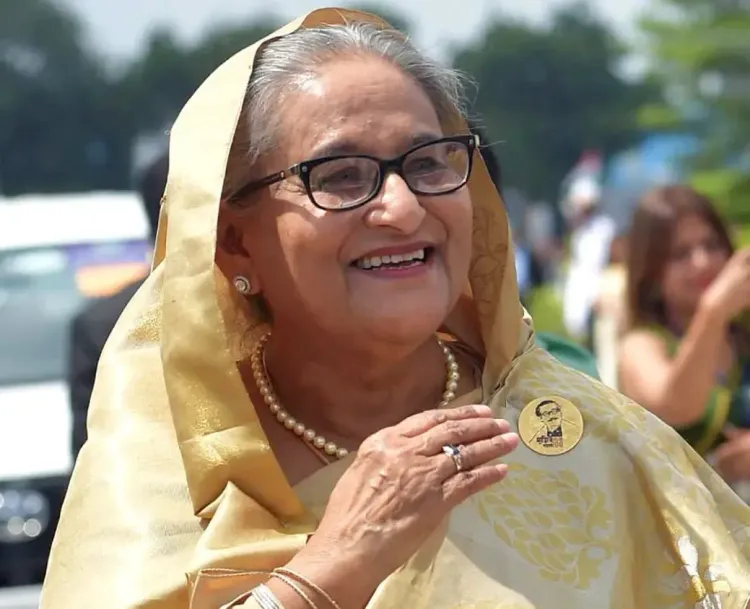
A leaked US diplomatic recording has stirred controversy in Bangladesh, leading to numerous allegations about American involvement in the political upheaval following Sheikh Hasina's ousting. As claims and counterclaims arise, the political landscape in Bangladesh faces intense scrutiny ahead of the 2024 elections. What does this mean for the future of Bangladeshi politics?
Key Takeaways
The leaked US recording raises questions about foreign influence in Bangladesh.
Awami League leaders are using the recording to assert their claims about the ousting of Sheikh Hasina.
Sheikh Hasina's escape to Delhi marks a significant political shift in Bangladesh.
The implications for the 2024 elections are profound and could affect the legitimacy of the government.
Excluding significant political parties poses risks to democracy in Bangladesh.
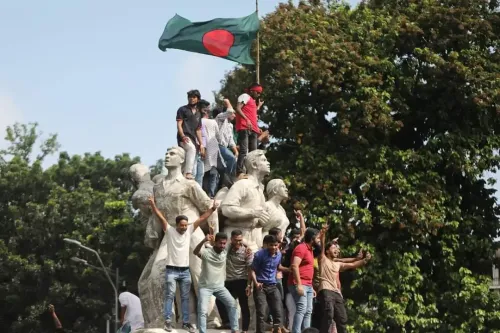
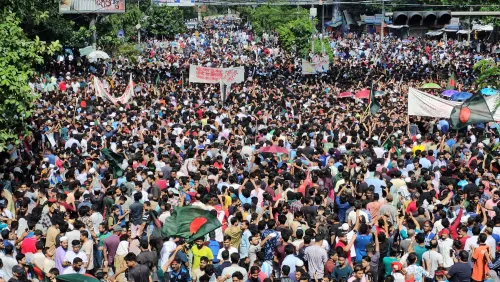
New Delhi, Jan 25 (NationPress) Months after the Sheikh Hasina administration was toppled in Bangladesh due to a student-led mass uprising, a recently leaked diplomatic recording from the United States has sparked a new controversy and ignited a flurry of allegations and counter-allegations about the impending 2024 political turmoil in the neighboring country.
The leaked diplomatic recording has positioned Washington at the center of fresh accusations, as many members of the Awami League are beginning to point fingers at the US for its purported involvement in facilitating a power shift in Bangladesh.
The recording, revealed by a prominent publication, StratNews Global, features discussions by a senior US diplomat regarding engagement with Bangladesh's Islamist political factions and evaluating the nation's direction in the post-Hasina landscape.
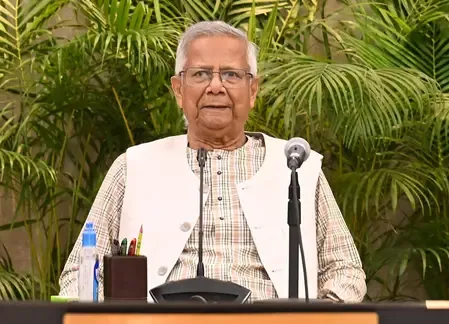
This development has amplified calls for an examination of the US's influence in Bangladesh and has provided a platform for Awami League leaders to launch severe critiques against the Yunous administration for its alleged complicity.
Former education minister Mohibul Hasan Chowdhury, speaking at a recent gathering, asserted that the audio confirms the Awami League's long-held belief — that the downfall of the Sheikh Hasina government was not a wholly organic event.
It is noteworthy that Sheikh Hasina was compelled to escape her country on August 5, 2024, after a student revolt led to a violent upheaval, leaving the government in chaos. She has since been residing in Delhi following her departure from Bangladesh.
Chowdhury further emphasized that the leaked audio showcases a 'blatant conspiracy' to orchestrate post-election administrations in Bangladesh and cautioned about the dire repercussions that such actions could yield.
He voiced strong objections to the exclusion of the Awami League from the electoral process, arguing that sidelining significant political entities like the Awami League would disenfranchise numerous voters, resulting in an illegitimate government lacking a popular mandate.
Point of View
I believe it is crucial to approach the situation in Bangladesh with a balanced perspective. The leaked recording raises significant questions about foreign influence on domestic politics. While the Awami League's response is understandable, we must also consider the broader implications for democracy and governance in Bangladesh as we head towards the 2024 elections.
NationPress
19 Sept 2026
Frequently Asked Questions
What does the leaked US recording entail?
The recording includes conversations from a senior US diplomat discussing engagement with Islamist political forces in Bangladesh and assessing the country's future post-Hasina.
How has the Awami League responded to the leaked audio?
Awami League leaders have accused the US of orchestrating the political transition and have used the recording to justify their claims that Sheikh Hasina's ousting was not an organic process.
What are the implications of this recording for Bangladeshi politics?
The recording could intensify scrutiny of foreign involvement in Bangladesh's political landscape and impact the legitimacy of the upcoming elections.
Where is Sheikh Hasina currently residing?
Sheikh Hasina has been living in Delhi since her departure from Bangladesh on August 5, 2024, following the student uprising.
What are the concerns regarding the exclusion of the Awami League from elections?
Excluding major political forces like the Awami League could disenfranchise large segments of the electorate, leading to an illegitimate government without public support.