US Ambassador Discusses Military and Diplomatic Strategies in Iran Conflict
Synopsis
In a recent interview, US Ambassador Mike Waltz elaborated on America's dual approach to the Strait of Hormuz, balancing military readiness with allied support. His statements underscore the urgency of addressing Iran's military capabilities while maintaining international partnerships.
Key Takeaways
US adopts a dual strategy for the Strait of Hormuz.
Allied nations are increasingly involved in supporting US efforts.
Military actions remain a viable option against Iran.
Concerns about the intertwining of Iran's military and civilian infrastructure.
Iran's missile capabilities are advancing and pose a regional threat.
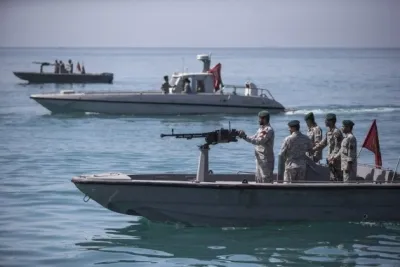
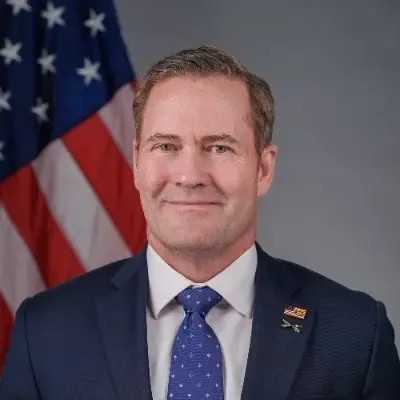
Washington, March 23 (NationPress) The United States is adopting a two-pronged strategy concerning the Strait of Hormuz, integrating the concept of allied responsibility with the potential for direct military intervention, as stated by US Ambassador to the United Nations, Mike Waltz.
During an appearance on CBS News’ “Face the Nation,” Waltz remarked, “I believe it can be a combination of both. They are not mutually exclusive,” when inquired about whether the US plans to forcibly reopen the crucial waterway or depend on its allies.
He highlighted the increasing commitment from allied nations, mentioning, “Countries like Italy, Germany, and France, among others, have pledged their support for this initiative,” while also noting that Japan has offered naval assistance since “80% of the Gulf's exports are directed towards Asia.”
At the same time, Waltz emphasized the US readiness to escalate military actions. “The president has made it clear that he will continue to target Iran's capabilities, including its missiles, naval assets, and drone technology,” he stated.
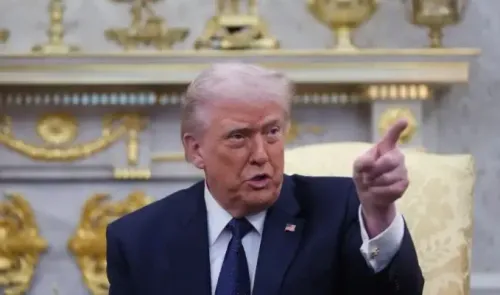
This statement follows President Donald Trump’s warning that Tehran must reopen the Strait of Hormuz or risk attacks on its energy facilities. Waltz did not dismiss the possibility of targeting these resources, asserting, “I would never rule out any options for the president, especially not on national television.”
Waltz noted the close relationship between Iran’s military and civilian sectors. He claimed that the Islamic Revolutionary Guard Corps “controls a significant portion of Iran's vital infrastructure, its economy, and many governance structures.”
“Therefore, as we work to diminish their military strength and defense industrial capabilities, all options must remain viable,” he continued.
When pressed about the UN's concerns regarding potential war crimes related to strikes on energy infrastructure, Waltz defended the US position. He stated that Iran “holds significant control over critical infrastructure” and is “using it for not only repressing its citizens but also attacking neighboring countries and defying UN sanctions while advancing towards nuclear armament.”
He reiterated that US actions would be precise. “I am confident that the president, the Pentagon, and their team will ensure that targets are focused on Iran's military infrastructure,” he said, while accusing Tehran of intentionally mixing military and civilian sites.
On the subject of Iran’s missile advancements, Waltz referred to recent incidents that challenge prior intelligence evaluations. “The UK recently condemned the launch of an intermediate-range ballistic missile aimed at Diego Garcia,” he warned, adding that such systems “could reach capitals in Europe.”
He further suggested that Iran has concealed advancements through its civilian space initiatives. “This space program has been a cover for this technology,” he claimed, noting that “the technology needed for re-entry is not overly complex.”
The ambassador defended the administration’s approach as proactive. “Thankfully, the president is taking steps now to halt Iran's progression towards a fully operational nuclear program,” he remarked, drawing parallels with North Korea.
Waltz also dismissed public opinion polls indicating skepticism among Americans regarding the conflict. He highlighted the backing from Republican constituents, stating that “90% of Republicans support Trump's initiatives to eliminate Iran's nuclear threats,” emphasizing the president’s primary aim of “keeping American citizens safe.”
He reiterated that no strategies, including possible ground involvement, have been eliminated. “I believe the president will maintain all options available to achieve these goals,” he concluded.
Point of View
The unfolding situation in the Strait of Hormuz highlights a crucial intersection of military strategy and international diplomacy. The US's approach reflects a commitment to national security while navigating complex geopolitical relationships.
NationPress
24 Sept 2026
Frequently Asked Questions
What is the dual-track approach mentioned by the US Ambassador?
The dual-track approach refers to the US strategy of combining allied burden-sharing with the potential for direct military action to address issues in the Strait of Hormuz.
Which countries have committed to support the US efforts?
Countries including Italy, Germany, France, and Japan have pledged to assist the US in efforts related to the Strait of Hormuz.
What are the concerns about Iran’s military capabilities?
There are concerns that Iran's military and civilian infrastructures are closely linked, allowing them to potentially exploit both for military purposes.
How does the US plan to address potential war crimes in Iran?
The US plans to focus its military actions on military infrastructure in Iran while being cautious of collateral damage to civilian sites.
What is the significance of Iran's missile developments?
Iran's missile advancements pose a threat as they may target regions beyond the Gulf, potentially impacting European capitals.