UNGA 2026: Vulnerable nations demand grants, reject climate debt burden
Synopsis
At UNGA 2026, leaders from the Pacific, Caribbean, Indian Ocean, and Himalayas delivered a unified message: the global climate finance system is punishing its least responsible victims. With Nepal's floods costing 10% of GDP and the Loss and Damage Fund still grossly underfunded, the pressure on wealthy emitters to shift from loans to grants is reaching a new pitch ahead of COP30.
Key Takeaways
Leaders from Caribbean , Pacific , Indian Ocean , and Himalayan nations told UNGA on 26 September 2026 that climate-vulnerable states should not be forced into debt to recover from disasters they did not cause.
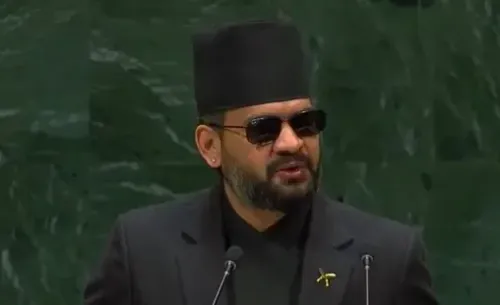
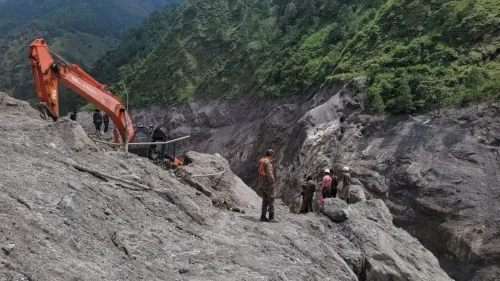
Nepal Prime Minister Balendra Shah cited flash floods that killed at least 1,400 people , left 6,000+ missing , and caused damage estimated at roughly 10% of Nepal's GDP .
Leaders demanded grant-based support, vulnerability-based eligibility for finance, and faster disbursement — replacing loan-heavy responses and lengthy accreditation processes.
Seychelles President Herminie called climate finance obligations — mitigation, adaptation, technology transfer, and loss-and-damage — legal duties, not charity.
The Pacific Resilience Facility was cited as a working model for rapid, community-level climate finance with minimal bureaucratic delay.
The coordinated push signals growing alignment among vulnerable nation blocs ahead of COP30 in Belém, Brazil .
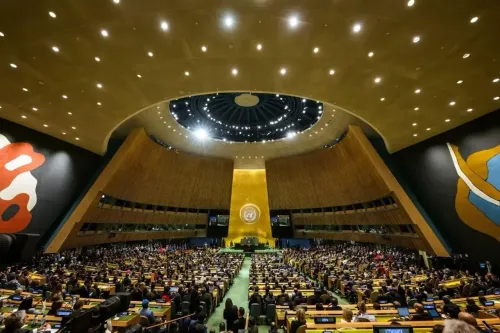
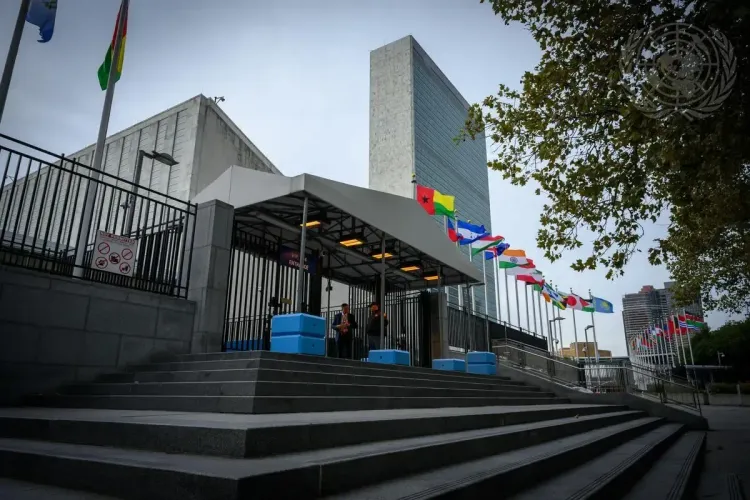
Climate-vulnerable nations took the floor at the United Nations General Assembly (UNGA) on 26 September 2026 to demand that the international community stop forcing disaster-struck countries deeper into debt for crises they played little role in causing. Leaders from the Caribbean, Pacific, Indian Ocean, and Himalayan regions called for outright grants, structural reforms to eligibility criteria, and faster disbursement of climate finance.
The Core Grievance: Loans Instead of Justice
Speaker after speaker argued that the current international finance architecture treats climate disasters the way commercial banks treat credit risk — with loans, conditions, and years of paperwork — rather than as a matter of global responsibility. Samoan Deputy Prime Minister Mulipola Anarosa Ale Molioo told the Assembly that money meant for education, health, water, and social protection was being siphoned into disaster recovery budgets.
'Small nations are being asked to finance both development and survival. No nation should have to borrow its way out of a crisis it did so little to create,' Molioo said.
Saint Lucian Prime Minister Philip J Pierre was equally direct. 'We must stop confusing loans with solidarity,' he said. 'A loan is not justice when a small vulnerable nation is forced to borrow to repair damage it did not cause.' Pierre called for eligibility criteria that factor in climate vulnerability alongside national income — a long-standing demand from small island developing states (SIDS) that has yet to be acted upon by multilateral lenders.
Nepal's Flash Flood Crisis Anchors the Argument
Nepal Prime Minister Balendra Shah brought the debate into sharp relief, citing catastrophic flash floods that killed at least 1,400 people and left more than 6,000 missing. Initial recovery assessments placed the cost at roughly 10 per cent of Nepal's GDP — a staggering burden for one of South Asia's most economically constrained countries.
'When a climate-driven disaster destroys the infrastructure of a poor country, the answer cannot simply be another mega loan or a patchwork of small grants,' Shah said. He called the Loss and Damage Fund and other environmental financing mechanisms 'grossly inadequate' and demanded adequate grant-based support. 'When the house is burning, we do not ask the family to complete fifty forms. We act,' he added.
Pacific and Island States: Survival Should Not Come with Debt
Palauan President Surangel Whipps argued that countries facing severe sea-level rise should not be burdened with debt 'simply to purchase a life jacket for their survival.' Saint Vincent and the Grenadines Prime Minister Godwin Friday captured the futility of repeated borrowing with a stark image: 'We cannot continue to walk up the down escalator, pretending it is development.'
Dominican Republic President Luis Abinader called for climate finance to be delivered as quickly as storms strike the Caribbean, describing vulnerability as a lived reality rather than a statistical category. Maldives Vice-President Hussain Mohamed Latheef demanded finance reach vulnerable countries 'at the scale, at the speed, and on the terms needed to build resilience.'
Seychelles President Mathew Antonio Patrick Herminie was categorical: 'Mitigation, adaptation, technology transfer, and loss-and-damage funding are not acts of charity — they are legal obligations.' Fijian President Ratu Naiqama Lalabalavu pointed to the Pacific Resilience Facility — a Pacific-owned financing mechanism — as proof that simpler, faster disbursement is possible. 'It exists because a village seawall does not need a three-year accreditation process. It needs money that arrives,' he said.
Systemic Barriers and the Eligibility Trap
The Bahamas highlighted a perverse dynamic in current lending rules: island states can be considered too prosperous to qualify for concessional finance — until a hurricane wipes out years of progress and leaves them impoverished. Nauru made the case that vulnerability, not income alone, should determine access to development finance.
This comes amid growing frustration that the Loss and Damage Fund, established at COP28 after decades of advocacy by vulnerable nations, has been slow to operationalise and remains severely underfunded relative to assessed needs. Critics argue that pledges from major emitters have consistently fallen short of commitments, leaving front-line communities to absorb costs they did not generate.
What Comes Next
The coordinated push at UNGA signals a sharper political alignment among climate-vulnerable blocs ahead of COP30, scheduled for Belém, Brazil, in late 2025. Whether the pressure translates into binding reforms to multilateral lending criteria or accelerated grant disbursement will depend on the response from major donor nations and development banks in the coming months.
Point of View
World Bank, and multilateral development bank eligibility rules before COP30. The Loss and Damage Fund, hailed as a breakthrough at COP28, risks becoming another symbol of unfulfilled promise if capitalisation remains voluntary and disbursement remains slow. What these nations are describing — borrowing to survive a crisis they did not create — is not a gap in generosity; it is a structural design flaw that major emitters have so far lacked the political will to fix.
NationPress
26 Sept 2026
Frequently Asked Questions
What did climate-vulnerable nations demand at UNGA 2026?
At the UN General Assembly on 26 September 2026, leaders from the Caribbean, Pacific, Indian Ocean, and Himalayan regions demanded grant-based climate finance rather than loans, vulnerability-based eligibility criteria, and faster disbursement of international funds. They argued the current system forces the least responsible nations to borrow to recover from disasters caused primarily by major industrial emitters.
What is the climate debt trap these nations are referring to?
The 'climate debt trap' describes a cycle where disaster-struck developing nations take on expensive loans to rebuild infrastructure destroyed by climate events, increasing their debt burden despite having contributed minimally to global emissions. Leaders at UNGA argued this transfers the financial cost of climate change onto its least responsible victims.
How has Nepal been affected by climate-related disasters?
Nepal suffered catastrophic flash floods that killed at least 1,400 people and left more than 6,000 missing. Initial assessments placed the physical recovery cost at roughly 10% of Nepal's GDP — an enormous burden for one of South Asia's most economically constrained nations. Prime Minister Balendra Shah cited the disaster in calling for adequate grant-based international support.
What is the Loss and Damage Fund and why is it under criticism?
The Loss and Damage Fund was established at COP28 to compensate climate-vulnerable nations for damage caused by climate change. However, multiple leaders at UNGA 2026 — including Nepal's Prime Minister — described it as 'grossly inadequate,' with capitalisation falling short of assessed needs and disbursement processes remaining slow and bureaucratic.
What is the Pacific Resilience Facility mentioned at UNGA?
The Pacific Resilience Facility is a Pacific-owned climate and disaster-financing mechanism designed to deliver grants directly to communities with minimal bureaucratic delay. Fijian President Ratu Naiqama Lalabalavu cited it at UNGA as evidence that faster, simpler climate finance delivery is achievable, contrasting it with multi-year accreditation processes required by larger multilateral funds.