Bangladesh's US trade deal under fire: Critics slam Yunus govt's rushed ART signing
Synopsis
Bangladesh signed the US Agreement on Reciprocal Trade just three days before its 2026 election — no parliament voted on it, no mandate existed. The Daily Star's analysis now calls it the most lopsided deal among all 10 ART signatories, raising a pointed question: what exactly did the rush buy Bangladesh?
Key Takeaways
Bangladesh signed the Agreement on Reciprocal Trade (ART) with the US on 9 February 2026 — just three days before a national election.
The deal was signed by the outgoing interim administration of Dr Muhammad Yunus without parliamentary debate or approval.
Among 10 countries that have signed the ART, Bangladesh's deal is described as the most sweeping and asymmetric .
Pakistan and Sri Lanka remain in active negotiations without conceding Bangladesh's terms; India operates under a separate interim framework.
Critics argue the Yunus administration acted as a lame-duck government , binding successors to commitments voters never endorsed.
Bangladesh's new parliament has yet to formally scrutinise or renegotiate the agreement.
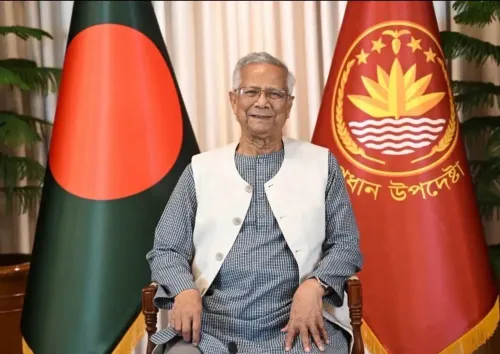
Bangladesh's Agreement on Reciprocal Trade (ART) with the United States is facing sharp criticism, with analysts arguing that the deal — signed in the dying days of the interim administration of Dr Muhammad Yunus — amounts to little more than accepting terms dictated by the Donald Trump administration, according to an analysis published by Dhaka-based newspaper The Daily Star.
The Controversial Signing
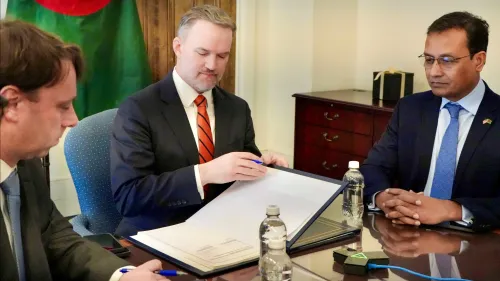
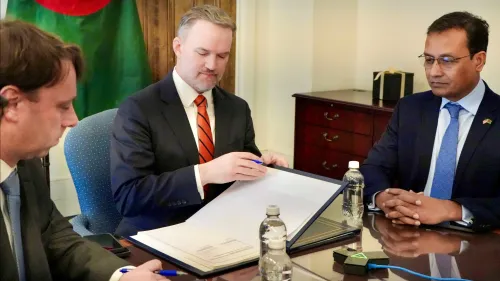
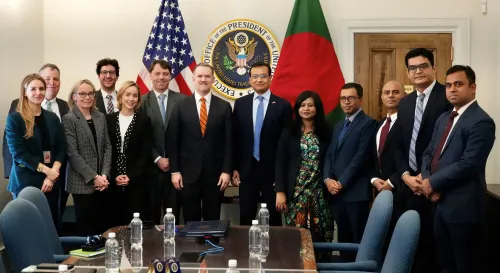
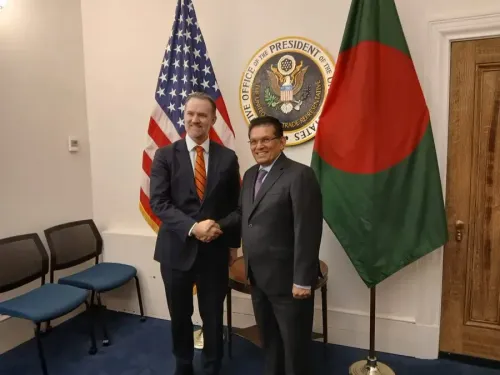
Bangladesh formalised the ART on 9 February 2026, just three days before a national election that removed the Yunus-led interim government from power. Critically, no elected parliament debated or ratified the agreement before it was signed — and the successor government has, according to reports, not subjected it to legislative scrutiny since taking office either. Critics have characterised the move as a lame-duck administration binding its successors to open-ended commitments the country never had a democratic mandate to approve.
How Bangladesh Compares With Its Neighbours
Among South Asian nations, Bangladesh was the first to sign an ART, yet the analysis struggles to identify what that haste actually delivered. Pakistan and Sri Lanka, by contrast, remain in active but unhurried negotiations and have reportedly not conceded the terms Bangladesh accepted. India, meanwhile, operates under a separate interim trade framework — even as it faces exposure to the Lindsey O. Graham Sanctioning Russia and Iran Act, which targets buyers of discounted Russian oil and gas.
The Most Asymmetric Deal Among Signatories
Of the 10 countries that have signed the ART, Bangladesh's version is described in the analysis as the most one-sided. The argument is not that any single clause is uniquely exotic — most mechanisms exist in some form across other signatories' agreements. Rather, it is the aggregate weight of obligations, combined with the peculiar circumstances under which Dhaka signed, that distinguishes Bangladesh's deal. Notably, Bangladesh entered the agreement with lower exports and a smaller trade surplus with the US than most other signatories, making the sweeping scope of its commitments all the more striking.
The Democratic Accountability Question
The analysis in The Daily Star draws a pointed distinction: 'No one has clearly explained what economic or political calculus persuaded an interim government to lock in an open-ended trade relationship on its way out the door. Critics are right to call this what it is: a lame-duck administration locking its successors into commitments the country never had a chance to vote on. That charge doesn't apply to the other signatories, whose governments actually had a mandate to sign,' the article observes. This raises a structural question about treaty legitimacy that Bangladesh's new legislature has yet to formally address.
What Comes Next
The newly elected Bangladeshi parliament faces pressure from trade experts and civil society groups to either renegotiate the ART's terms or pass legislation clarifying its domestic legal standing. How Dhaka navigates this — and whether the Trump administration proves willing to reopen discussions — will determine whether Bangladesh can claw back any leverage in what critics are calling an unequal arrangement.
Point of View
A smaller trade surplus — yet accepted the most sweeping terms among all signatories. The new parliament's silence on the matter is equally troubling; legitimising a treaty signed without a mandate, by doing nothing, is itself a political choice. The deeper question is whether the Trump administration's ART process systematically exploited political transitions to extract maximum concessions — and whether Dhaka was simply the most exposed test case.
NationPress
24 Sept 2026
Frequently Asked Questions
What is Bangladesh's Agreement on Reciprocal Trade (ART) with the US?
The ART is a bilateral trade agreement signed between Bangladesh and the United States on 9 February 2026, during the final days of the interim government led by Dr Muhammad Yunus. Critics describe it as heavily asymmetric, with Bangladesh accepting sweeping obligations despite having lower exports and a smaller trade surplus with the US than most other signatories.
Why is the Bangladesh-US ART deal controversial?
The deal was signed just three days before a national election, by an interim government without an elected parliamentary mandate. No legislature debated or approved it before or after signing, leading critics to call it a 'lame-duck' administration locking successors into commitments voters never endorsed.
How does Bangladesh's ART compare with other countries' agreements?
Among the 10 countries that have signed the ART, Bangladesh's version is described as the most one-sided in aggregate. Pakistan and Sri Lanka remain in ongoing negotiations without conceding similar terms, and India operates under a separate interim framework, making Bangladesh an outlier in both speed and scope of concessions.
What are the next steps for Bangladesh regarding the ART?
Bangladesh's newly elected parliament faces calls from trade experts and civil society to either renegotiate the agreement's terms or enact legislation clarifying its domestic legal standing. Whether the Trump administration will agree to reopen discussions remains unclear.
What is the Lindsey O. Graham Sanctioning Russia and Iran Act mentioned in the context?
It is a US law that targets countries purchasing discounted Russian oil and gas. India, despite operating under a separate interim trade framework with the US, faces exposure to this act — illustrating the broader geopolitical pressures shaping South Asian nations' trade negotiations with Washington.