China+1 shift could hand India a major manufacturing leap: Report

Synopsis
India holds just 3% of global manufacturing against China's 29% — but a new report argues the China+1 shift, Europe's industrial retreat, and India's PLI momentum could dramatically change that math. With iPhone exports at ₹2 lakh crore and FDI up 17% in FY26, the tailwinds are real. The question is whether infrastructure and policy execution can finally match the opportunity.
Key Takeaways
China holds approximately 29% of global manufacturing; India holds around 3% , leaving large headroom for gain.
Europe closed 37 million tonnes of chemical capacity between 2022 and 2025 ; Germany logged 24,064 insolvencies in 2025 , an 11-year high.
India's iPhone exports reached approximately ₹2 lakh crore in FY26 ; gross FDI rose 17% to $94.5 billion .
Merchandise exports totalled $441.8 billion in FY26 , including $122.4 billion in engineering goods and $48 billion in electronics.
Manufacturing accounts for approximately 13% of India's GDP against a National Manufacturing Mission target of 25% by 2035 .
Infrastructure gaps, input costs and policy execution pace remain the key barriers to capturing the China+1 dividend, according to the report.
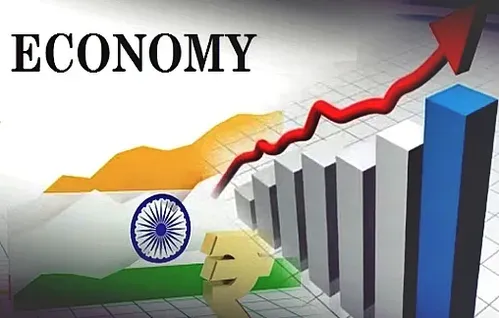
India stands to capture a substantially larger share of global manufacturing as multinational companies accelerate supply-chain diversification away from China, with the momentum reinforced by production-linked incentive (PLI) schemes and surging exports, according to a new report released on Friday, 16 October 2026. The findings from investment platform smallcase underscore a structural inflection point for Indian industry, one that analysts say could reshape the country's economic trajectory over the coming decade.
The Scale of the Opportunity
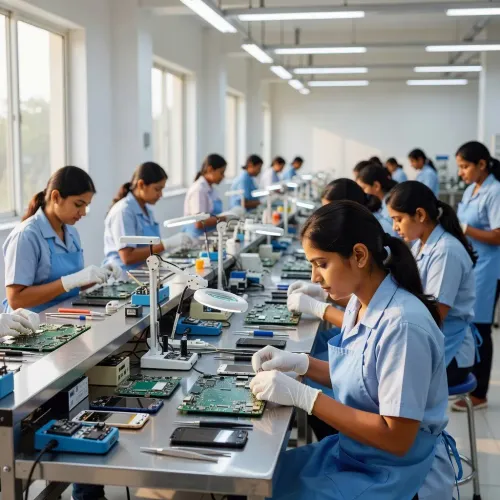
China currently accounts for approximately 29 per cent of global manufacturing output, while India's share stands at around 3 per cent. The report argues that even a modest reallocation of global production capacity in India's favour could translate into a significant expansion of domestic industrial activity. The China+1 strategy — through which companies build manufacturing capacity outside China as a hedge against geopolitical and supply-chain risk — is creating openings for India across specialty chemicals, pharmaceuticals, auto components, and electronics.
Nitya Shah, smallcase manager and Co-Founder of KamayaKya Wealth Management, said the confluence of European capacity closures, global supply-chain diversification, and India's expanding manufacturing capabilities 'could create a substantial opportunity for Indian businesses over the coming decade.' Shah cautioned, however, that 'translating this potential into sustained growth will depend on improving infrastructure, reducing input costs and ensuring faster execution of industrial policies.'
Europe's Industrial Retreat Opens New Doors
Europe announced closures of 37 million tonnes of chemical capacity between 2022 and 2025, while Germany recorded 24,064 corporate insolvencies in 2025 — its highest annual tally in 11 years. Elevated energy costs and labour expenses have squeezed European industrial competitiveness, with chemical production and plant utilisation visibly weakening. As Europe's industrial base retreats, Indian manufacturers with established capabilities in chemicals, pharmaceuticals, forgings, castings, and auto components are increasingly being evaluated as credible substitutes by global buyers.
India's Export Momentum and FDI Surge
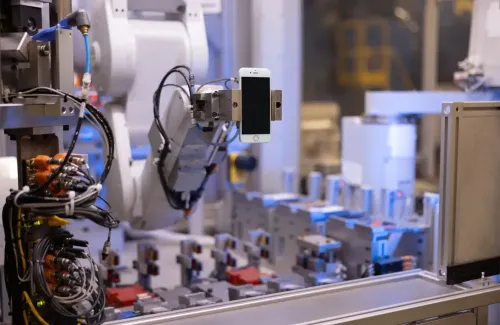
Concrete data points reinforce the report's thesis. India's iPhone exports reached approximately ₹2 lakh crore in FY26, a figure that signals the country's growing role in high-value electronics manufacturing. Gross foreign direct investment (FDI) rose 17 per cent to $94.5 billion over the same period. India recorded total merchandise exports of $441.8 billion in FY26, including $122.4 billion in engineering goods and $48 billion in electronics — marking strong year-on-year progress across key export categories.
The GDP Gap and the 2035 Target
Manufacturing currently contributes approximately 13 per cent of India's GDP, well below the National Manufacturing Mission's target of 25 per cent by 2035. The report notes that India's large domestic market, deep engineering and chemistry talent pool, and established pharmaceutical and chemicals base provide the foundation for more complex, higher-value manufacturing — but closing the GDP gap will require sustained policy execution. This is the context in which the China+1 tailwind is arriving: a country with genuine industrial assets but a historically inconsistent track record of converting external opportunity into structural gain.
What Needs to Happen Next
Analysts and industry bodies have consistently flagged infrastructure bottlenecks, logistics costs, and the pace of regulatory approvals as the primary barriers to India fully absorbing the China+1 dividend. The report echoes these concerns, stressing that policy intent must be matched by faster on-ground execution. With global supply-chain realignment still underway, the window to position India as a preferred manufacturing destination remains open — but it is not indefinite.
Point of View
Yet India's manufacturing share of GDP has barely moved. What makes this report's framing sharper is the European dimension — 37 million tonnes of chemical closures is not a blip; it is a structural vacancy in global supply chains that India's chemicals and pharma sector is uniquely positioned to fill. The FDI and iPhone export numbers are real momentum signals, but 13% of GDP to 25% by 2035 is a steep climb that no single tailwind can deliver. The accountability question — whether PLI disbursements are genuinely linked to output and jobs rather than capacity creation — remains unanswered, and that is the variable that will determine whether this cycle of optimism produces a different outcome than the last.
NationPress
16 Oct 2026
Frequently Asked Questions
What is the China+1 strategy and how does it benefit India?
The China+1 strategy refers to the approach by global companies of building manufacturing capacity in at least one country outside China to reduce supply-chain concentration risk. India stands to benefit through increased investment and orders across specialty chemicals, pharmaceuticals, auto components, and electronics, according to the smallcase report.
How large is India's current share of global manufacturing?
India accounts for approximately 3% of global manufacturing output, compared to China's roughly 29%, according to the report. Even a modest increase in India's share could represent a significant expansion of domestic industrial activity.
What are India's key manufacturing export numbers for FY26?
India recorded merchandise exports of $441.8 billion in FY26, including $122.4 billion in engineering goods and $48 billion in electronics. iPhone exports alone reached approximately ₹2 lakh crore, and gross FDI rose 17% to $94.5 billion in the same period.
What is the National Manufacturing Mission's target for India?
The National Manufacturing Mission targets manufacturing's share of India's GDP rising from approximately 13% currently to 25% by 2035. Achieving this will require sustained infrastructure development, lower input costs, and faster execution of industrial policies, analysts say.
Why is Europe's industrial slowdown relevant to India's manufacturing prospects?
Europe announced 37 million tonnes of chemical capacity closures between 2022 and 2025, and Germany recorded its highest annual corporate insolvency tally in 11 years in 2025. As European industrial output retreats due to high energy and labour costs, global buyers are looking for alternative suppliers — creating an opening for Indian manufacturers in chemicals, pharmaceuticals, and related sectors.