Gaganyaan to Venus mission: India's next space exploration phase explained
Synopsis
India's official space roadmap is more ambitious than most headlines suggest: a crewed Gaganyaan flight by 2027, a Venus orbiter by 2028, a five-module national space station by 2035, and reusable rockets in development — all backed by a ₹20,193 crore programme expanded as recently as September 2024. The question is no longer whether India is a serious space power, but whether its execution timelines will hold.
Key Takeaways
Gaganyaan programme expanded in September 2024 to ₹20,193 crore , covering 8 missions including BAS-01 precursor flights.
First uncrewed Gaganyaan flight with Vyommitra half-humanoid targeted for Q4 2026 ; crewed mission targeted for 2027 .
Bharatiya Antariksh Station (BAS) first module planned for launch by 2028 ; full operationalisation targeted by 2035 .
Venus Orbiter Mission targeted for launch in March 2028 to study Venus geology, atmosphere, and ionosphere.
ISRO is developing a 200-tonne semi-cryogenic engine , VTVL booster recovery , a reusable NGLV , and an air-breathing propulsion demonstrator to cut launch costs.
SPADEX-2 and SPADEX-3 missions under study to advance orbital docking for Chandrayaan-4 , Gaganyaan , and BAS .
India is entering a transformative new chapter in space exploration, with ISRO preparing for human spaceflight, planetary missions, and next-generation launch technologies that the government says will position the country as a leading global space power. An official government fact-sheet, released on 23 August, outlines a sweeping roadmap spanning the Gaganyaan crewed mission, a Venus Orbiter, a national space station, and fully reusable rockets.
Gaganyaan: India's crewed spaceflight mission
The Gaganyaan human spaceflight programme, first approved in January 2019, was significantly expanded in September 2024 to a total outlay of ₹20,193 crore, covering 8 missions in all — including precursor flights for the Bharatiya Antariksh Station (BAS-01). The programme aims to send a crew of three Indian astronauts to a 400-km orbit for a three-day mission.
The first uncrewed experimental flight — which will validate critical technologies including the Vyommitra half-humanoid robot — is targeted for Q4 of 2026. The crewed mission itself is slated for 2027, according to the fact-sheet.
Bharatiya Antariksh Station: India's own space station by 2035
India's planned five-module Bharatiya Antariksh Station (BAS) is targeted for full operationalisation by 2035. The first module, BAS-01, is planned for launch by 2028. The station is designed to support long-duration human spaceflight, microgravity research, and advanced orbital operations.
Notably, SPADEX-2 and SPADEX-3 missions are being studied to advance orbital docking capabilities essential for future Chandrayaan-4, Gaganyaan, and BAS missions. These missions will demonstrate spacecraft docking, sample and crew transfer, and propellant transfer in orbit.
Venus Orbiter Mission and deep-space ambitions
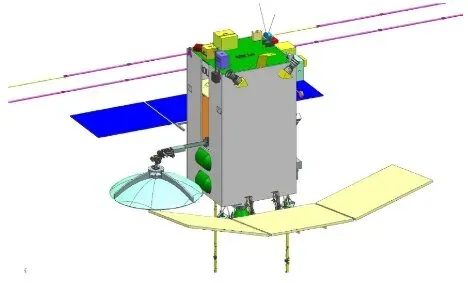
Targeted for launch in March 2028, the Venus Orbiter Mission will study the planet's geology, atmosphere, and ionosphere. The mission will also demonstrate advanced aerobraking and thermal-management technologies — capabilities critical for future deep-space exploration. This makes India only the fourth space agency to attempt a dedicated Venus mission.
Next-generation launch vehicles and reusability
ISRO is developing a 200-tonne thrust semi-cryogenic engine to power more capable launch vehicles with higher payload capacity. A semi-cryogenic booster stage is also being developed for the Launch Vehicle Mark-3 (LVM3), significantly enhancing its payload-carrying capability.
In parallel, ISRO is demonstrating booster recovery through Vertical Take-off and Vertical Landing (VTVL) technology — a step toward rocket-stage reusability and lower launch costs. The agency is also developing a partially reusable Next Generation Launch Vehicle (NGLV) using LOX-Methane propulsion for frequent, cost-effective launches.
Rounding out the roadmap, ISRO is building a Winged Orbital Re-entry Vehicle under its Reusable Launch Vehicle (RLV) programme to demonstrate orbital re-entry and runway landing, alongside an air-breathing propulsion technology demonstrator for more efficient atmospheric flight. Together, these programmes mark India's most ambitious push yet to reduce the cost of access to space and sustain a long-term human presence beyond Earth.
Point of View
But the gap between announcement and execution has historically been wide — Gaganyaan itself was first approved in 2019 and has seen multiple timeline slippages. The ₹20,193 crore outlay is substantial, yet the programme now carries eight missions, a space station, a Venus orbiter, and reusable rocket development simultaneously. Prioritisation and supply-chain depth, not vision, will determine whether 2027 and 2028 deadlines hold. The Venus Orbiter and NGLV together signal that ISRO is no longer content with incremental milestones — but ambition without adequate industrial capacity has tripped the agency before.
NationPress
23 Aug 2026
Frequently Asked Questions
When will India's Gaganyaan crewed mission launch?
The Gaganyaan crewed mission carrying three Indian astronauts to a 400-km orbit is targeted for 2027. A precursor uncrewed flight to validate technologies including the Vyommitra half-humanoid is planned for Q4 2026.
What is the Bharatiya Antariksh Station and when will it be ready?
The Bharatiya Antariksh Station (BAS) is India's planned five-module national space station, designed for long-duration human spaceflight and microgravity research. Its first module, BAS-01, is planned for launch by 2028, with full operationalisation targeted by 2035.
What is India's Venus Orbiter Mission?
The Venus Orbiter Mission, targeted for launch in March 2028, will study Venus's geology, atmosphere, and ionosphere. It will also demonstrate advanced aerobraking and thermal-management technologies for future deep-space missions.
How much has India approved for the Gaganyaan programme?
The Gaganyaan programme carries a total approved outlay of ₹20,193 crore, covering 8 missions in all. The scope was expanded and revised in September 2024 to include precursor flights for the Bharatiya Antariksh Station.
What reusable rocket technologies is ISRO developing?
ISRO is working on multiple fronts: Vertical Take-off and Vertical Landing (VTVL) booster recovery, a partially reusable Next Generation Launch Vehicle (NGLV) using LOX-Methane propulsion, a Winged Orbital Re-entry Vehicle under the RLV programme, and an air-breathing propulsion demonstrator — all aimed at reducing future launch costs.