PM Vishwakarma Yojana transforms Gujarat woman from domestic worker to weaver
Synopsis
A woman from Banaskantha who once washed utensils at neighbours' homes now runs her own stitching unit — after a sewing machine and a ₹1 lakh loan from PM Vishwakarma Yojana changed the equation. Her story is drawing other women in the neighbourhood to explore the scheme, putting a human face on the Centre's artisan empowerment drive.
Key Takeaways
Chitraben Thakkar of Banaskantha, Gujarat , transitioned from domestic work to running a small stitching unit under PM Vishwakarma Yojana .
She received a sewing machine and a loan of ₹1 lakh through the scheme.
The PM Vishwakarma scheme was launched in 2023 to uplift artisans and craftspeople in rural and urban India.
The scheme prioritises women's empowerment and marginalised groups including SCs, STs, OBCs, Specially Abled and Transgender individuals.
Chitraben has urged other women in her neighbourhood to apply for the scheme and pursue financial independence.
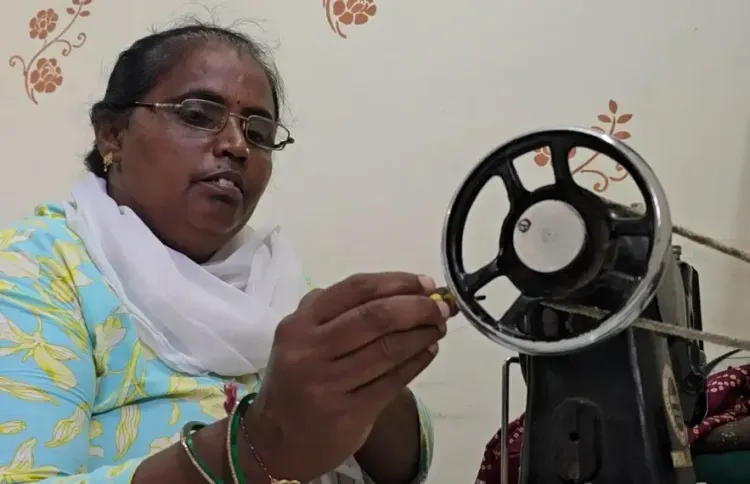
Chitraben Thakkar, a resident of Banaskantha district in Gujarat, once washed utensils at neighbours' homes to sustain her family. Today, she runs a small weaving unit and stitches clothes for income — a transformation she credits entirely to the PM Vishwakarma Yojana, the Centre's flagship scheme for empowering artisans and craftspeople. Her story has become a point of inspiration for women in her neighbourhood, with many hoping to replicate her journey toward financial independence.
From Dependence to Self-Reliance
Chitraben recounted that she once depended on others even for minor personal needs. Financial hardships consistently stood between her and the self-reliance she aspired to. 'My situation was quite dire in the past; I had no idea what the future held, but today, I am standing on my own feet,' she said.
Her turning point came when an acquaintance explained the PM Vishwakarma Yojana to her in detail after learning of her circumstances. Chitraben applied for the scheme and was provided a sewing machine and a loan of ₹1 lakh, which she used to establish her small stitching enterprise.
What the Scheme Provided
Under the yojana, Chitraben received both a physical asset — the sewing machine — and working capital through the ₹1 lakh loan. 'I used the funds from the scheme to purchase this sewing machine, and I also received a loan of one lakh rupees. Thanks to this scheme, I have become self-reliant,' she said. She now earns her own livelihood through stitching and contributes financially to her household.
Expressing gratitude to Prime Minister Narendra Modi, she said: 'I benefited from this scheme, and I am very happy.' She also urged other women in similar situations to come forward and avail the scheme's benefits.
About PM Vishwakarma Yojana
The PM Vishwakarma scheme was launched in 2023 with the stated objective of uplifting artisans and craftspeople by enhancing their skills and expanding the reach of their products and services. The scheme's core focus is on traditional trades in both rural and urban areas. It places special emphasis on women's empowerment and on marginalised or underserved groups, including Scheduled Castes, Scheduled Tribes, Other Backward Classes (OBCs), Specially Abled persons, and Transgender individuals.
Ripple Effect in Banaskantha
Chitraben's success has drawn attention beyond her immediate household. Women in her neighbourhood are reportedly watching her journey closely, with several expressing interest in applying for the scheme themselves. She has actively encouraged them, hoping that the welfare programme can replicate its impact across more households in the district.
Stories like Chitraben's offer ground-level evidence of the scheme's reach, even as the broader question of scale — how many beneficiaries have achieved sustained income growth — remains a measure to watch as the programme matures.
Point of View
However authentic, are not impact data. The PM Vishwakarma Yojana now needs to surface aggregate numbers: how many of its beneficiaries have crossed a sustainable income threshold, and how many loans are being repaid? Without that layer of accountability, success stories risk functioning as PR rather than policy evidence.
NationPress
20 Nov 2026
Frequently Asked Questions
What is the PM Vishwakarma Yojana?
The PM Vishwakarma Yojana is a Central government scheme launched in 2023 to uplift artisans and craftspeople by enhancing their skills and expanding the reach of their products. It supports traditional trades in rural and urban areas with a focus on women's empowerment and marginalised communities including SCs, STs, OBCs, Specially Abled persons, and Transgender individuals.
What benefits did Chitraben Thakkar receive under the scheme?
Chitraben Thakkar of Banaskantha, Gujarat, received a sewing machine and a loan of ₹1 lakh under the PM Vishwakarma Yojana. She used these to establish a small stitching unit, enabling her to earn an independent livelihood and contribute financially to her family.
Who is eligible for the PM Vishwakarma Yojana?
The scheme targets artisans and craftspeople engaged in traditional trades, with special focus on women and underserved groups such as Scheduled Castes, Scheduled Tribes, Other Backward Classes, Specially Abled persons, and Transgender individuals, in both rural and urban areas.
How did the PM Vishwakarma scheme change Chitraben's life?
Chitraben, who previously worked as a domestic helper washing utensils at neighbours' homes, used the scheme's sewing machine and ₹1 lakh loan to start her own stitching enterprise. She says the scheme gave her the opportunity to become financially self-reliant and no longer depend on others.
When was the PM Vishwakarma Yojana launched?
The PM Vishwakarma Yojana was launched in 2023 by the Central government. Its primary goal is to empower traditional artisans and craftspeople by improving their skills, providing tools and credit support, and expanding the market reach of their products and services.