Hormuz closure drives input cost surge, CPI inflation under pressure: Crisil

Synopsis
For the first time in 44 months, Crisil's input-output ratio has crossed 1.0 — a historically reliable early warning of consumer price inflation. With crude oil up 49.3%, copper 17.3%, and aluminium 20.6% in April alone, and the Strait of Hormuz still disrupting supply chains, the cost pressure on Indian manufacturers — and ultimately consumers — is only beginning to show up in retail prices.
Key Takeaways
Crisil warned on 27 May 2026 that input costs will remain elevated even after the Strait of Hormuz reopens, putting upward pressure on core CPI .
WPI inflation jumped to 8.3% in April 2026 , up from 3.9% in March; non-food WPI surged to 10.9% .
Crisil's input-output ratio crossed 1.0 in April for the first time in 44 months , last seen during the Russia-Ukraine conflict in March 2022 .
Crude oil-related input prices spiked 49.3% , aluminium rose 20.6% , and copper surged 17.3% in April.
Manufacturers currently have room to pass on costs given steady domestic demand, but sustained transmission into retail prices could complicate RBI policy.
A Crisil report released on Wednesday, 27 May 2026 has warned that input costs for Indian manufacturers are set to remain elevated throughout the year — even after the Strait of Hormuz reopens — as the ripple effects of the West Asia conflict continue to broaden across commodity categories. The report noted that with domestic demand holding up so far, manufacturers have room to pass on higher costs to consumers, which could place upward pressure on Consumer Price Index (CPI) inflation, particularly core CPI, in the coming months.
Key Developments in Wholesale and Consumer Prices
Wholesale Price Index (WPI) inflation is expected to be the first indicator to reflect the pressure, with consumer prices likely to follow. In fiscal 2026, overall WPI inflation was a modest 0.7%, while non-food WPI stood at 1.1%. However, by April 2026, overall WPI inflation had surged to 8.3% — up sharply from 3.9% in March — while non-food WPI jumped to 10.9% from 4.7%.
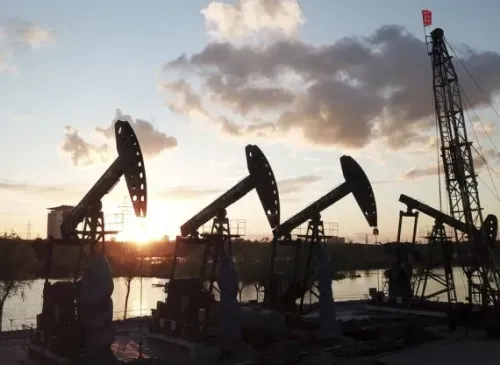
Within specific categories, the price acceleration was stark: copper prices surged 17.3%, aluminium rose 20.6%, crude oil-related inputs spiked 49.3%, and gas-related inputs climbed 19.1% in April, according to the report.
Crisil's Input-Output Ratio Crosses Critical Threshold
Crisil's input-output ratio, derived from WPI data, crossed the 1.0 mark in April 2026 — the first time it has done so in 44 consecutive months. The ratio stood at 1.02, driven by a 6.2% month-on-month rise in input prices against a comparatively muted 0.7% increase in output prices. The last time this ratio breached the 1.0 threshold was in March 2022, in the wake of the Russia-Ukraine conflict, and it remained elevated for five months thereafter.
This signals that manufacturers are absorbing more cost than they are recovering through pricing — a dynamic that historically precedes a broader consumer price uptick.
What Is Driving the Cost Surge
The report attributed the sharp rise in input costs primarily to higher energy prices — particularly for crude petroleum, natural gas, and mineral oils — alongside elevated manufacturing costs across steel, basic chemicals, fertilisers, plastics, synthetic rubber, man-made fibres, plastic products, non-ferrous metals, and other non-metallic mineral products.
Notably, some critical inputs had already been under pressure before the current conflict. Copper prices rose 8.7% on average in fiscal 2026 — above their decadal average of 7.8% — while aluminium climbed 6.5%, exceeding its decadal average of 5.4%.
The Hormuz Factor and Its Broader Impact
The Crisil report described the West Asia conflict as having 'sparked the largest oil shock the world has seen so far,' with the closure of the Strait of Hormuz amplifying the shock beyond oil to a wider set of input categories. 'The closure of the Strait of Hormuz has only broadened the shock to other input categories even as manufacturers are already grappling with higher costs from critical inputs such as copper and aluminium,' the report stated.
This comes amid a period when Indian manufacturers had largely benefited from subdued global commodity prices, allowing them to keep output prices in check. That buffer appears to have eroded sharply in the April data.
What Comes Next for Inflation
With input costs expected to remain sticky even post-Hormuz reopening, analysts will closely watch the transmission into retail prices over the next two to three months. A sustained rise in core CPI would complicate the Reserve Bank of India's (RBI) monetary policy calculus, particularly if it coincides with any demand-side pressures. The trajectory of global energy prices and the duration of the Hormuz disruption will be pivotal in determining how much of the wholesale cost surge eventually lands on Indian consumers.
Point of View
Indian manufacturers absorbed global commodity softness and kept output prices subdued, giving the RBI room to manoeuvre. That cushion is now gone. What makes this episode more dangerous than March 2022 is the breadth: it is not just oil, it is copper, aluminium, chemicals, and fertilisers simultaneously. If domestic demand holds and manufacturers begin passing costs through in earnest, the RBI's rate-cut cycle could stall or reverse at exactly the wrong moment for growth. The Hormuz reopening, whenever it comes, will ease energy prices at the margin — but the second-order effects on industrial inputs are already baked in and will take months to unwind.
NationPress
21 Sept 2026
Frequently Asked Questions
What is Crisil's input-output ratio and why does it matter?
Crisil's input-output ratio compares input price inflation to output price inflation using WPI data. When it crosses 1.0, it signals that manufacturers are absorbing more cost than they are recovering through pricing — a reliable precursor to consumer price inflation. It crossed 1.0 in April 2026 for the first time in 44 months.
How much has WPI inflation risen in April 2026?
Overall WPI inflation jumped to 8.3% in April 2026, up sharply from 3.9% in March. Non-food WPI surged even more steeply, rising to 10.9% from 4.7%, driven by crude oil, gas, copper, and aluminium price spikes.
Why is the Strait of Hormuz closure affecting Indian manufacturers?
The Strait of Hormuz is a critical global oil and gas transit route. Its closure has driven crude oil-related input prices up 49.3% and gas-related prices up 19.1% in April 2026 alone, according to Crisil. The shock has also broadened to metals and industrial chemicals, raising costs across multiple manufacturing sectors in India.
Will CPI inflation rise as a result of higher input costs?
The Crisil report indicates that core CPI could face upward pressure in coming months as manufacturers begin passing elevated input costs to consumers. WPI is typically the leading indicator, with consumer prices following with a lag of one to three months.
Which commodities are most affected by the current input cost surge?
Crude oil-related inputs surged 49.3%, aluminium rose 20.6%, gas-related inputs climbed 19.1%, and copper jumped 17.3% in April 2026. Steel, basic chemicals, fertilisers, plastics, synthetic rubber, and non-ferrous metals were also cited as major contributors to the cost rise.