IIT Kanpur startup signs deal for India's first 100% electric compact tractor
Synopsis
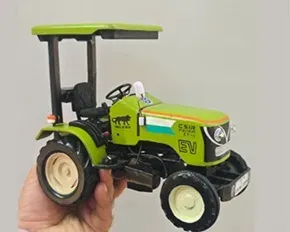
India's first indigenously developed 100% electric compact tractor — built with over 90% local components — is now cleared for commercial rollout after IIT Kanpur's incubated startup ScaNxt signed a technology transfer MoU with CSIR-CMERI and NRDC at Vigyan Tech 2026. With V2L capability and controls designed for women farmers, it targets a gap that diesel mechanisation has never bridged for India's 86% smallholder farming base.
Key Takeaways
ScaNxt Scientific Technologies , incubated at SIIC IIT Kanpur , signed a technology transfer MoU with CSIR-CMERI and NRDC at Vigyan Tech 2026 in New Delhi .
The agreement covers India's first 100 per cent electric compact tractor , developed with over 90 per cent indigenous components .
The tractor features a fully electric drivetrain, Vehicle-to-Load (V2L) functionality, and simplified controls designed for women farmers .
Over 86 per cent of India's farming households operate on less than 2 hectares , the primary target segment for this technology.
ScaNxt will commercialise the tractor under its own brand, focusing on affordable and scalable rural mechanisation.
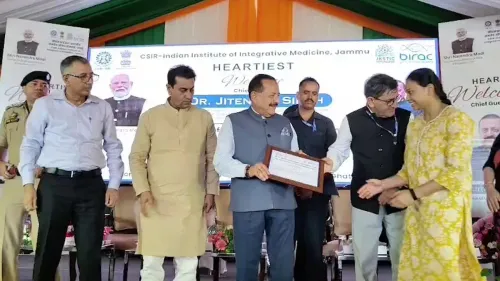
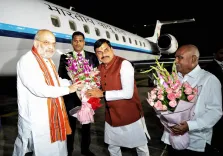
An SIIC IIT Kanpur-incubated startup, ScaNxt Scientific Technologies, has signed a technology transfer agreement with two institutions under the Ministry of Science and Technology for India's first indigenously developed 100 per cent electric compact tractor. The agreement was formalised at the Vigyan Tech 2026 exhibition in New Delhi, marking a significant milestone in the country's agricultural mechanisation journey.
What the Agreement Covers
SIIC IIT Kanpur signed the Memorandum of Understanding (MoU) with CSIR-CMERI and the National Research Development Corporation (NRDC) during the event. Under the pact, ScaNxt Scientific Technologies will commercialise the technology under its own brand, with the stated goal of delivering an affordable, energy-efficient, and scalable mechanisation solution for India's rural economy.
The electric tractor has been developed with over 90 per cent indigenous components, positioning it as a flagship product of India's translational innovation ecosystem — where publicly funded research, startup entrepreneurship, and institutional incubation converge to address national challenges.
Technology and Features
The compact tractor integrates a fully electric drivetrain and Vehicle-to-Load (V2L) functionality capable of powering irrigation pumps and other farm equipment. Its compact operational architecture is suited for smaller landholdings, and its simplified controls have been specifically designed to improve accessibility for women farmers.
'Our Smart Compact EV Tractor will dramatically cut cultivation costs, generate green jobs in rural India, and usher in a new era of precision and prosperous farming,' the ScaNxt team said in a statement.
Why It Matters for Indian Agriculture
India's agricultural economy is heavily dependent on smallholder farmers, with over 86 per cent of farming households operating on less than 2 hectares of land. Conventional diesel-based mechanisation has historically remained economically out of reach for this segment, creating a structural productivity gap across rural India.
This is the first time an indigenously developed, fully electric compact tractor has been cleared for commercial transfer in India. With electric agricultural equipment still at an early stage nationally, the initiative opens pathways for manufacturing, distribution, servicing, and ecosystem development around sustainable rural mobility.
Broader Industry Implications
The development signals the emergence of a new category within India's farm mechanisation landscape. Analysts note that if commercially scaled, such platforms could meaningfully reduce diesel dependency in agriculture — a sector that accounts for a significant share of rural energy consumption. The focus on V2L capability also positions the tractor as a dual-purpose energy asset for off-grid farming communities.
With sectoral interest in agri-tech and clean energy converging, ScaNxt's commercialisation roadmap will be closely watched by both the startup ecosystem and farm equipment manufacturers.
Point of View
But this one carries a structural differentiator: the V2L capability means the tractor doubles as a mobile power source for off-grid farmers — a feature that could matter more than the tractor itself in energy-starved rural pockets. The 90 per cent indigenisation figure is notable in a sector historically dominated by imported drivetrains. The real test, however, is price point: if ScaNxt cannot undercut diesel tractor total cost of ownership within two to three crop cycles, adoption among marginal farmers will remain aspirational. The MoU is a beginning, not a market.
NationPress
3 Oct 2026
Frequently Asked Questions
What is India's first 100% electric compact tractor?
It is an indigenously developed electric tractor built by ScaNxt Scientific Technologies , an IIT Kanpur-incubated startup, with over 90 per cent local components. It features a fully electric drivetrain, V2L functionality for powering farm equipment, and controls designed for small and marginal farmers, including women farmers.
Who signed the technology transfer agreement for the electric tractor?
SIIC IIT Kanpur signed an MoU with CSIR-CMERI and the National Research Development Corporation (NRDC) at the Vigyan Tech 2026 exhibition in New Delhi. ScaNxt Scientific Technologies will commercialise the technology under its own brand.
Why is this electric tractor significant for Indian farmers?
Over 86 per cent of India's farming households operate on less than 2 hectares of land, and conventional diesel tractors have historically been unaffordable for this segment. The electric compact tractor is designed specifically for small landholdings, with the potential to reduce cultivation costs and improve energy access in rural areas.
What is Vehicle-to-Load (V2L) functionality in this tractor?
V2L allows the tractor's battery to supply electricity to external devices such as irrigation pumps and farm equipment. This makes the tractor a dual-purpose asset — both a field machine and a mobile power source — particularly valuable for off-grid farming communities.
When will the electric tractor be commercially available?
The MoU signed at Vigyan Tech 2026 initiates the commercialisation process. A specific launch date or production timeline has not been disclosed in the announcement; ScaNxt is expected to develop its commercial rollout roadmap following the technology transfer.