India takes on end-to-end chip development as global firms shift semiconductor work
Synopsis
India is no longer just a support function in global chip development — it is becoming the principal address for full-cycle semiconductor programmes. With engineering talent shortages biting in the US, Japan, and Europe, global firms are handing Indian teams everything from chip architecture to final testing, in a shift that could redefine where the world's next generation of ASICs and SoCs is built.
Key Takeaways
Global firms from the US , Japan , Malaysia , Vietnam , and Europe are now entrusting Indian engineering teams with complete semiconductor development programmes.
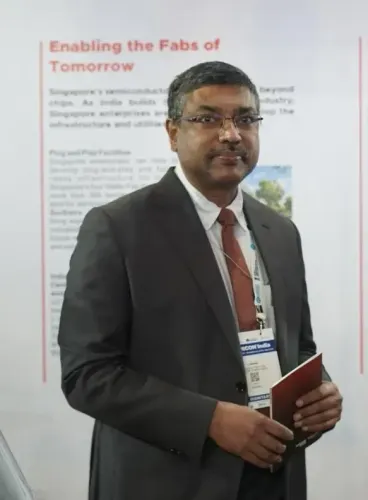
Richard Bergman , President and Global Business Head for Semiconductors at Quest Global , confirmed the shift from discrete component work to full end-to-end chip development.
The transition covers customised chips including ASICs and SoCs , requiring tight architecture-design collaboration from early development stages.
A shortage of experienced semiconductor engineers in major global markets is a primary driver pushing work toward India.
Industry-led programmes, including those run by Quest Global , are working to bridge the gap between academic education and semiconductor industry requirements.
The trend strengthens India's position in the global semiconductor value chain alongside the Centre's broader India Semiconductor Mission push.
India is rapidly becoming a preferred destination for complete semiconductor development programmes, with global companies across the US, Japan, Malaysia, Vietnam, and Europe now entrusting Indian engineering teams with the full spectrum of chip work — from architecture and physical design through to testing and validation. The shift marks a significant departure from India's traditionally supporting role in the global semiconductor value chain.
From Components to Complete Programmes
Historically, Indian engineering teams were brought in to handle discrete, well-defined tasks — designing a specific block within a chip, or running validation suites at the tail end of a development cycle. That model is changing fast, according to Richard Bergman, President and Global Business Head for Semiconductors at Quest Global. Bergman said global customers are now seeking to have entire chip development programmes executed in India, encompassing architecture, physical design, and testing as a unified, end-to-end workflow.
The transition is particularly significant for customised chip categories such as application-specific integrated circuits (ASICs) and systems-on-chips (SoCs), where tight integration between architecture and design teams from the earliest stages of the cycle is critical to accelerating innovation. Bergman noted that this close collaboration enables companies to convert chip concepts into commercially viable silicon products more efficiently.
The Talent Shortage Driving the Shift
One of the central forces behind the transition is an acute shortage of experienced semiconductor engineers in several major markets. Companies in the US, Japan, Malaysia, Vietnam, and Europe are reportedly finding it increasingly difficult to recruit skilled talent at the pace their chip programmes demand. India, by contrast, offers access to a large and growing engineering workforce underpinned by a steady pipeline of engineering graduates each year.
Bergman described India's talent base as providing a 'strong pipeline' for the semiconductor industry, positioning the country as an attractive hub for global firms seeking to scale chip design and development operations without the recruitment bottlenecks seen elsewhere.
Bridging the Industry-Academia Gap
Even as India's talent pool expands, Bergman stressed that raw graduate numbers are not enough. He highlighted the need for industry-led initiatives to bridge the gap between academic education and the specific, hands-on requirements of semiconductor careers. Quest Global and several peer companies have reportedly established structured programmes to prepare graduates for immediate productive roles in chip development teams.
This comes amid a broader global push to diversify semiconductor supply chains following the disruptions of recent years, with governments and private players alike investing in talent development as a strategic priority.
What This Means for India's Semiconductor Ambitions
The trend reinforces India's growing stature in the global semiconductor ecosystem, complementing the Centre's push to attract chip fabrication and design investments through schemes such as the India Semiconductor Mission. While fabrication capacity — the physical manufacturing of chips — remains nascent in India, the country's design and development capabilities are evidently earning the confidence of global customers at scale.
As demand for specialised semiconductors continues to rise worldwide, India's expanding role in full-cycle chip development could prove a durable competitive advantage — provided the talent pipeline and industry-academia alignment keep pace with accelerating global expectations.
Point of View
Where global firms are quietly transferring end-to-end programme ownership to Indian teams. This is not charity; it is driven by hard talent economics in the US, Japan, and Europe. The risk India must manage is commoditisation — being the low-cost execution arm rather than the innovation originator. Unless India builds IP ownership and not just engineering capacity, the country risks replicating in semiconductors what happened in IT services: valuable but structurally dependent on decisions made elsewhere.
NationPress
20 Nov 2026
Frequently Asked Questions
What does end-to-end semiconductor development in India mean?
It means Indian engineering teams are now responsible for the entire chip development lifecycle — from initial architecture and physical design through to testing and validation — rather than handling only specific components or late-stage tasks as was traditionally the case.
Which companies and countries are driving this shift?
Global firms from the US, Japan, Malaysia, Vietnam, and Europe are increasingly routing full semiconductor development programmes to India, according to Quest Global's Richard Bergman. Quest Global itself is among the firms facilitating this transition.
Why are global firms moving chip development work to India?
A key driver is an acute shortage of experienced semiconductor engineers in major markets such as the US, Japan, and Europe. India's large and growing engineering talent base, supported by a steady flow of graduates, makes it an attractive alternative for scaling chip design operations.
What types of chips are being developed end-to-end in India?
The shift is particularly significant for customised chip categories such as application-specific integrated circuits (ASICs) and systems-on-chips (SoCs), where integrated architecture and design collaboration is essential to accelerating development timelines.
How is the semiconductor industry addressing the talent readiness gap in India?
Companies including Quest Global have established industry-led programmes specifically designed to prepare engineering graduates for semiconductor careers, bridging the gap between academic curricula and the hands-on skills required by chip development teams.