India needs whole-of-industry approach to build global semiconductor hub
Synopsis
At SEMICON India 2026, with 600-plus exhibitors and 56 MoUs signed, industry leaders delivered a frank message: India's semiconductor ambitions cannot be realised by individual associations working in silos. With five commercial units operational and 12 projects approved, the infrastructure is taking shape — but the missing piece is structured, cross-value-chain collaboration at industry level.
Key Takeaways
SEMICON India 2026 drew over 600 exhibitors , including nearly 300 international companies , in New Delhi .
The event saw 56 MoUs and announcements across manufacturing, design, packaging, AI, R&D, logistics, and skilling.
Industry experts called for a whole-of-industry approach and the creation of a permanent cross-association dialogue mechanism.
As of September 2026 , 5 commercial semiconductor units are operational under the Semicon India programme , with 12 projects approved in total.
The 'Silicon to Systems' vision — integrating design, fabrication, packaging, and electronics — was reaffirmed as the guiding framework.
India's electronics and semiconductor sector must shift to a coordinated whole-of-industry approach to convert growing investments and expanding capacities into a globally competitive ecosystem, industry experts said on Wednesday, 23 September 2026, according to an official fact sheet released during SEMICON India 2026 in New Delhi. The call marks a pivotal moment for a sector that experts say is now growing at an 'unprecedented pace.'
Key Developments at SEMICON India 2026
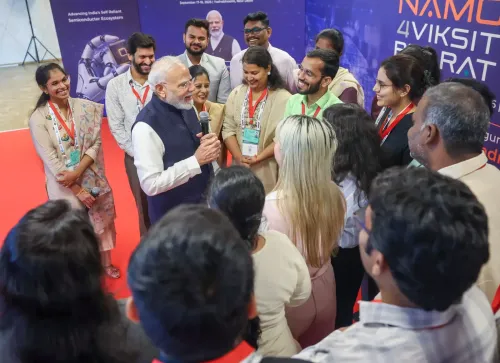
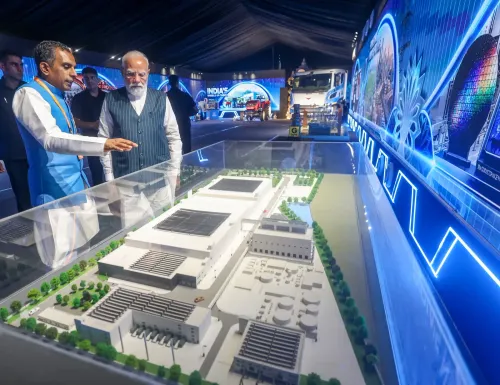
The flagship semiconductor event drew over 600 exhibitors, including nearly 300 international companies, underscoring deepening global interest in India's chip and electronics ecosystem. The event also witnessed 56 MoUs, strategic initiatives, and industry announcements spanning manufacturing, design, packaging, artificial intelligence, R&D, logistics, and skilling.
Industry leaders representing different segments of the ecosystem — semiconductors, electronics manufacturing, components, materials, design, packaging, and end-use applications — acknowledged that while their associations operate independently, they are converging on a single national objective: building a world-class electronics and semiconductor sector in India.
The 'Silicon to Systems' Vision
A central theme across discussions was the increasing technological interdependence across the value chain. According to experts cited in the official statement, 'Chips derive value not in isolation but through their integration into devices, products and systems. Advances in fabrication rely on supporting materials and equipment, while manufacturing depends on packaging, testing and broader electronics capabilities.'
This interconnected reality reinforced the broader 'Silicon to Systems' framework, where design, fabrication, packaging, electronics, and technology solutions must operate in tandem. Notably, industry leaders also explored the creation of a permanent community mechanism to facilitate continuous dialogue and drive collective action on matters of national importance — a step beyond existing association-level coordination.
Government Push and Operational Milestones
The government's Production-Linked Incentive (PLI) schemes and the India Semiconductor Mission have been credited with strengthening domestic capabilities. As of September 2026, the government has approved 12 semiconductor projects under the Semicon India programme, with five commercial semiconductor units already operational — a concrete sign that policy intent is beginning to translate into physical infrastructure.
What Industry Leaders Are Calling For
Experts stressed that the next stage of growth cannot be driven by any single segment alone. Existing associations, they said, must build on their individual strengths while creating a common platform for cross-sectoral collaboration — particularly on issues that cut across value chains. The call for structured inter-association coordination reflects a maturing industry that is moving beyond early-stage capacity building toward systemic competitiveness.
What Comes Next
With global companies increasing their India presence and investments accelerating, the pressure is now on industry bodies, policymakers, and ecosystem players to institutionalise collaboration rather than leave it to bilateral or event-driven engagement. How quickly India can operationalise the remaining approved semiconductor projects — and whether the proposed permanent community mechanism takes shape — will be the key indicators to watch in the months ahead.
Point of View
But it is also a reminder of how far the country still has to go relative to Taiwan, South Korea, or even Vietnam on electronics integration. The proposed permanent community mechanism sounds promising, but India has a long history of forming committees as a substitute for action. The real test will be whether the 56 MoUs signed at this event translate into operational linkages — or remain conference-circuit commitments. Without a binding coordination framework, the 'Silicon to Systems' vision risks staying a slogan.
NationPress
23 Sept 2026
Frequently Asked Questions
What is the 'whole-of-industry approach' being advocated for India's semiconductor sector?
It refers to a coordinated framework where all segments of the electronics and semiconductor value chain — including semiconductors, components, materials, design, packaging, and end-use applications — collaborate rather than operating in silos. Industry leaders at SEMICON India 2026 stressed this is essential for India to become globally competitive.
What is SEMICON India 2026 and why does it matter?
SEMICON India 2026 is India's flagship semiconductor and electronics industry event, held in New Delhi. The 2026 edition drew over 600 exhibitors including nearly 300 international companies, and saw 56 MoUs and strategic announcements, signalling growing global confidence in India's chip ecosystem.
How many semiconductor projects has the Indian government approved under the Semicon India programme?
The government has approved 12 semiconductor projects under the Semicon India programme, with five commercial semiconductor units already operational as of September 2026.
What is the 'Silicon to Systems' vision?
'Silicon to Systems' is the guiding framework under which India aims to integrate chip design, fabrication, packaging, electronics manufacturing, and technology solutions into a single, resilient value chain. It was a recurring theme at SEMICON India 2026.
What role do PLI schemes play in India's semiconductor ambitions?
The Production-Linked Incentive (PLI) schemes, along with the India Semiconductor Mission, are the primary policy tools strengthening domestic manufacturing capabilities. They incentivise production milestones and have been instrumental in attracting both domestic and international investment into India's semiconductor ecosystem.