India's 500 GW renewable energy target by 2030 on track: MNRE Secretary
Synopsis
India's top renewable energy bureaucrat has publicly reaffirmed the 500 GW by 2030 goal — but his careful silence on new PLI schemes and the future of PM Surya Ghar signals that the government is still working through its post-budget policy calculus. The message: confidence in the target, uncertainty on the instruments.
Key Takeaways
MNRE Secretary Santosh Kumar Sarangi confirmed India is on track for 500 GW of renewable energy capacity by 2030 .
Schemes PM Surya Ghar Muft Bijli Yojana and PM-KUSUM credited for driving distributed renewable adoption at household and agricultural levels.
Sarangi noted policy alternatives to PLI — including Basic Customs Duty adjustments and the ALMM framework — are available to support domestic manufacturing.
He declined to comment on new sectoral incentive schemes or the forthcoming Union Budget .
The future of the PM Surya Ghar scheme beyond the current financial year remains unconfirmed, with discussions described as ongoing.
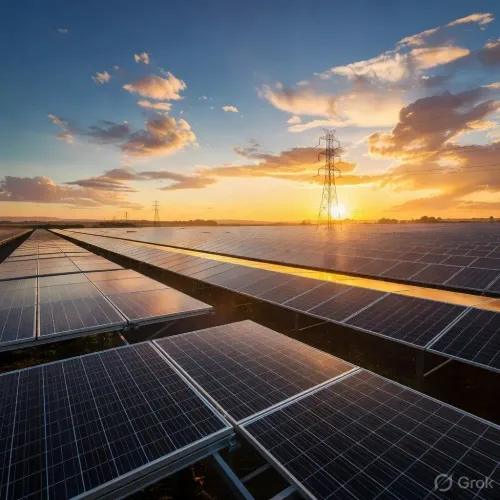
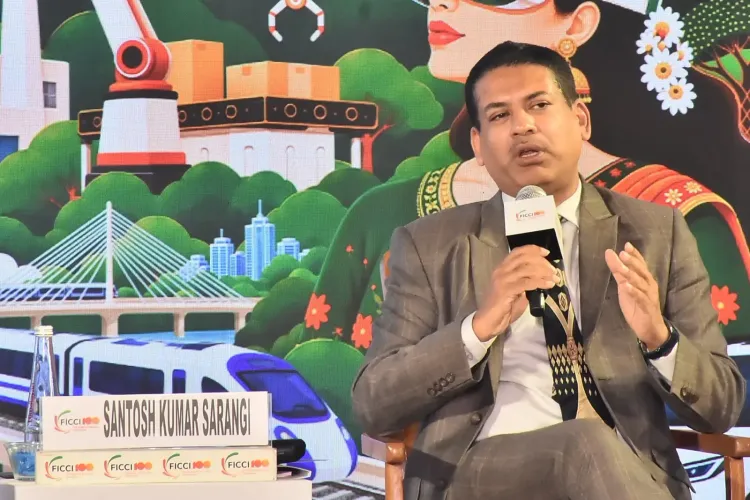
India is firmly on course to meet its landmark target of 500 GW of renewable energy capacity by 2030, MNRE Secretary Santosh Kumar Sarangi said on Wednesday, 18 November 2026, citing rapid sectoral growth, sustained policy support, and flagship government schemes. His remarks came on the sidelines of FICCI's Annual General Meeting in New Delhi.
Key Developments
Sarangi expressed confidence in the government's clean energy roadmap, pointing to significant capacity additions over recent years as evidence that the country is on a credible trajectory. He credited policy stability and deliberate market-development efforts for creating a conducive environment for renewable energy investments across India.
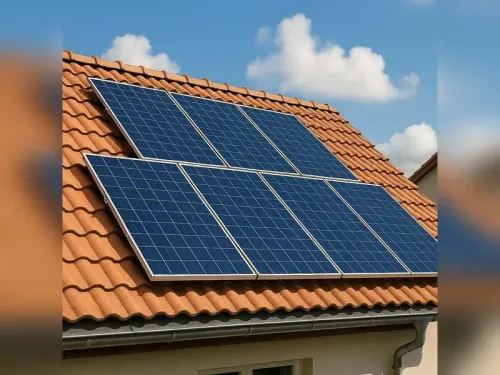
Among the programmes he highlighted were PM Surya Ghar Muft Bijli Yojana and PM-KUSUM, both of which, he said, have accelerated the uptake of distributed renewable generation at the household and agricultural levels. These schemes, he argued, are strengthening India's broader transition towards a cleaner energy mix.
Beyond PLI: Other Policy Tools in Play
On the question of industrial incentives, Sarangi made a notable observation: government support for a sector need not always flow through a Production-Linked Incentive (PLI) programme. He pointed to a wider toolkit available to policymakers, including adjustments to Basic Customs Duty (BCD), the Approved List of Models and Manufacturers (ALMM) framework, and various regulatory interventions designed to bolster domestic manufacturing competitiveness and local production.
Sarangi, however, declined to indicate whether any new incentive schemes were under active consideration for specific sectors, and explicitly refrained from commenting on matters related to the forthcoming Union Budget — a signal that policy options remain fluid.
PM Surya Ghar's Future Remains Open
When asked about the continuation of the PM Surya Ghar scheme beyond the current financial year, Sarangi did not offer a direct answer, suggesting instead that discussions and planning on the matter are still ongoing. The scheme, which subsidises rooftop solar installations for households, has been one of the government's most visible clean energy retail-facing programmes.
Why This Matters
India's 500 GW renewable energy target by 2030 is a cornerstone of its commitments under the Paris Agreement, representing one of the most ambitious clean energy pledges among major economies. This comes amid growing global scrutiny of countries' actual progress against climate pledges in the lead-up to future COP reviews. Notably, India's installed renewable capacity has grown rapidly in recent years, though analysts have flagged that the pace of grid integration, storage infrastructure, and distribution reform must keep up for the target to translate into usable, clean power.
With budget discussions underway and the renewable sector watching for signals on PLI extensions and customs duty structures, Sarangi's carefully worded remarks suggest the government is weighing its options without tipping its hand ahead of fiscal decisions.
Point of View
But the more telling signal is what he did not say. Declining to confirm whether PM Surya Ghar continues beyond this financial year — and staying silent on new PLI or customs duty moves ahead of the Budget — suggests the renewable sector's policy scaffolding is under review. India's 500 GW target is achievable on paper, but grid absorption, storage buildout, and distribution utility finances remain the unglamorous bottlenecks that no FICCI podium address fully resolves. The pivot from PLI to BCD and ALMM levers is worth watching: it may signal a more demand-side, rather than supply-side, approach to building a domestic clean energy manufacturing base.
NationPress
18 Nov 2026
Frequently Asked Questions
Is India on track to achieve its 500 GW renewable energy target by 2030?
Yes, according to MNRE Secretary Santosh Kumar Sarangi , India is firmly on course to meet its 500 GW renewable energy capacity target by 2030 . He cited rapid sectoral growth, sustained policy support, and flagship schemes as the key drivers behind the country's progress.
What are PM Surya Ghar and PM-KUSUM schemes?
PM Surya Ghar Muft Bijli Yojana is a central government scheme that subsidises rooftop solar installations for households, aiming to generate free electricity for beneficiary families. PM-KUSUM targets the agricultural sector, supporting farmers in adopting solar-powered irrigation pumps and promoting distributed clean energy generation.
Will the PM Surya Ghar scheme continue beyond the current financial year?
This remains unclear. MNRE Secretary Sarangi did not provide a direct answer on the scheme's continuation, stating only that discussions and work on the matter are ongoing. No formal announcement has been made.
Why is the government considering alternatives to PLI schemes for renewable energy?
Sarangi noted that government support for a sector does not have to flow exclusively through PLI programmes. Alternatives such as Basic Customs Duty (BCD) adjustments and the Approved List of Models and Manufacturers (ALMM) framework offer policymakers flexibility to support domestic manufacturing and strengthen industry competitiveness without direct production-linked cash incentives.
What is India's 500 GW renewable energy target and why is it significant?
India has committed to achieving 500 GW of non-fossil fuel-based installed power capacity by 2030 as part of its updated Paris Agreement pledges. It is one of the most ambitious clean energy targets among major economies and is central to India's strategy for reducing carbon emissions while meeting rising electricity demand.