KOSPI falls for 2nd day as oil-driven inflation fears lift US yields
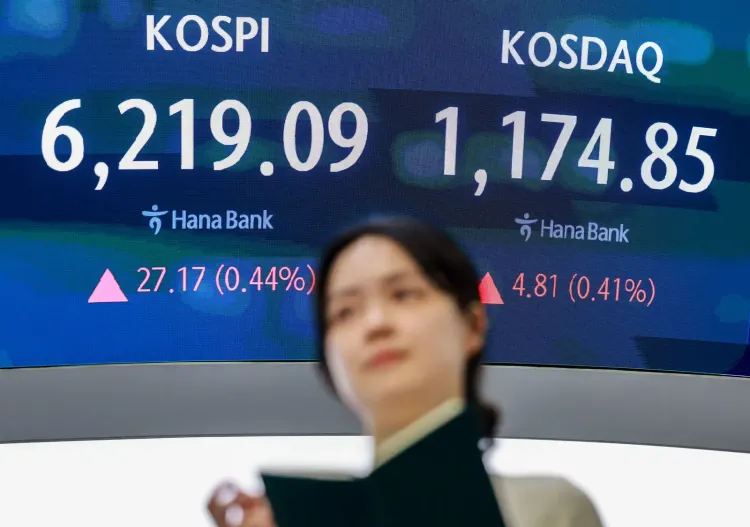
Synopsis
South Korea's KOSPI posted back-to-back losses on 29 September as the US-Iran standoff drove crude oil higher, pushed 10-year US Treasury yields to 5.23 percent, and triggered a broad foreign selloff. LG Energy Solution shed over 3 percent, and with yields at multi-year peaks, the pressure on Asia's export-driven markets is far from over.
Key Takeaways
KOSPI fell 18.93 points (0.27%) to close at 6,870.81 on 29 September 2026 — its second consecutive decline.
Rising crude oil prices, linked to US-Iran tensions , stoked inflation fears and pushed the US 10-year Treasury yield to 5.23 percent .
Foreign investors were net sellers of 2.9 trillion won ; trade volume was light at 210.06 million shares .
LG Energy Solution sank 3.16% and Hyundai Motor fell 1.27% , while Samsung Electronics gained 0.93% .
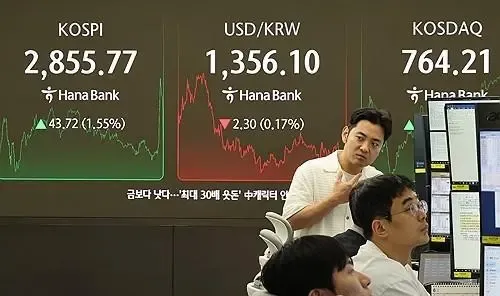
The Korean won strengthened to 1,356.7 won per US dollar as of 3:30 pm local time .
Domestic bond yields edged lower, with the five-year yield falling 6.9 basis points to 4.276 percent .
South Korea's benchmark Korea Composite Stock Price Index (KOSPI) declined for a second consecutive session on Tuesday, 29 September 2026, shedding 18.93 points, or 0.27 percent, to close at 6,870.81, as surging oil prices stoked inflation fears and drove US Treasury yields to multi-year highs amid escalating Middle East tensions. The Korean won, however, edged higher against the US dollar.
How the Session Unfolded
The index opened 0.19 percent lower and extended losses through afternoon trading as foreign and institutional investors offloaded local shares. Trade volume was relatively light at 210.06 million shares valued at 17.99 trillion won (approximately US$13.26 billion), with declining stocks vastly outnumbering advancers at 622 to 231.
Foreigners were net sellers, offloading a net 2.9 trillion won worth of shares. Individuals and institutions moved in the opposite direction, absorbing a net 1.14 trillion won and 121.06 billion won, respectively.
What Triggered the Selloff
The proximate cause was a sharp overnight retreat on Wall Street, driven by renewed US-Iran tensions that pushed crude oil prices higher for a second straight day. Higher energy costs have rekindled fears that inflation — already proving stubborn — could remain elevated for longer, keeping central bank interest rates high.
The ripple effect hit bond markets hard. The US 10-year Treasury yield climbed to 5.23 percent, while the 30-year yield rose to 5.55 percent, both hovering around multi-year peaks. Elevated US yields reduce the relative attractiveness of emerging-market equities, triggering capital outflows.
Lee Kyoung-min, an analyst at Daishin Securities, summed up the mood: 'The local stock market was bearish as rising US Treasury yields weighed on investor sentiment, while renewed gains in global oil prices further dampened risk appetite.'
Market Heavyweights Split
Blue-chip performance was mixed. Samsung Electronics, the index's biggest constituent, bucked the trend and gained 0.93 percent to close at 272,500 won. Rival chipmaker SK Hynix edged down 0.17 percent to 1.76 million won.
Among the notable decliners, Hyundai Motor fell 1.27 percent to 350,000 won, while battery manufacturer LG Energy Solution was among the hardest hit, sinking 3.16 percent to 352,500 won — underscoring the vulnerability of energy-transition stocks to an oil-price shock.
Currency and Bond Markets
The Korean won strengthened by 3.2 won to trade at 1,356.7 won per US dollar as of 3:30 pm local time. South Korean bond prices closed higher as investors made selective safe-haven moves domestically: the yield on three-year government bonds fell 4.3 basis points to 4.076 percent, while the five-year benchmark yield dropped 6.9 basis points to 4.276 percent.
What to Watch Next
With US Treasury yields at multi-year highs and Middle East supply risks unresolved, traders will closely monitor any escalation in the US-Iran standoff and forthcoming US inflation data for direction. A sustained crude rally would put further pressure on rate-sensitive sectors across Asian markets, including South Korea's export-heavy economy.
Point of View
The risk-free rate in the world's reserve currency is high enough to make emerging-market equities look comparatively unattractive — and that structural pressure will not ease until the Fed signals a credible pivot. South Korea is particularly exposed: its export giants face a double hit of softer global demand and higher domestic borrowing costs. The divergence between Samsung's modest gain and LG Energy Solution's sharp fall also hints at a broader repricing of the clean-energy premium as fossil fuel prices reassert themselves.
NationPress
29 Sept 2026
Frequently Asked Questions
Why did the KOSPI fall on 29 September 2026?
The KOSPI fell 18.93 points to 6,870.81, its second consecutive decline, as rising oil prices driven by US-Iran tensions fuelled inflation fears and pushed US Treasury yields to multi-year highs. Elevated US yields dampened risk appetite among foreign investors, who sold a net 2.9 trillion won of South Korean shares.
How high did US Treasury yields climb and why does it matter for Korea?
The US 10-year Treasury yield rose to 5.23 percent and the 30-year yield climbed to 5.55 percent, both near multi-year highs. Higher US yields make dollar-denominated assets more attractive relative to emerging-market equities like those on the KOSPI, prompting capital outflows from South Korea.
Which South Korean stocks were hardest hit?
LG Energy Solution was the biggest blue-chip decliner, sinking 3.16 percent to 352,500 won. Hyundai Motor fell 1.27 percent to 350,000 won. Samsung Electronics was an exception, gaining 0.93 percent to 272,500 won.
How did the Korean won perform?
The Korean won strengthened by 3.2 won to trade at 1,356.7 won per US dollar as of 3:30 pm local time on 29 September, even as equities came under pressure.
What should investors watch in the coming sessions?
Key factors to monitor include any escalation in the US-Iran standoff, the trajectory of global crude oil prices, and upcoming US inflation data. Sustained high energy costs and elevated Treasury yields could keep selling pressure on South Korean equities, particularly in rate-sensitive and energy-transition sectors.