Electric mobility a 'strategic imperative' for Viksit Bharat 2047: NITI Aayog
Synopsis
India imports nearly 89% of its crude oil — and NITI Aayog’s Rajiv Gauba used the launch of the India Electric Mobility Index to frame EV adoption not as a green aspiration but as a national security and economic necessity. With ₹92,000 crore already committed and 29 of 36 states having notified EV policies, the policy scaffolding is in place. The harder question is whether execution can match ambition before 2047.
Key Takeaways
NITI Aayog member Rajiv Gauba called electric mobility an “economic, environmental, and strategic imperative” for Viksit Bharat 2047 on 16 September .
29 of India’s 36 States and Union Territories have notified EV policies; the highest IEMI state score rose from 77 to 84 and the median from 36 to 40 in one year.
India imports nearly 89% of its crude oil, making EV adoption critical to reducing energy vulnerability.
The automotive sector contributes 7.1% of GDP and supports 1.9 crore jobs , underlining the economic stakes of the EV transition.
Government EV support totals over ₹92,000 crore through FAME, PM E-DRIVE, PM E-bus Sewa, and two PLI schemes.
The newly launched Unified Bharat e-Charge app aims to improve charging accessibility nationwide.
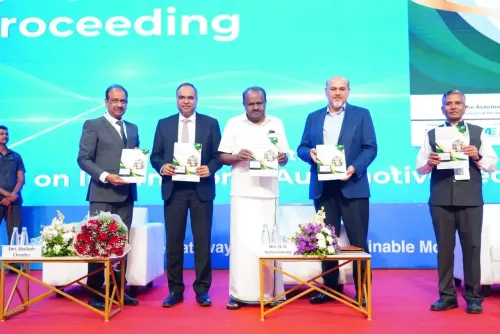
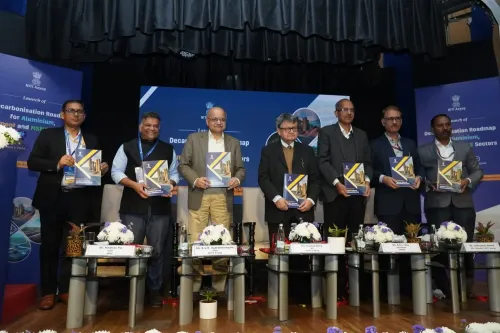
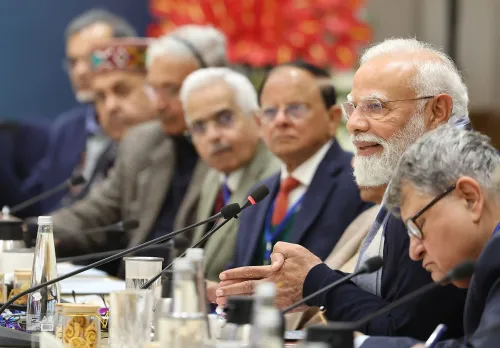
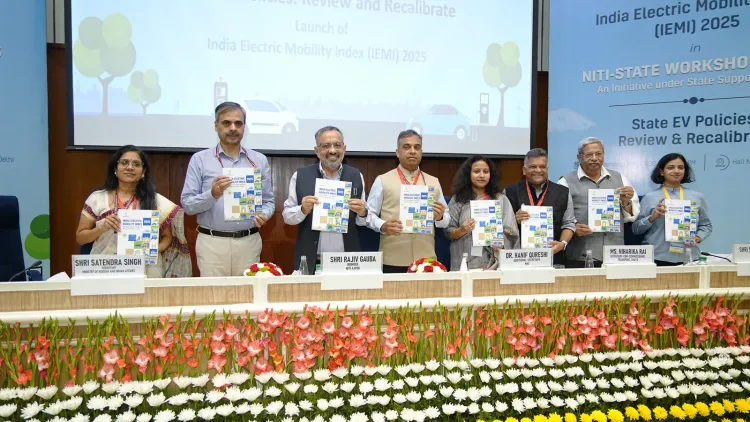
NITI Aayog member Rajiv Gauba on Wednesday, 16 September declared electric mobility an “economic, environmental, and strategic imperative” for India’s Viksit Bharat 2047 vision, speaking at the launch of the second edition of the India Electric Mobility Index (IEMI) report in New Delhi. His remarks came during a NITI Aayog Workshop on State EV Policies, where he underscored that the global shift to electric vehicles is already well underway and that India cannot afford to be left behind.
India’s EV Policy Landscape
Gauba noted that 29 of India’s 36 States and Union Territories have now formally notified EV policies — a significant expansion in regulatory coverage. IEMI scores reflect broad-based improvement across states, with the highest state score rising from 77 to 84 and the median score climbing from 36 to 40 over the past year alone. This progress signals growing administrative momentum, even as implementation gaps persist in several regions.
The Oil Dependence Argument
A central theme of Gauba’s address was India’s acute vulnerability to global crude markets. India currently imports nearly 89 per cent of its crude oil requirements, he said, warning that rising car ownership will deepen that dependence unless electric vehicles are adopted at scale. The automotive sector, he added, contributes approximately 7.1% of GDP and supports close to 1.9 crore jobs — making alignment with the global EV transition not just an environmental choice but an economic one. He also pointed to the significant public health burden of vehicular emissions in cities such as Delhi, where air quality remains a persistent crisis.
Global EV Trends and the West Asia Factor
Drawing on international comparisons, Gauba highlighted that electric cars accounted for roughly one-tenth of new car sales in the United States in 2025, more than a quarter in the European Union, and over half in China — with all three shares projected to rise sharply in the years ahead. He pointed to the recent West Asia crisis as a potential inflection point for electric mobility globally, drawing a parallel with the oil shocks of the 1970s that accelerated the push for fuel efficiency across major economies. This framing positions geopolitical instability as a catalyst rather than merely a risk.
Government Support and Charging Infrastructure
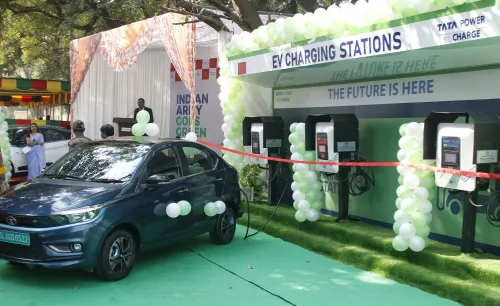
Gauba outlined the scale of government backing already in place for the EV sector, totalling over ₹92,000 crore across schemes including FAME, PM E-DRIVE, and PM E-bus Sewa, along with two production-linked incentive (PLI) schemes covering Automobiles and Auto Components and Advanced Chemistry Cell battery storage. On the infrastructure side, he highlighted the rapid expansion of the EV charging ecosystem, driven by both oil marketing companies and private players. The newly launched Unified Bharat e-Charge app, according to a NITI Aayog statement, is expected to make charging infrastructure more accessible and convenient for users across the country.
What Comes Next
With IEMI scores improving and state-level policy coverage widening, the focus is expected to shift toward execution quality — particularly on charging density, battery recycling norms, and localisation of EV supply chains. Industry observers note that while the policy architecture is strengthening, bridging the gap between notified policies and on-ground outcomes remains the defining challenge for India’s EV ambitions ahead of 2047.
Point of View
Which carries far more political weight in New Delhi. Yet the IEMI data reveals a telling asymmetry: the top state score jumped to 84 while the median sits at just 40, suggesting that policy ambition is concentrated rather than distributed. With ₹92,000 crore committed and 29 states having notified policies, the scaffolding looks impressive — but India’s EV penetration still lags China and the EU by a wide margin. The real test will be whether the Unified Bharat e-Charge app and PLI incentives can compress that gap before rising car ownership locks in another decade of crude dependence.
NationPress
16 Sept 2026
Frequently Asked Questions
What is the India Electric Mobility Index (IEMI)?
The India Electric Mobility Index (IEMI) is a report that tracks and scores the EV policy progress of India’s states and Union Territories. The second edition, launched on 16 September, showed the highest state score rising from 77 to 84 and the median score improving from 36 to 40 over the past year.
Why does NITI Aayog call EV adoption a strategic imperative for India?
NITI Aayog argues that India’s dependence on crude oil imports — currently nearly 89% of requirements — makes EV adoption critical to national energy security. Rising car ownership without an EV shift would deepen that import dependence and increase urban pollution and public health costs.
How much has the Indian government committed to EV development?
The government has committed over ₹92,000 crore to the EV sector through schemes including FAME, PM E-DRIVE, PM E-bus Sewa, and two PLI schemes covering automobiles, auto components, and Advanced Chemistry Cell battery storage.
What is the Unified Bharat e-Charge app?
The Unified Bharat e-Charge app is a newly launched platform designed to make EV charging infrastructure more accessible and convenient across India. It is expected to strengthen the broader EV charging ecosystem being developed by oil marketing companies and private players.
How does India’s EV adoption compare globally?
According to Rajiv Gauba, electric cars accounted for roughly one-tenth of new car sales in the US in 2025, more than a quarter in the EU, and over half in China — all shares projected to rise further. India’s penetration remains significantly lower, making the policy push more urgent.