NM-ICPS Mission enables 1,146 technologies, trains 2.46 lakh professionals
Synopsis
India's NM-ICPS has quietly become one of the country's most productive deep-tech engines — 1,146 technologies enabled, 1,136 start-ups incubated, 24,000-plus jobs created, and 5,824 CHANAKYA fellowships awarded. The numbers suggest a government-backed hub model that is moving beyond research into real commercial and employment outcomes.
Key Takeaways
NM-ICPS has enabled 1,146 technologies and contributed to 1,329 technology products across agriculture, healthcare, mining, cybersecurity, and more.
The mission has trained more than 2.46 lakh professionals in Cyber-Physical Systems skills.
The CHANAKYA Fellowship Programme has awarded 5,824 fellowships to researchers at undergraduate, postgraduate, PhD, and postdoctoral levels.
1,136 start-ups and spin-offs have been incubated, generating more than 24,000 jobs .
25 Technology Innovation Hubs (TIHs) have been established as Section 8 companies, hosted by premier academic institutions nationwide.
India's National Mission on Interdisciplinary Cyber-Physical Systems (NM-ICPS) has enabled 1,146 technologies and contributed to 1,329 technology products across sectors including agriculture, healthcare, mining, cybersecurity, advanced communication, and positioning, according to an official factsheet released on Monday, 31 August. The mission has simultaneously provided skills development training to more than 2.46 lakh professionals, marking a significant step in India's push to build deep-tech capabilities at scale.
Key Developments Under NM-ICPS
The mission is constructing an integrated innovation ecosystem by linking technology, talent, and enterprise through its Technology Innovation Hubs (TIHs) and Translation Research Parks (TTRPs). The government has established 25 TIHs as Section 8 companies, hosted by premier academic institutions across the country. These hubs operate across four broad areas: technology development; human resource development and skill enhancement; innovation, entrepreneurship, and start-up development; and international collaborations, according to the official statement.
CHANAKYA Fellowship and Human Capital
The CHANAKYA Fellowship Programme is a central pillar of NM-ICPS's human resource strategy. It funds projects addressing real-world challenges in Cyber-Physical Systems (CPS) through specialised TIHs and has awarded 5,824 fellowships to undergraduate, postgraduate, PhD, and postdoctoral researchers. This pipeline of trained researchers is designed to feed directly into the mission's broader innovation and commercialisation goals.
Start-Up Incubation and Job Creation
Beyond research, NM-ICPS is actively nurturing entrepreneurship by facilitating the transition of research-based innovations toward commercialisation. The mission has incubated 1,136 start-ups and spin-offs, which have collectively contributed to more than 24,000 jobs. This positions NM-ICPS not just as a research initiative but as a measurable driver of employment in the deep-tech sector.
Scope and National Significance
NM-ICPS provides a national framework for advancing CPS research, innovation, and applications across priority sectors. The mission brings academia, industry, government, and international organisations onto a common platform, connecting scientific research with national priorities, industrial capabilities, and emerging market opportunities. It covers the complete innovation journey — from R&D and translational research through to product development and start-up incubation. Notably, this convergence model mirrors global deep-tech ecosystems in the US and South Korea, where government-anchored hub networks have historically accelerated technology commercialisation timelines. The mission is also supporting the creation and licensing of intellectual properties, adding a formal IP layer to its innovation output.
What Comes Next
With 25 TIHs now operational and a growing cohort of CHANAKYA fellows entering the workforce, the mission's next phase is expected to focus on deepening international collaborations and scaling product-to-market pipelines. The performance of incubated start-ups across sectors will be a key indicator of whether NM-ICPS translates research investment into durable economic value.
Point of View
But the deeper question is whether the 1,136 incubated start-ups are surviving beyond the incubation window and whether the 24,000 jobs figure reflects sustained employment or early-stage headcount. India's deep-tech ecosystem has historically struggled with the valley of death between lab prototype and scalable product. The mission's hub-and-spoke model is structurally sound, but without public disclosure of start-up survival rates, revenue generation, and IP commercialisation outcomes, the factsheet risks reading as a tally of inputs rather than a proof of impact. The CHANAKYA Fellowship pipeline is the most promising long-term signal — if those researchers stay in India.
NationPress
15 Oct 2026
Frequently Asked Questions
What is the NM-ICPS mission?
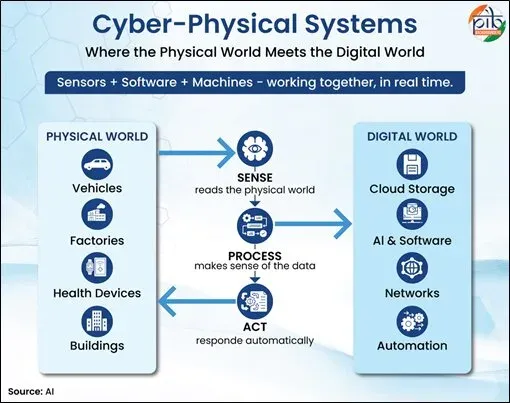
The National Mission on Interdisciplinary Cyber-Physical Systems (NM-ICPS) is a government-backed initiative that provides a national framework for advancing CPS research, innovation, and applications across priority sectors. It connects academia, industry, government, and international organisations to cover the full innovation journey from R&D to start-up incubation.
How many technologies has NM-ICPS enabled so far?
According to an official factsheet released on 31 August, NM-ICPS has enabled 1,146 technologies and contributed to 1,329 technology products across sectors including agriculture, healthcare, mining, cybersecurity, advanced communication, and positioning.
What is the CHANAKYA Fellowship Programme?
The CHANAKYA Fellowship Programme is NM-ICPS's human resource development arm, funding projects that address real-world CPS challenges through specialised Technology Innovation Hubs. It has awarded 5,824 fellowships to undergraduate, postgraduate, PhD, and postdoctoral researchers.
How many start-ups has NM-ICPS incubated?
NM-ICPS has incubated 1,136 start-ups and spin-offs, which have collectively contributed to more than 24,000 jobs, according to the official factsheet.
What are Technology Innovation Hubs (TIHs) under NM-ICPS?
TIHs are 25 specialised centres established as Section 8 companies and hosted by premier academic institutions across India. They develop technology platforms, translate research into products, nurture start-ups, and facilitate international collaborations across four core areas of CPS innovation.