Pakistan's external debt doubles to $135 billion in a decade, China its top creditor
Synopsis
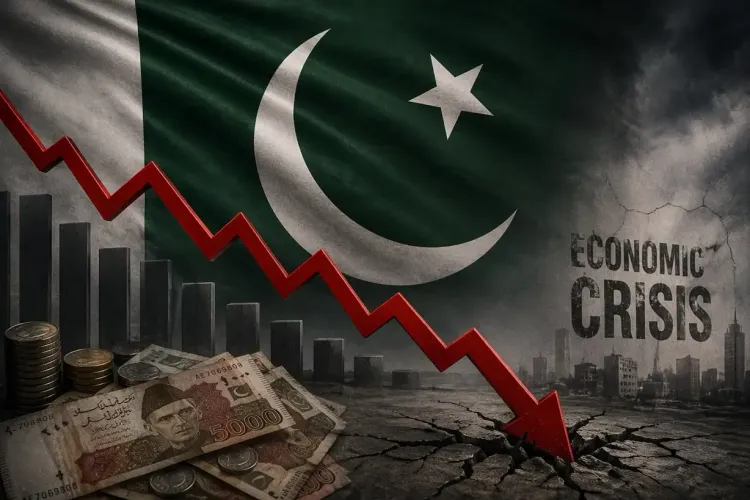
Pakistan's external debt has nearly doubled in just ten years to $135.1 billion, with China entrenching itself as the single largest bilateral creditor at $22.4 billion. Despite a $2 billion Chinese loan extension and $2.3 billion in IMF disbursements in 2025, structural debt vulnerabilities persist — and global borrowing costs for low-income economies are now at multi-decade highs.
Key Takeaways
Pakistan's external debt rose from $68.7 billion in 2015 to $135.1 billion in 2025 , a near- 97% increase.
China is the largest bilateral creditor with $22.4 billion in outstanding loans, ahead of the World Bank ( $19.2 billion ) and ADB ( $16.8 billion ).
In 2025 , China extended a $2 billion loan maturity and the IMF disbursed $2.3 billion under support programmes.
The MENAP region recorded the sharpest external debt rise relative to gross national income globally.
Global debt-service payments across low and middle income economies hit $1.4 trillion — a fifth consecutive annual increase.
Countries eligible for concessional financing face average interest rates of 8.2% on new commitments, the highest in decades.
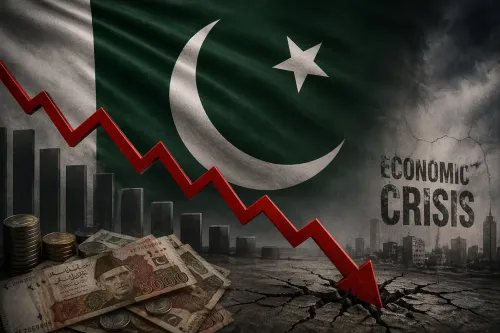
Pakistan's external debt has nearly doubled over the past decade, surging from $68.7 billion in 2015 to $135.1 billion in 2025 — a rise of almost 97% — with China holding the largest bilateral creditor position, according to an analysis by Dawn. The scale of accumulation underscores deepening fiscal stress for a country that has repeatedly turned to emergency international support to service its obligations.
Debt Breakdown: Who Pakistan Owes
The $135.1 billion total external debt stock is composed of $107.1 billion in public and publicly guaranteed debt, $17.6 billion in private non-guaranteed debt, and $10.5 billion in short-term obligations. Among public sector liabilities, multilateral lenders are owed $56.8 billion, while bilateral creditors hold $42.4 billion.
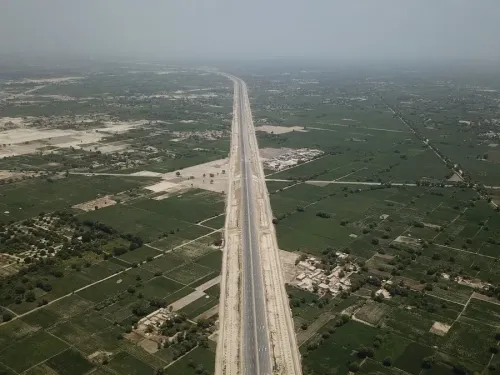
China leads among individual creditors with outstanding loans of $22.4 billion, followed by the World Bank at $19.2 billion and the Asian Development Bank (ADB) at $16.8 billion. Beijing's dominance reflects years of lending under the China-Pakistan Economic Corridor (CPEC), which critics have described as a source of long-term debt dependency.
Recent Relief and Ongoing Pressure
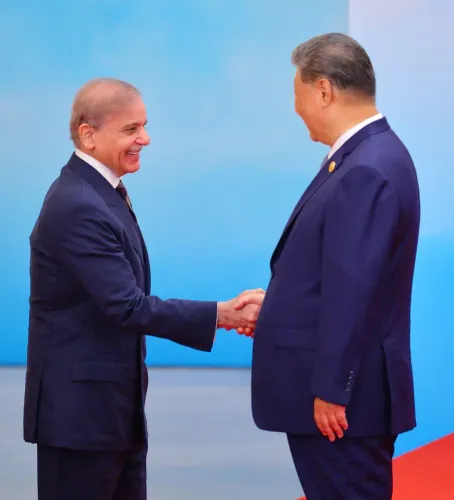
During 2025, Pakistan received significant external support to manage its repayment calendar. China extended a $2 billion loan maturity, effectively rolling over near-term obligations, while the International Monetary Fund (IMF) disbursed $2.3 billion under ongoing support programmes. These measures have provided short-term breathing room, but analysts note that structural vulnerabilities remain largely unaddressed.
Regional and Global Context
The analysis further noted that the Middle East, North Africa, Afghanistan and Pakistan (MENAP) region recorded the sharpest increase in external debt relative to gross national income globally, highlighting continued debt accumulation even as some debt-servicing indicators showed marginal improvement.
Globally, external debt owed by low and middle income countries rose 5.5% to a record $9.4 trillion in 2025. Debt levels in the world's poorest nations climbed even faster, with borrowing costs remaining elevated — countries eligible for concessional financing faced average interest rates of 8.2% on new commitments, reportedly the highest level in decades.
Debt-Service Strain Mounts
Debt-service payments across low and middle income economies rose for a fifth consecutive year, reaching $1.4 trillion, according to the analysis. This persistent repayment pressure comes despite stronger economic growth and improved capital inflows in certain economies, suggesting the trajectory is structural rather than cyclical.
For Pakistan, the combination of a heavily bilateral debt composition, elevated interest rates on new borrowings, and recurring reliance on creditor extensions raises questions about long-term debt sustainability — a debate that is likely to intensify ahead of the country's next IMF programme review.
Point of View
But the composition matters as much as the size. China's $22.4 billion position — built largely through CPEC financing — gives Beijing significant leverage over Islamabad's fiscal decisions, a dynamic that sits uneasily alongside Pakistan's stated pursuit of IMF-mandated reforms. The recurring cycle of loan rollovers and emergency IMF tranches suggests the country is managing liquidity, not resolving solvency risk. With global concessional borrowing costs now at multi-decade highs, the window for affordable refinancing is narrowing — and without a credible domestic revenue expansion, the next crisis may be harder to defer.
NationPress
6 Nov 2026
Frequently Asked Questions
How much is Pakistan's total external debt in 2025?
Pakistan's total external debt stood at $135.1 billion in 2025, nearly double the $68.7 billion recorded in 2015, representing a rise of approximately 97% over a decade, according to an analysis by Dawn.
Which country is Pakistan's largest bilateral creditor?
China is Pakistan's largest individual bilateral creditor, with outstanding loans of $22.4 billion as of 2025. This is primarily linked to financing extended under the China-Pakistan Economic Corridor (CPEC).
What financial support did Pakistan receive in 2025?
In 2025, China extended a $2 billion loan maturity for Pakistan, while the IMF disbursed $2.3 billion under ongoing support programmes, providing short-term relief on Pakistan's repayment obligations.
How does Pakistan's debt compare globally?
Globally, external debt owed by low and middle income countries rose 5.5% to a record $9.4 trillion in 2025. Pakistan's MENAP region recorded the sharpest increase in external debt relative to gross national income among all regions tracked.
What are the broader risks from Pakistan's rising debt?
Countries eligible for concessional financing now face average interest rates of 8.2% on new commitments — the highest in decades. Debt-service payments across low and middle income economies rose for a fifth straight year to $1.4 trillion, signalling persistent repayment pressure that stronger growth has not fully offset.