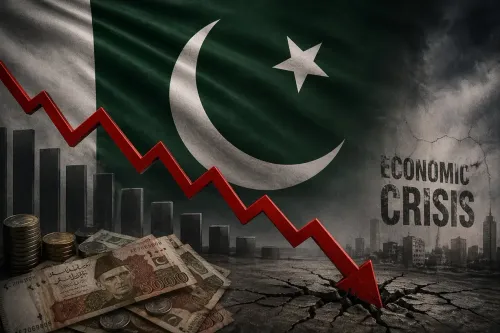
Pakistan's economic recovery built on fudged figures, IMF data contradicts Islamabad
Synopsis
Pakistan's economic stabilisation story is unravelling. Revised National Accounts data added $14.8 billion to import figures across five years, the IMF refuses to endorse official growth and deficit projections, and the trade gap for Q1 of this fiscal year has already widened more than 15 per cent. The discrepancy was caught not by Pakistani institutions, but by a mismatch with China's own export data.
Key Takeaways
Pakistan's National Accounts Committee revised annual growth down to 3.65 per cent and added $14.8 billion to import figures across five financial years.
The IMF projects Pakistan's current account deficit at $4.5 billion , nearly double Islamabad's own estimate of $2.5 billion .
Pakistan's gross financing needs are put at 22–25 per cent of output — well above regional peers.
A finance ministry committee found import data discrepancies of $18.13 billion between PRAL and the Pakistan Single Window, with the annual gap reaching $6.22 billion in FY2025 .
The data error was exposed by China's export records, not Pakistan's own institutions.
Pakistan's trade deficit for Q1 of this fiscal year widened more than 15 per cent to $10.79 billion .
Pakistan's much-touted economic stabilisation narrative has come under serious scrutiny after revised data from the country's own National Accounts Committee contradicted official claims, according to a new report citing the Greek news website Directus. The revisions reveal that key indicators underpinning Islamabad's recovery story were, reportedly, based on inaccurate figures.
What the Revised Data Shows
The National Accounts Committee recorded a growth of 2.0 per cent in the final quarter of the last financial year, while revising the annual figure downward to 3.65 per cent. More strikingly, it added as much as $14.8 billion to recorded imports across five financial years. The upward revision to import figures suggests that Pakistan's external accounts — the very foundation of Islamabad's stabilisation argument — were significantly understated throughout the period the government claimed to be fixing them.
IMF Contradicts Pakistan's Official Account
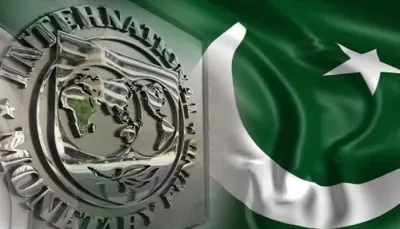
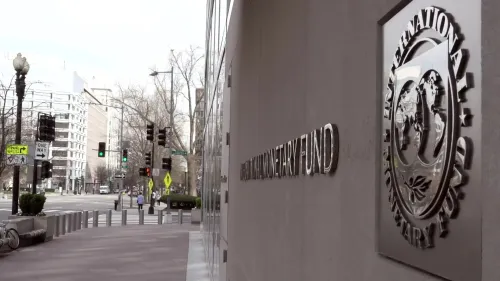
The International Monetary Fund (IMF)'s regional assessment this month reportedly declined to endorse Pakistan's official economic narrative on nearly every count. The IMF projects Pakistan's current account deficit at close to 1 per cent of output, approximately $4.5 billion, versus Islamabad's own estimate of around $2.5 billion. The Fund further warns that the external position will weaken as imports rise and remittances moderate.
Notably, the IMF has flagged that exports have not grown despite years of government incentives. It places Pakistan's gross financing needs at 22 to 25 per cent of output — well above regional peers — and its growth forecast of 3.5 per cent sits below the official projection of 4 per cent. Sector-wise data for the fourth quarter shows that Pakistan's industry contracted by 4.7 per cent, while electricity, gas and water supply shrank by as much as 33.2 per cent.
How the Data Discrepancy Was Uncovered
A finance ministry committee identified discrepancies of roughly $18.13 billion between import data compiled through PRAL and the Pakistan Single Window. The annual gap widened from $1.4 billion in FY2021 to $6.22 billion in FY2025.
The root cause, according to the report, was that the Federal Board of Revenue and the Bureau of Statistics had not updated their data systems since 2017, failing to capture goods entering under newer declaration categories, particularly facilitation schemes. Critically, the discrepancy was not flagged by Pakistan's own institutions — it was revealed when Pakistan's recorded imports from China diverged sharply from China's own recorded export data.
External Account Deteriorating, Not Stabilising
Current data confirms that Pakistan's external account is deteriorating rather than stabilising. The trade deficit for the first quarter of this fiscal year widened more than 15 per cent to $10.79 billion, with imports rising over 13 per cent against export growth of 11 per cent.
The goods deficit on the payments measure widened 21.1 per cent, the current account deficit reached $874 million from $755 million a year earlier, and the overall balance swung to a quarterly deficit of $3.12 billion from a $274 million surplus. This comes amid broader concerns about Pakistan's fiscal credibility, as Islamabad continues to negotiate terms with international lenders.
Point of View
Because their data systems had not been updated since 2017. That is a structural failure of statistical governance, not a rounding error. The IMF's refusal to endorse Pakistan's official account on almost every metric — growth, current account deficit, financing needs — signals that international creditors are already pricing in a credibility discount. For a country that depends on multilateral support to service its debt, that discount is not abstract; it shapes the terms of every future bailout.
NationPress
29 Oct 2026
Frequently Asked Questions
What did Pakistan's National Accounts Committee reveal about its economy?
The National Accounts Committee recorded final-quarter growth of 2.0 per cent, revised the annual figure down to 3.65 per cent, and added $14.8 billion to recorded imports across five financial years. The revisions directly contradict the Pakistani government's earlier narrative that the economy had stabilised.
How does the IMF's assessment differ from Pakistan's official figures?
The IMF projects Pakistan's current account deficit at approximately $4.5 billion — nearly double Islamabad's estimate of $2.5 billion. The Fund also places Pakistan's growth forecast at 3.5 per cent, below the official 4 per cent, and flags gross financing needs of 22–25 per cent of output, far above regional peers.
How was the import data discrepancy discovered?
The gap was revealed when Pakistan's recorded imports from China diverged significantly from China's own recorded export data. Pakistan's Federal Board of Revenue and Bureau of Statistics had reportedly not updated their data systems since 2017, causing them to miss goods entering under newer declaration categories.
What is the current state of Pakistan's trade deficit?
Pakistan's trade deficit for the first quarter of the current fiscal year widened more than 15 per cent to $10.79 billion, with imports rising over 13 per cent against export growth of 11 per cent. The current account deficit reached $874 million, up from $755 million a year earlier.
Why does Pakistan's economic data credibility matter internationally?
Pakistan relies heavily on multilateral lenders, including the IMF, for financing support. If official data is found to be unreliable, it affects the terms under which international creditors extend credit and programme support. The IMF's refusal to endorse Pakistan's own figures this month signals that this credibility gap is already being factored in.