India-New Zealand FTA takes effect: 100% zero-duty access for Indian exports
Synopsis
India's FTA with New Zealand just crossed from negotiation to reality — and it's a sweeping deal. Every Indian export now enters New Zealand duty-free across all tariff lines, $20 billion in Kiwi investment is on the table, and sensitive farm sectors stay protected. With a NZ$7 billion bilateral trade target by 2030, this is one of the cleanest market-access wins in recent Indian trade diplomacy.
Key Takeaways
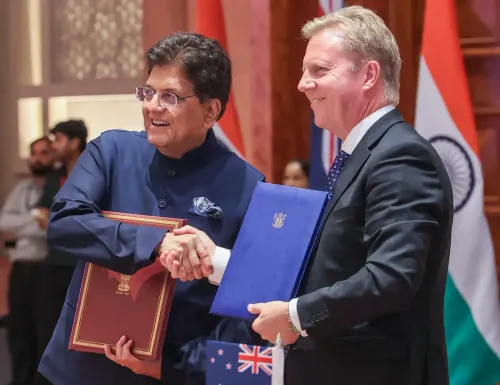
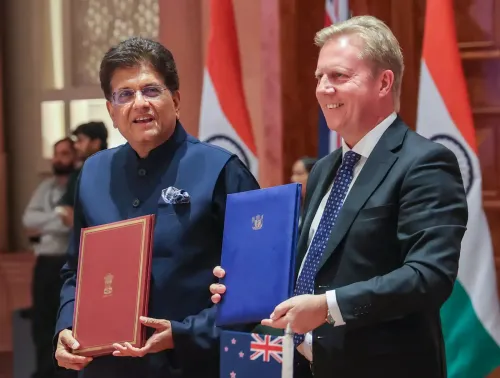
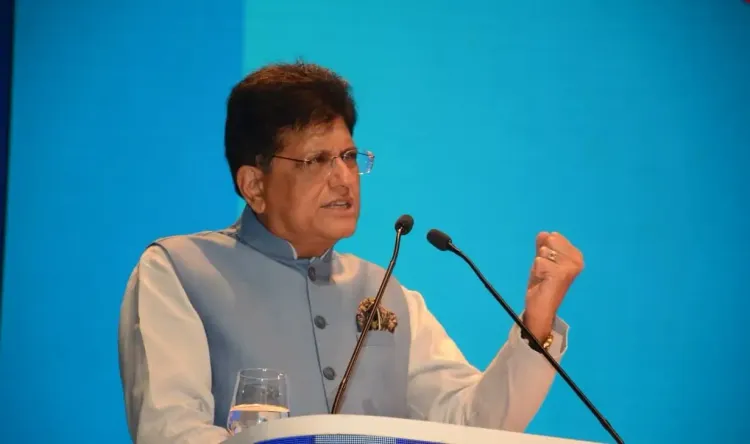
The India-New Zealand FTA came into force on 20 October 2026 , confirmed by Commerce Minister Piyush Goyal .
100% of Indian exports now enter New Zealand duty-free across all tariff lines .
New Zealand will facilitate investments worth $20 billion into India.
India's sensitive sectors — dairy, key farm products, animal products — remain protected under the agreement.
Bilateral trade in goods and services is targeted at NZ$7 billion by 2030 .
Key beneficiary sectors include textiles, pharmaceuticals, gems and jewellery, engineering goods, and MSMEs .
Commerce and Industry Minister Piyush Goyal on Tuesday, 20 October 2026, confirmed that the India-New Zealand Free Trade Agreement (FTA) has come into force, granting 100% zero-duty access to all Indian exports entering New Zealand across every tariff line. The minister described the agreement as 'a new chapter of opportunities' for both nations, underscoring its potential to significantly deepen bilateral trade and investment ties.
What the FTA Delivers for India
Under the agreement, Indian goods can now enter New Zealand duty-free across all tariff lines, making this one of the most comprehensive market-access wins India has secured in recent trade diplomacy. Minister Goyal also highlighted that New Zealand will facilitate investments worth $20 billion into India — a development he described as a significant opportunity for economic growth and job creation.
The two countries have jointly set a target of achieving bilateral trade in goods and services worth NZ$7 billion by 2030, a figure that industry representatives say is now more credible with zero-duty access in place.
Sensitive Sectors Shielded
Notably, the FTA includes explicit protections for India's sensitive agricultural sectors. Goyal stated: 'But we safeguarded our farmers' interests. Sensitive sectors, from dairy and key farm products to animal products, remain protected. Our farmers' welfare comes first.' This carve-out is significant given that past FTA negotiations — including those with the European Union and Australia — have faced domestic pushback over agricultural concessions.
Industry and Trade Bodies Welcome the Pact
Confederation of All India Traders (CAIT) Secretary General and Chandni Chowk Member of Parliament Praveen Khandelwal welcomed the implementation, saying the agreement reflects India's growing manufacturing strength and supports the vision of 'Local to Global', 'Aatmanirbhar Bharat' and 'Viksit Bharat'.
According to CAIT, zero-duty access to the New Zealand market is expected to enhance the competitiveness of Indian products and benefit MSMEs, artisans, farmers, manufacturers, women entrepreneurs and exporters. Sectors poised to gain include textiles and apparel, leather and footwear, gems and jewellery, engineering goods, automobiles and auto components, pharmaceuticals, chemicals, agricultural produce, and processed food products.
Khandelwal urged traders, manufacturers and MSMEs to leverage the agreement to expand the global footprint of 'Made in India' products, calling it a demonstration of Prime Minister Narendra Modi's trade-focused diplomacy helping Indian businesses access new global markets.
Opportunities for Indian Professionals and Youth
Beyond goods trade, the FTA also expands opportunities for Indian professionals and youth in New Zealand, adding a services and mobility dimension that distinguishes it from purely merchandise-focused pacts. The investment facilitation commitment of $20 billion is further expected to channel capital into Indian manufacturing and infrastructure.
What Comes Next
With the agreement now in force, the immediate focus shifts to implementation — ensuring Indian exporters, particularly smaller MSME players, are aware of and can operationalise the zero-duty benefit. Industry bodies have called on the government to run outreach programmes targeting sectors with the highest export potential. The NZ$7 billion bilateral trade target by 2030 will serve as the key benchmark against which the FTA's real-world impact is measured.
Point of View
But its real test lies in uptake. India's MSME exporters — the stated primary beneficiaries — have historically under-utilised FTA provisions due to compliance complexity and lack of awareness. The $20 billion investment facilitation commitment is also a pledge, not a disbursement, and New Zealand is a small economy relative to India's trade ambitions. The NZ$7 billion bilateral trade target by 2030 is achievable but modest; the more instructive comparison will be how quickly MSME export volumes to New Zealand actually shift. Agricultural protection carve-outs were a non-negotiable red line and their inclusion reduces domestic political risk, but they also limit the reciprocal liberalisation that would have made New Zealand's concessions more symmetrical.
NationPress
20 Oct 2026
Frequently Asked Questions
What is the India-New Zealand Free Trade Agreement?
The India-New Zealand FTA is a bilateral trade agreement that came into force on 20 October 2026, granting 100% zero-duty access to all Indian exports entering New Zealand across every tariff line. It also includes provisions for New Zealand to facilitate $20 billion in investments into India and expands opportunities for Indian professionals and youth.
Which Indian sectors benefit most from the India-NZ FTA?
Key beneficiary sectors include textiles and apparel, leather and footwear, gems and jewellery, engineering goods, automobiles and auto components, pharmaceuticals, chemicals, agricultural produce, and processed food products. MSMEs, artisans, farmers, and women entrepreneurs are also expected to gain from enhanced market competitiveness.
Does the FTA affect India's farmers and dairy sector?
India's sensitive agricultural sectors — including dairy, key farm products, and animal products — remain explicitly protected under the FTA. Commerce Minister Piyush Goyal stated that farmers' welfare was the government's first priority in the negotiations.
What is the bilateral trade target between India and New Zealand?
India and New Zealand have set a target of achieving bilateral trade in goods and services worth NZ$7 billion by 2030. Industry representatives have described the FTA as a potential driver of exports, employment generation, and economic growth toward this goal.
How does the India-NZ FTA connect to India's broader trade strategy?
CAIT Secretary General Praveen Khandelwal linked the FTA to Prime Minister Narendra Modi's trade-focused diplomacy and the broader 'Aatmanirbhar Bharat' and 'Viksit Bharat' frameworks. It is part of India's push to expand the global footprint of 'Made in India' products by securing zero-duty access in new markets.