South Korean retail investors pour $7 billion into US stocks in 2 months
Synopsis
South Korean retail investors funnelled $7 billion into US equities in just two months — 70% of what they bought in the entire first half of the year — as the KOSPI cratered from record highs. Their top pick was a leveraged semiconductor ETF, not a blue-chip — a signal of the risk appetite, and the desperation, driving this cross-border rotation.
Key Takeaways
South Korean individual investors bought a net $7.04 billion in US stocks between 1 July and 28 August 2025 , per Korea Securities Depository data.
The two-month total equals 70% of their net US equity purchases in the entire first half of the year ( $9.87 billion ).
Top buy: SOXL (Direxion Daily Semiconductor Bull 3X Shares) with net purchases of $3 billion .
Top sells: Nvidia (-$748.9 million), Palantir Technologies (-$615.4 million), Micron Technology (-$353.93 million).
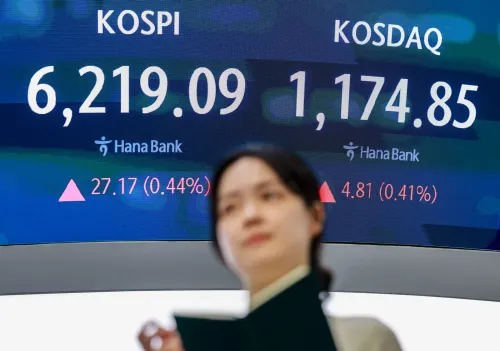
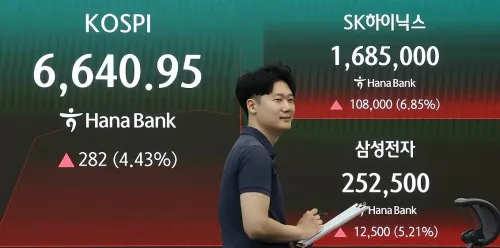
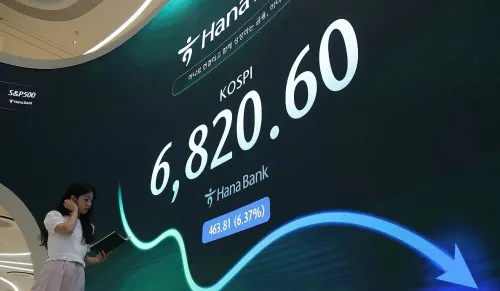
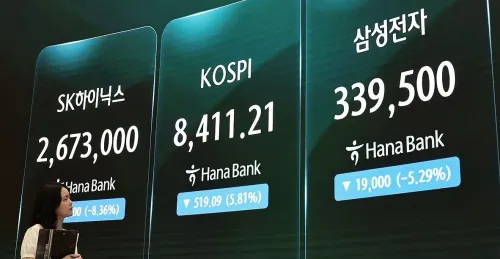
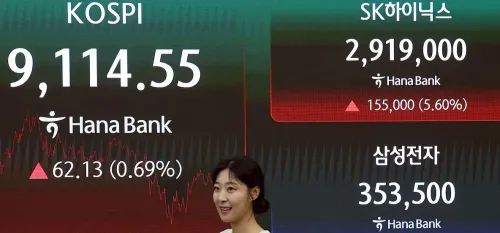
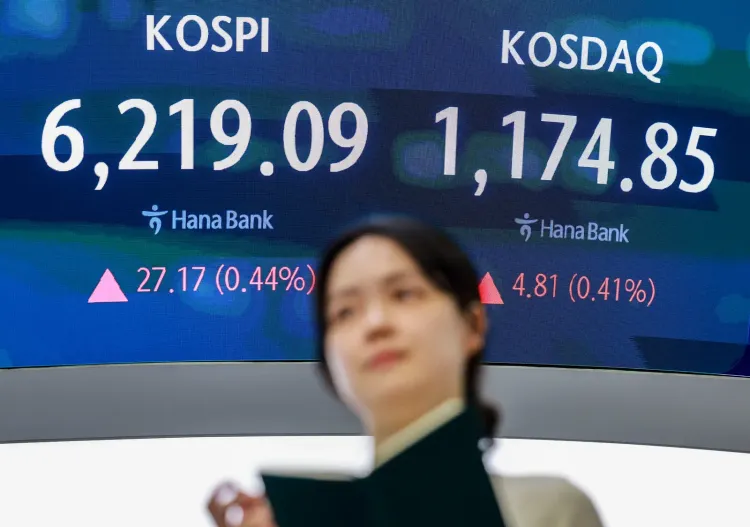
The shift was triggered by the KOSPI sliding from a record high of 9,114.55 points on 22 June into the 6,000-point range by mid-July.
Samsung Securities researcher Shin Seung-jin attributed the trend to rising KOSPI volatility and losses in domestic semiconductor shares.
South Korean individual investors channelled a net $7.04 billion into US equities between 1 July and 28 August 2025, as a sharp correction in the domestic KOSPI index drove retail money across the Pacific, according to data from the Korea Securities Depository's online portal released on 30 August. The two-month figure represented roughly 70 percent of their entire first-half net purchases in the US market, which stood at $9.87 billion.
The KOSPI Correction That Triggered the Shift
The exodus from domestic stocks followed a steep fall in the Korea Composite Stock Price Index (KOSPI) after it hit a record closing high of 9,114.55 points on 22 June. The index slid to the 7,000-point level by the second trading session of July and has since remained in the 6,000-point range for more than a month. Notably, this kind of domestic-to-foreign rotation is not unprecedented in South Korea — retail investors have historically pivoted to US markets during periods of local volatility, but the speed and scale of this shift stand out.
Where Korean Investors Put Their Money
The top pick by a wide margin was Direxion Daily Semiconductor Bull 3X Shares (SOXL), a leveraged ETF that targets three times the daily return of the ICE Semiconductor Index, attracting net purchases of $3 billion. Beyond SOXL, investors also bought a net $815.42 million in SK hynix American depositary receipts (ADRs), $647.17 million in Alphabet shares, and $514.96 million in SpaceX.
What They Sold
In a notable reversal, Korean retail investors were net sellers of several high-profile US technology names during the same period. They offloaded a net $748.9 million worth of Nvidia shares, $615.4 million of Palantir Technologies, and $353.93 million of Micron Technology. The sell-off in Nvidia is particularly striking given the stock's earlier status as a retail favourite in South Korea.
US Markets Stayed Resilient
The appeal of US equities was reinforced by relative strength on Wall Street. The S&P 500 climbed from 7,499.36 at end-June to 7,730.99 by 28 August, while the Nasdaq Composite advanced from 26,213.72 to 26,541.35 over the same stretch. Meanwhile, Korean investors also bought a net 8.75 trillion won ($6.34 billion) in the KOSPI market and a net 1.57 trillion won in the secondary KOSDAQ market — suggesting some were bargain-hunting at home even as the bulk of fresh capital headed abroad.
Analyst View
'Increasing volatility in the KOSPI and losses in semiconductor shares encourage investment in the U.S.,' said Shin Seung-jin, a researcher at Samsung Securities. The monthly breakdown underscores the pace of the shift: Korean retail investors bought a net $4.64 billion in US stocks in July alone, followed by $2.4 billion in the first 27 days of August. With the KOSPI yet to recover meaningfully, analysts expect the outflow trend to persist into September unless domestic semiconductor stocks stabilise.
Point of View
Not a diversified index fund. That is a retail crowd making a concentrated directional bet, not a considered reallocation. The simultaneous selling of Nvidia, Palantir, and Micron suggests Korean investors are rotating within the US tech trade, not out of it — chasing leverage while trimming names that ran hard. The deeper question is what this signals about domestic confidence: when retail money abandons a market that just hit an all-time high within weeks, it points to a structural trust deficit in Korean equities that no single KOSPI recovery will quickly reverse.
NationPress
30 Aug 2026
Frequently Asked Questions
Why are South Korean investors buying so many US stocks?
South Korean retail investors accelerated purchases of US equities after the KOSPI fell sharply from a record high of 9,114.55 points on 22 June into the 6,000-point range by mid-July. According to Samsung Securities researcher Shin Seung-jin, rising KOSPI volatility and losses in domestic semiconductor shares made US markets comparatively attractive.
How much did South Korean investors buy in US stocks between July and August 2025?
They purchased a net $7.04 billion worth of US stocks from 1 July through 28 August 2025, according to Korea Securities Depository data. This was split between $4.64 billion in July and $2.4 billion in the first 27 days of August.
What was the top US stock pick for Korean retail investors?
The Direxion Daily Semiconductor Bull 3X Shares (SOXL), a leveraged ETF targeting three times the daily return of the ICE Semiconductor Index, was the most purchased instrument, with net buys of $3 billion over the two-month period.
Which US stocks did Korean investors sell during this period?
Korean retail investors were net sellers of Nvidia ($748.9 million), Palantir Technologies ($615.4 million), and Micron Technology ($353.93 million) during the same July-August window.
Did Korean investors also buy domestic stocks during this period?
Yes. Alongside their US purchases, Korean retail investors also bought a net 8.75 trillion won ($6.34 billion) in the KOSPI market and 1.57 trillion won in the secondary KOSDAQ market, suggesting some bargain-hunting at home even as the larger capital flow went abroad.