Seoul KOSPI slips 0.18% as tech stocks drag; South Korea inflation rises in July
Synopsis
Seoul's KOSPI swung from a 1.5% gain to a 0.18% loss in a single session, as tech giants Samsung and SK Hynix dragged the index lower despite a strong Wall Street lead. Meanwhile, South Korea's central bank flagged an August inflation rebound even as July's reading dipped below 3% for the first time in three months — a split signal that puts the Bank of Korea in a difficult spot.
Key Takeaways
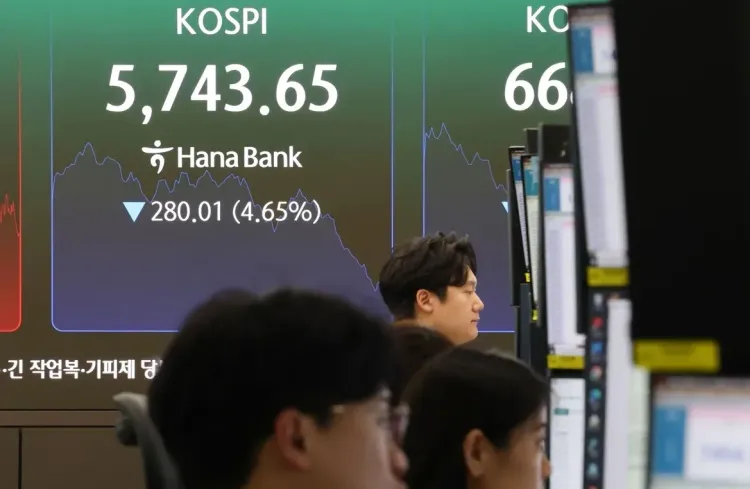
The KOSPI traded down 11 points (0.18%) at 6,246.45 as of 11:20 am on 4 August , reversing a 1.5% opening gain.
Samsung Electronics fell 1.77% and SK Hynix dropped 2.55% , leading the tech-sector decline.
Defence stocks surged: Hanwha Aerospace jumped 8.71% and Korea Aerospace Industries climbed 10.27% .
South Korea's July consumer price inflation came in at 2.8% year-on-year — below 3% for the first time in three months.
Deputy Governor Lee Ji-ho warned that August inflation is set to accelerate due to a base effect from last year's mobile carrier discounts.
Wall Street's overnight gains — Dow +1.32% , Nasdaq +2.13% — failed to sustain Seoul's early rally amid lingering Middle East uncertainty.
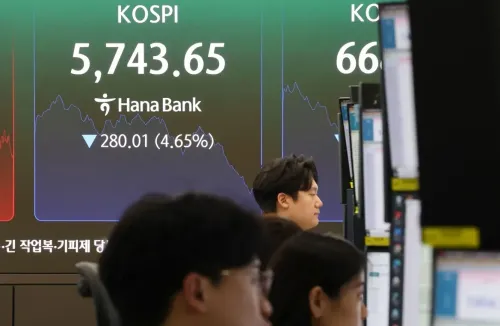
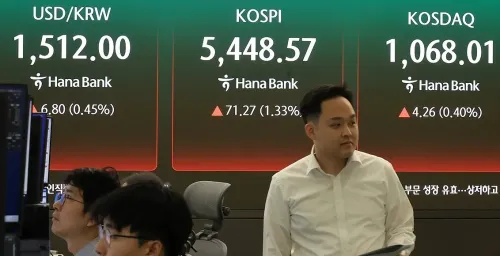
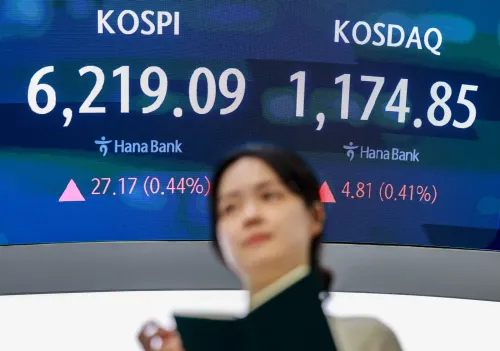
South Korea's benchmark Korea Composite Stock Price Index (KOSPI) reversed early gains to trade down 11 points, or 0.18 percent, at 6,246.45 as of 11:20 am local time on Tuesday, 4 August, as a sell-off in technology shares offset positive momentum from Wall Street's overnight rally. The reversal came despite the index opening 1.5 percent higher, with traders citing persistent uncertainty over the Middle East conflict as a key drag on sentiment.
Tech Stocks Lead the Decline
Technology heavyweights bore the brunt of Tuesday's selling pressure. Samsung Electronics, the market's bellwether, shed 1.77 percent, while memory-chip rival SK Hynix fell a steeper 2.55 percent. The declines underscored how geopolitical risk continues to weigh on South Korea's export-driven semiconductor sector.
Beyond tech, Hyundai Motor, the country's top carmaker, dropped 2.67 percent, and national flag carrier Korean Air edged down 0.19 percent. The KOSPI's retreat follows a turbulent stretch: the index had plunged more than 5 percent on Monday after surging a record 18 percent on Friday, reflecting sharp two-way volatility.
Defence Stocks Buck the Trend
Not all sectors were in retreat. Defence stocks posted sharp gains amid the ongoing geopolitical backdrop. Hanwha Aerospace surged 8.71 percent and Korea Aerospace Industries climbed 10.27 percent, emerging as the session's standout gainers as investors rotated into defence plays on Middle East uncertainty.
Wall Street Provided Overnight Support
The positive open in Seoul had been driven by a strong session on Wall Street, where Amazon.com Inc. jumped 4.5 percent following robust earnings, lifting sentiment across artificial intelligence-linked companies. The Dow Jones Industrial Average rose 1.32 percent to 53,178.41, while the tech-heavy Nasdaq Composite climbed 2.13 percent to 25,913.90. However, Seoul's own tech dynamics overrode the external tailwind.
Inflation Edges Up; Central Bank Flags August Acceleration
Separately, South Korea's central bank flagged on Tuesday that inflation is expected to pick up in August after a brief easing in July. Government data released earlier in the day showed the country's consumer prices rose 2.8 percent year-on-year in July, slipping below the 3 percent mark for the first time in three months. The moderation was attributed to stabilising oil prices following a short-lived ceasefire in the Middle East, as well as government-imposed oil price caps.
Deputy Governor Lee Ji-ho, speaking at a meeting to review inflation trends, noted: 'Consumer prices in July slowed as prices of petroleum and agricultural products fell. However, core inflation rose slightly due to higher prices of durable goods amid cost-push inflation.' He added that 'in August, inflation is projected to accelerate, driven by the base effect of large-scale discount programs offered by some mobile carriers last year.'
This comes amid a broader global environment where Middle East tensions continue to fuel cost-push inflationary pressure, complicating the central bank's policy calculus heading into the second half of the year.
What to Watch Next
Markets will be tracking further developments in the Middle East and any shifts in US Federal Reserve guidance, both of which have outsized influence on South Korean equities and currency. With core inflation edging up and a base-effect-driven August spike anticipated, the Bank of Korea faces a delicate balancing act between supporting growth and managing price pressures.
Point of View
Because Samsung and SK Hynix face a more direct earnings threat from demand uncertainty than their US peers. The inflation picture adds another layer of complexity — a 2.8% July print looks benign, but the central bank's own forward guidance points to an August spike driven by a base effect, not underlying demand cooling. That limits the Bank of Korea's room to ease even as global growth signals wobble. The real story here is not Tuesday's 0.18% dip; it is whether the KOSPI's extraordinary Friday-to-Monday swing of nearly 23 percentage points in two sessions signals a market finding its floor — or one still searching for it.
NationPress
4 Aug 2026
Frequently Asked Questions
Why did the KOSPI fall on Tuesday 4 August despite Wall Street gains?
The KOSPI reversed early gains to fall 0.18% to 6,246.45 as technology stocks, including Samsung Electronics and SK Hynix, declined on lingering Middle East uncertainty. Although Wall Street had rallied overnight on strong Amazon earnings, Seoul's own tech-sector dynamics and geopolitical risk overrode the positive external cue.
What happened to South Korea's inflation in July 2025?
South Korea's consumer prices rose 2.8% year-on-year in July, falling below the 3% mark for the first time in three months. The slowdown was driven by stabilising oil prices following a brief Middle East ceasefire and government oil price caps.
Why is August inflation expected to rise again in South Korea?
Deputy Governor Lee Ji-ho said August inflation is projected to accelerate due to a base effect from large-scale mobile carrier discount programmes offered the previous year. Core inflation also edged up in July due to higher durable goods prices amid cost-push pressures.
Which South Korean stocks gained on Tuesday amid the broader decline?
Defence stocks bucked the downtrend: Hanwha Aerospace surged 8.71% and Korea Aerospace Industries climbed 10.27%, as investors rotated into defence plays on the back of ongoing Middle East tensions.
How volatile has the KOSPI been recently?
The KOSPI has seen extreme swings: it surged a record 18% on Friday before plunging more than 5% on Monday, and then reversed a 1.5% opening gain to trade slightly lower on Tuesday. The volatility reflects a market caught between strong external earnings signals and unresolved geopolitical risk.