Panagariya: India's stable inflation and 7-8% growth show resilience amid global shocks
Synopsis
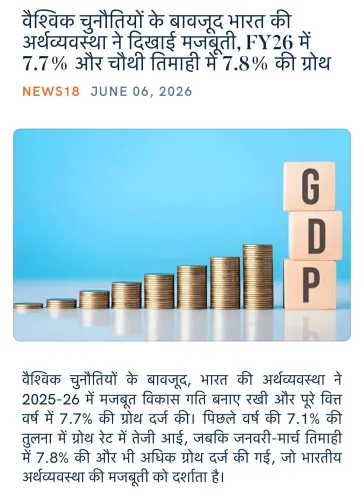
At the Kautilya Economic Conclave 2026, Finance Commission Chairman Arvind Panagariya declared that India's combination of 7–8% growth and stable inflation proves the economy has outperformed global expectations — even as West Asia tensions initially spooked analysts. With manufacturing clocking over 10% growth for three straight years and the current account deficit at just 0.5% of GDP, the data backs the confidence.
Key Takeaways
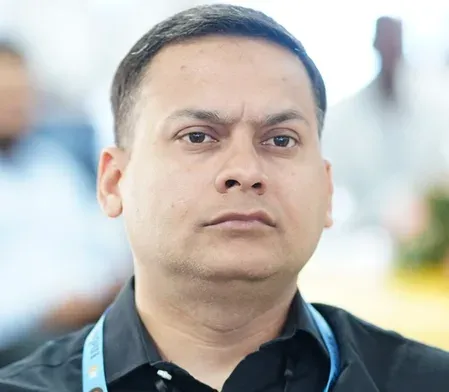
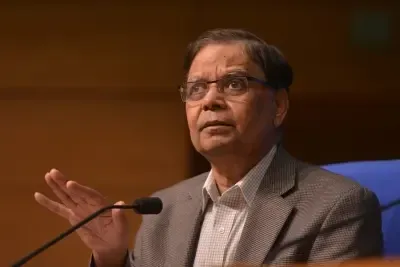
Arvind Panagariya , Chairman of the 16th Finance Commission , said India has managed global economic shocks better than anticipated at the 5th Kautilya Economic Conclave 2026 on 3 October 2026 .
He projected India's GDP will grow at 7–8 per cent annually over the medium term.
Manufacturing growth has exceeded 10 per cent for the past three financial years — among the strongest performances since Independence.
Finance Minister Nirmala Sitharaman cited 7.8 per cent real GDP growth in Q1 FY2026-27 and consumer price inflation of around 4.8 per cent in August.
India's current account deficit stood at 0.5 per cent of GDP in the same quarter, signalling external sector stability.
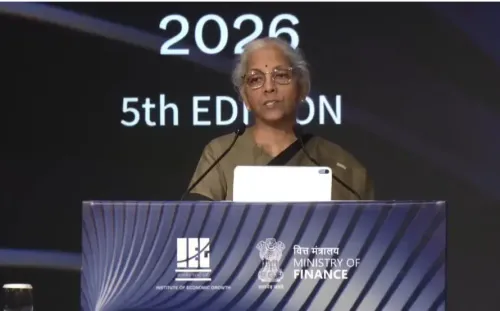
16th Finance Commission Chairman Arvind Panagariya on Saturday, 3 October 2026 said India has weathered global economic turbulence far better than anticipated, maintaining both strong growth momentum and stable inflation despite mounting geopolitical pressures. Panagariya made the remarks on the sidelines of the 5th Kautilya Economic Conclave 2026 in New Delhi.
Panagariya's Confidence in India's Growth Trajectory
Expressing conviction in the country's economic fundamentals, Panagariya said he believes India will sustain an annual growth rate of 7–8 per cent over the medium term. He acknowledged initial concerns when West Asia tensions flared, but noted that the economy's performance had been 'remarkably well' in spite of the headwinds.
'When tensions in the Middle East escalated, I initially felt the impact on India could be quite severe, but the economy has performed remarkably well,' he said.
He added that the combination of controlled inflation and sustained economic activity signals India's capacity to navigate a difficult global environment. 'With inflation remaining under control and growth momentum continuing, it shows that India has managed global instability much better than many had anticipated,' Panagariya said.
Manufacturing Emerges as a Key Growth Driver
Highlighting a structural positive, Panagariya pointed to the manufacturing sector as a standout contributor to the broader growth story. He noted that manufacturing growth has exceeded 10 per cent across the past three financial years — one of the strongest such runs since Independence.
He also argued that businesses typically build resilience against uncertainty, insulating the broader economy from sector-specific shocks. 'Uncertainties may affect one or two sectors, but they do not necessarily impact the entire economy. Some sectors continue to perform well and provide support to overall growth,' he said.
Finance Minister Sitharaman's Macro Snapshot
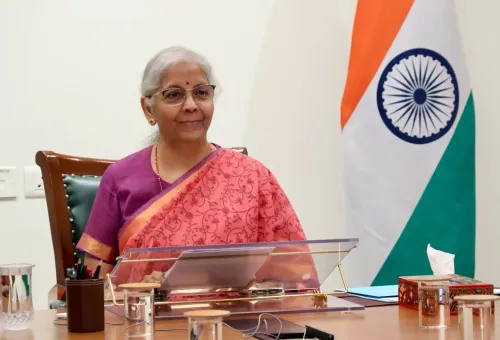
Earlier at the same conclave, Finance Minister Nirmala Sitharaman presented a broadly optimistic reading of India's economic scorecard. She noted that real GDP expanded by 7.8 per cent in the first quarter of FY2026-27, while consumer price inflation stood at approximately 4.8 per cent in August. The current account deficit was contained at just 0.5 per cent of GDP during the quarter.
Sitharaman credited institutional strengthening since 2014 for the economy's ability to absorb external shocks, saying the government had systematically built the capacities necessary for sustained long-term growth and development.
Broader Context and What It Signals
The remarks at the Kautilya Economic Conclave come at a time when several emerging markets have struggled with currency volatility, elevated inflation, and slowing growth in the face of global supply chain disruptions and commodity price pressures. India's relatively contained current account deficit and moderating inflation offer a contrasting picture.
Notably, this is not the first time India's macro resilience has drawn attention — similar assessments were made following the COVID-19 shock and the 2022 global inflation surge. Whether the current outperformance proves durable will depend significantly on the trajectory of crude oil prices, US monetary policy, and domestic consumption trends in the quarters ahead.
Point of View
But the 7–8% projection carries a known caveat: India has repeatedly set ambitious growth targets that look credible at cyclical peaks, only to face structural headwinds — consumption inequality, jobless-growth concerns, and credit access — that erode momentum. The manufacturing surge is real, but it has yet to deliver the mass employment that would make it transformational. And with crude oil prices, US Fed policy, and a fragile global trade environment all unresolved, the next two quarters will test whether this resilience is structural or situational. The conclave itself, featuring both the Finance Minister and Finance Commission Chairman singing from the same sheet, raises a reasonable question about whether the forum is shaping narrative as much as analysis.
NationPress
3 Oct 2026
Frequently Asked Questions
What did Arvind Panagariya say about India's economic growth at the Kautilya Conclave 2026?
Panagariya said India has managed global economic uncertainties far better than expected, maintaining stable inflation alongside strong growth. He expressed confidence that the Indian economy will continue to grow at 7–8 per cent annually over the medium term.
What were India's key economic indicators cited at the conclave?
Finance Minister Nirmala Sitharaman noted that real GDP grew by 7.8 per cent in Q1 FY2026-27, consumer price inflation stood at around 4.8 per cent in August, and the current account deficit was contained at 0.5 per cent of GDP for the quarter.
How has India's manufacturing sector performed recently?
According to Panagariya, manufacturing growth has exceeded 10 per cent over each of the past three financial years, which he described as one of the strongest such performances since Independence.
Why does Panagariya believe India is resilient to global shocks?
He argued that businesses typically build safeguards against uncertainty, limiting the knock-on effect of global disruptions. He noted that while uncertainties can hurt one or two sectors, they do not necessarily drag down the entire economy, as other sectors continue to provide support to overall growth.
What is the 5th Kautilya Economic Conclave 2026?
The Kautilya Economic Conclave is an annual policy and economic forum held in New Delhi. The 5th edition, held on 3 October 2026, brought together senior policymakers including Finance Minister Nirmala Sitharaman and Finance Commission Chairman Arvind Panagariya to discuss India's economic outlook amid global uncertainties.