US Fed set to hold rates in 2026 as US-Iran conflict stokes inflation
Synopsis
Elara Capital has scrapped its call for three US Fed rate cuts in 2026 — and is now putting a 1-in-5 chance on a rate hike by December if the Strait of Hormuz stays shut. The US-Iran conflict has redrawn the Fed's inflation calculus, and Asia's energy dependence makes this a global story, not just an American one.
Key Takeaways
Elara Capital has withdrawn its forecast of three Fed rate cuts totalling 75 basis points in CY26.
The firm now expects the US Federal Reserve to hold rates unchanged through 2026 .
A 20% probability has been assigned to a 25-bps rate hike in December 2026 if the Strait of Hormuz remains closed until September.
The US-Iran conflict is seen transmitting to growth via softening consumer demand and supply chain bottlenecks.
Runaway inflation is not the base case, as fiscal transfer payments seen in 2022 are absent this time.
Asia is flagged as especially vulnerable due to its high dependence on Gulf energy supplies.
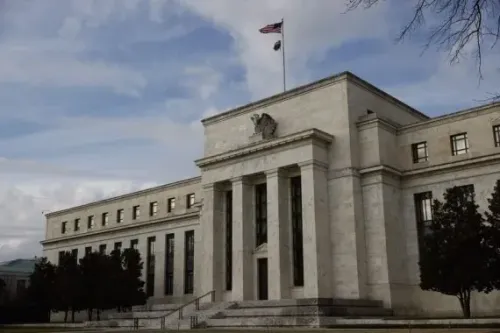
The US Federal Reserve is widely expected to keep interest rates unchanged through calendar year 2026 (CY26), as inflationary spillovers from the US-Iran conflict sustain upside risks to prices, according to a research report released on Friday, 15 May. The assessment comes from Elara Capital, which has formally withdrawn its earlier forecast of three rate cuts totalling 75 basis points in CY26.
Key Developments
Elara Capital has assigned a 20% probability to a 25-basis-point rate hike in December 2026 under a specific stress scenario: if the Strait of Hormuz remains closed until September 2026, energy prices spike further, and core personal consumption expenditures (PCE) inflation moves higher. This marks a significant hawkish pivot from the firm's earlier baseline, which had anticipated meaningful monetary easing this year.
The report noted that peak uncertainty surrounding the US labour market has likely passed. 'We believe peak uncertainty regarding the US labour market has passed and hereon, the labor market is set to soften at a gradual pace,' the report stated. However, the pace of softening is expected to be gradual rather than sharp, limiting the Fed's room to ease.
How the US-Iran Conflict Is Transmitting to Growth
Elara Capital identified a clear transmission channel from the geopolitical conflict to economic activity. 'With the US-Iran conflict leading to the surge in energy prices, the potential transmission channel to growth is likely to emerge from softening consumer demand supplemented by moderation in business spending, due to supply chain bottlenecks,' the report said.
On the growth front, the firm noted that risks are moderate and are likely to materialise with a lag of at least a year, making them unlikely to be a primary concern for the Federal Open Market Committee (FOMC) in CY26. Tariffs, combined with elevated energy and food prices, are expected to keep inflation sticky and elevated throughout the year.
Why Runaway Inflation Is Not the Base Case
Despite the inflationary pressures, Elara Capital stopped short of forecasting a runaway inflation scenario. 'A runaway inflation is not our base case scenario this time, because the support to private demand via fiscal transfer payments akin to CY22 is missing,' the report clarified. This distinguishes the current episode from the post-pandemic inflation surge of 2022, when aggressive fiscal stimulus supercharged consumer demand.
Asia's Vulnerability and the Broader Global Impact
The report's implications extend well beyond the United States. Leaders across the world have raised alarm over energy shortages stemming from the Iran conflict and the wider economic disruption it is causing. Asia is considered especially exposed, given the region's high dependence on energy and other critical supplies routed through the Gulf. For India and other Asian economies, sustained elevated energy prices translate directly into imported inflation and current account pressure.
What to Watch Next
The trajectory of the Strait of Hormuz situation remains the single most critical variable for the Fed's path. A prolonged closure could force the FOMC to shift from a hold posture to an active tightening bias. Markets will closely track core PCE data, FOMC meeting statements, and geopolitical developments in the Gulf in the months ahead.
Point of View
Including India's. The absence of 2022-style fiscal stimulus is the one structural brake on runaway inflation, but it also means demand destruction, not policy, does the heavy lifting — a grimmer trade-off than markets are pricing.
NationPress
25 Sept 2026
Frequently Asked Questions
Why is the US Federal Reserve expected to hold rates in 2026?
The US Fed is expected to hold rates unchanged in 2026 because the US-Iran conflict has driven energy prices higher, keeping inflation elevated and sticky. According to Elara Capital, tariffs compounding energy and food price rises leave the Fed with little room to cut.
What did Elara Capital change about its Fed forecast?
Elara Capital withdrew its earlier call for three Fed rate cuts totalling 75 basis points in CY26. The firm now expects rates to be held steady and has assigned a 20% probability to a 25-basis-point hike in December 2026 under a stress scenario.
What conditions could trigger a Fed rate hike in December 2026?
A rate hike becomes more likely if the Strait of Hormuz remains closed until September 2026, energy prices spike further, and core PCE inflation rises. Elara Capital puts the probability of this outcome at 20%.
How does the US-Iran conflict affect economic growth?
According to the report, the conflict transmits to growth through softening consumer demand and moderation in business spending caused by supply chain bottlenecks. Growth risks are seen as moderate and likely to materialise with a lag of at least one year.
Why is Asia particularly vulnerable to the US-Iran conflict?
Asia is especially exposed because the region is heavily dependent on energy and other critical supplies routed through the Gulf. Sustained high energy prices driven by the conflict translate into imported inflation and current account pressure for Asian economies, including India.