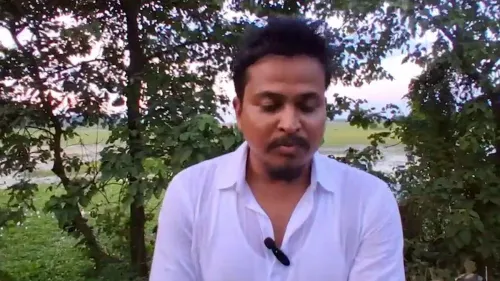
Adivi Sesh urges Assam govt to review Kaziranga resort plan

Synopsis
Actor Adivi Sesh has taken on a conservation battle far from the screen, writing directly to the Assam government to halt — or at least scrutinise — a resort project near Kaziranga, home to the world's largest population of the greater one-horned rhinoceros. His letter is as much a policy brief as a celebrity appeal, demanding transparency, independent audits, and a seat at the table for local communities.
Key Takeaways
Adivi Sesh has written a formal letter to the Assam government urging a review of proposed resort development near Kaziranga .
The actor cited risks to the habitat of the greater one-horned rhinoceros and broader Kaziranga ecosystem.
He called for full transparency on the land involved and independent environmental impact assessments .
Sesh stressed that local communities who have coexisted with the landscape for generations must be included in any decisions.
He clarified his appeal is not against development but for responsible, sustainable tourism planning.
The Assam government has not yet issued a formal response to the letter.
Actor Adivi Sesh has written an open letter urging the Assam government to carefully review a proposed resort development in the ecologically sensitive Kaziranga region, calling for transparency over the land involved, independent environmental assessments, and meaningful inclusion of local communities in the decision-making process.
The Actor's Core Argument
Sesh framed his appeal around the principle of stewardship rather than ownership. 'Nature does not belong to us; we are only its temporary custodians,' he said. 'When we talk about a place like Kaziranga, we are not simply talking about a national park or a tourist destination. We are talking about a living ecosystem that has existed for generations, a home to extraordinary wildlife, and a natural heritage that belongs to every Indian and, in many ways, to the world.'
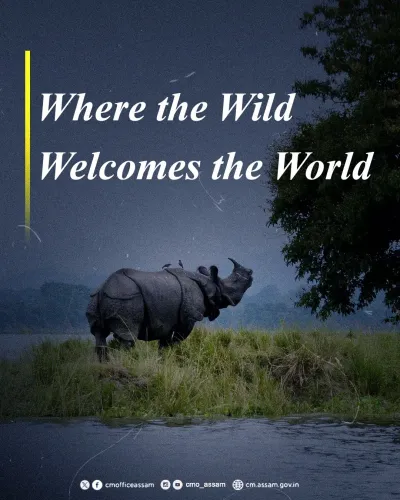
At the centre of his concern is the greater one-horned rhinoceros, a globally protected species for which Kaziranga serves as the primary stronghold. 'The greater one-horned rhinoceros is not just a symbol of Assam; it represents the incredible biodiversity that we have a responsibility to protect,' Sesh wrote. He warned that once a natural corridor is disrupted or a habitat permanently altered, restoration becomes 'incredibly difficult, sometimes impossible.'
On Tourism Versus Conservation
Sesh was careful to distinguish between opposing development outright and advocating for responsible planning. 'I understand that tourism can generate employment, create opportunities and contribute to the local economy. But development must be planned with a long-term vision, particularly when it concerns ecologically sensitive regions,' he said.
He added: 'We need to ask ourselves whether every piece of land needs to be commercially developed, and whether the immediate benefits of construction justify the possible long-term consequences for wildlife and the environment. Sustainable tourism should be about experiencing nature while preserving it, not about changing the very landscape that makes a place special in the first place.'
Call for Community Voices
The actor broadened the conversation beyond wildlife, highlighting the generations of local communities whose lives and livelihoods are intertwined with the Kaziranga landscape. 'Their voices, experiences and concerns must be part of any decision-making process that affects their surroundings,' he said. 'Conservation cannot succeed if the people who have coexisted with nature for generations are left out of the conversation.'
What Sesh Is Asking For
In his letter, the actor made three specific requests to the Assam government: a thorough review of the implications of the proposed resort development; complete transparency regarding the land parcels involved; and independent environmental impact assessments where deemed necessary. 'I hope that all relevant ecological, legal and community considerations are examined before any irreversible decisions are made,' he wrote.
Sesh concluded with a generational framing: 'Kaziranga is a priceless natural treasure, and we owe it to future generations to protect its wildlife, its forests and the people who call this region home. The decisions we make today will determine what we leave behind tomorrow.' The Assam government is yet to formally respond to the letter.
Point of View
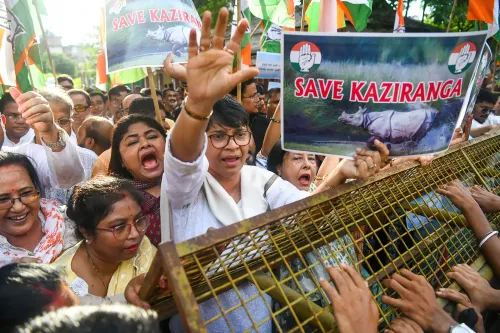
But Sesh's letter is notable for its specificity — it asks for land transparency and independent environmental assessments, not just good intentions. Kaziranga's buffer zones have faced incremental encroachment pressures for years, and resort projects in ecologically sensitive corridors tend to generate cumulative, hard-to-reverse impacts that initial approvals rarely anticipate. The Assam government's silence is telling: a formal response would either legitimise the review process or expose the decision to sharper scrutiny. What is missing from this conversation is a concrete legal framework — India's existing environmental clearance regime has repeatedly proved inadequate for buffer-zone commercial projects, and one actor's letter, however well-argued, cannot substitute for stronger statutory safeguards.
NationPress
14 Oct 2026
Frequently Asked Questions
What is Adivi Sesh's concern about Kaziranga?
Adivi Sesh has urged the Assam government to review a proposed resort development near Kaziranga, warning it could damage the ecologically sensitive region, disrupt wildlife corridors, and harm the habitat of the greater one-horned rhinoceros. He has called for transparency on the land involved and independent environmental assessments.
What is the proposed development near Kaziranga?
The proposal involves resort development in or near the Kaziranga region in Assam, one of India's most critical wildlife zones. Specific details about the developer and exact land parcel have not yet been made public, and Sesh's letter specifically demands full transparency on these points.
Why is Kaziranga ecologically significant?
Kaziranga National Park is a UNESCO World Heritage Site and hosts the world's largest population of the greater one-horned rhinoceros. It is also home to tigers, elephants, wild water buffalo, and a wide range of bird species, making it one of India's most biodiverse protected areas.
What does Adivi Sesh want the Assam government to do?
He has made three specific requests: a thorough review of the resort development's implications, complete transparency regarding the land parcels involved, and independent environmental impact assessments where necessary. He has also asked that local communities be included in the decision-making process.
Has the Assam government responded to Adivi Sesh's letter?
As of the time of reporting, the Assam government has not issued a formal response to Adivi Sesh's letter urging a review of the proposed Kaziranga resort development.