Rajkot drones identify 10,333 mosquito breeding sites across 95 sq km
Synopsis
Rajkot's civic body has turned to drones and AI to find mosquito breeding hotspots at a scale rarely seen in Indian municipal health drives — 10,333 sites flagged across nearly 60% of the city, with 149 hours of aerial spraying already done. The tech-backed sweep runs alongside a parallel ground operation that reached over a lakh households in just one week.
Key Takeaways
Rajkot Municipal Corporation (RMC) identified 10,333 potential mosquito breeding sites via AI-assisted drone surveys across 95.27 sq km .
Drones logged 149 hours of insecticide spraying; 5,605 of the flagged sites have already been treated by field staff.
The survey covers 10 municipal wards out of Rajkot's total area of 161.85 sq km .
Between 1–7 October 2026 , anti-larval measures were carried out in 1,03,359 households ; fogging in 953 households .
303 non-residential premises inspected; notices issued to 297 persons across residential and commercial areas.
Health staff surveyed 2,47,323 people for water-borne disease risk and conducted 2,671 R.C. tests in the same period.
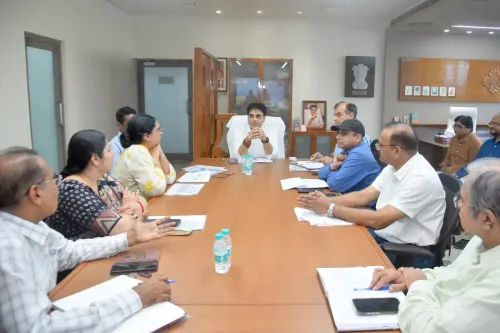
Rajkot Municipal Corporation (RMC) has identified 10,333 potential mosquito breeding sites through drone-based surveys and artificial intelligence (AI)-assisted surveillance covering 95.27 square kilometres of the city, in a stepped-up drive to prevent mosquito-borne diseases. The initiative, led by the civic body's Health Department, marks one of the most technology-intensive vector-control efforts undertaken by a Gujarat municipal corporation in recent times.
Scale of the Survey
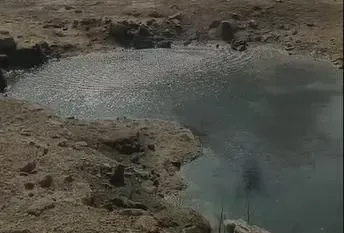
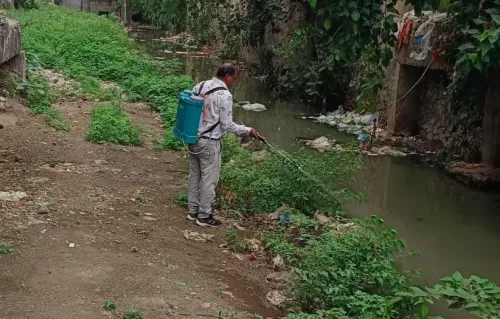
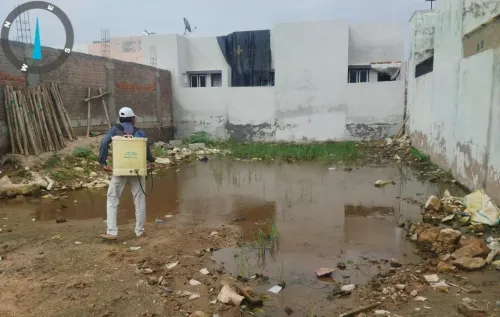
The drone-assisted sweep has covered parts of 10 municipal wards — wards 3, 7, 13, 4, 5, 6, 18, 1, 11 and 12 — out of the city's total area of 161.85 square kilometres, meaning roughly 59% of Rajkot's geographic expanse has now been assessed. Drones have logged a cumulative 149 hours of insecticide spraying, targeting drains, pits, pools in riverbed areas, and waterlogged pockets where conventional equipment either cannot reach or poses operational risks to workers.
Of the 10,333 flagged sites, 5,605 have already been attended to by field staff through insecticide application or source-reduction measures, according to the department's statement. Health workers from the respective wards and health centres are independently verifying findings before carrying out remediation.
Conventional Operations Running in Parallel
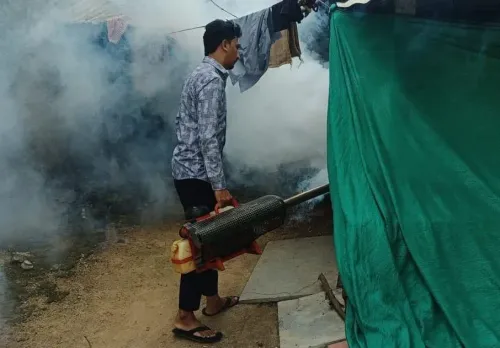
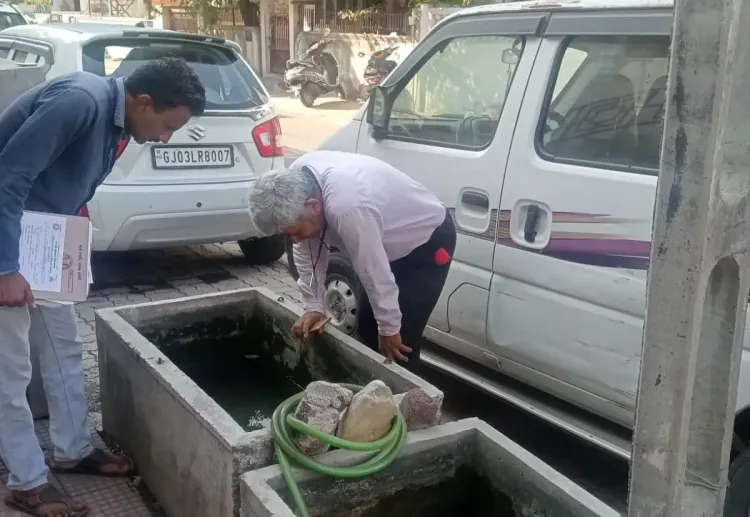
Alongside the AI-and-drone initiative, the RMC has maintained conventional mosquito-control operations at scale. Between 1 October and 7 October 2026, field workers, urban Accredited Social Health Activists (ASHAs) and Multi-Purpose Health Workers (MPHWs) carried out anti-larval measures across 1,03,359 households. Fogging was conducted in 953 households, with vehicle-mounted fogging machines deployed in areas of high mosquito density, including residential societies, public roads, and gathering venues.
Non-Residential Premises Under Watch
The Health Department has inspected 303 non-residential premises for potential breeding activity, covering construction sites, schools, hospitals, hotels, industrial units, hostels, commercial complexes, scrap yards, basements, party plots, religious venues, petrol pumps, and government offices. Notices were issued to 260 persons in residential areas and 37 persons in commercial areas for mosquito-breeding violations, and administrative charges were levied under applicable municipal bylaws.
Water-Borne Disease Surveillance
Alongside vector control, RMC has activated surveillance to prevent water-borne disease outbreaks. During the same 1–7 October period, health staff surveyed a population of 2,47,323, distributed 4,664 chlorine tablets and 889 oral rehydration solution (ORS) packets, and conducted 2,671 rapid-confirmation (R.C.) tests. The department has urged residents to prevent water accumulation, maintain drinking water hygiene, and cooperate with drone survey teams operating in their neighbourhoods.
With the survey still covering roughly 40% of the city's total area yet to be mapped, the RMC is expected to extend drone operations to remaining wards in the coming weeks.
Point of View
But the hard test is what happens after the flagging. Of the 10,333 sites identified, only 5,605 — just over half — had been remediated at the time of reporting, which means thousands of active breeding pockets remain untreated. The real metric to watch is not how many sites the drones find but how quickly and completely the ground teams close the loop. Technology can surface a problem at scale; it cannot substitute for the last-mile enforcement and sustained follow-up that ultimately breaks a disease cycle.
NationPress
10 Oct 2026
Frequently Asked Questions
What has Rajkot Municipal Corporation done to control mosquitoes?
The RMC has used AI-assisted drone surveys to identify 10,333 potential mosquito breeding sites across 95.27 square kilometres of the city, logging 149 hours of aerial insecticide spraying. In parallel, field teams have conducted anti-larval operations in over a lakh households between 1 and 7 October 2026.
How many mosquito breeding sites have been treated so far?
Of the 10,333 sites identified through drone surveys, 5,605 have been covered by field staff for insecticide spraying or source-reduction measures. The remaining sites are being verified and prioritised by health workers from the respective wards.
Which areas of Rajkot have been covered by the drone survey?
The survey has covered parts of 10 municipal wards — wards 3, 7, 13, 4, 5, 6, 18, 1, 11, and 12 — spanning 95.27 square kilometres out of the city's total area of 161.85 square kilometres. The remaining wards are expected to be covered in subsequent phases.
What action has RMC taken against premises with mosquito breeding?
The Health Department inspected 303 non-residential premises and issued notices to 260 persons in residential areas and 37 in commercial areas for mosquito-breeding violations. Administrative charges were also levied under applicable municipal bylaws.
What is RMC doing to prevent water-borne diseases alongside mosquito control?
Between 1 and 7 October 2026, health staff surveyed a population of 2,47,323, distributed 4,664 chlorine tablets and 889 ORS packets, and conducted 2,671 R.C. tests. Residents have been advised to boil or purify drinking water and follow guidance from health workers.