Uganda Ebola cases rise to 5 as DRC outbreak risk upgraded to 'very high'
Synopsis
Uganda's Ebola count has jumped to five in a single update, with a health worker and a driver among the newly infected — a pattern that signals active transmission chains. The WHO has simultaneously upgraded the DRC outbreak risk to 'very high' nationally, and the UN has unlocked $60 million in emergency funding. The cross-border case of a symptomatic Congolese woman entering Uganda is the detail that will alarm regional health authorities most.
Key Takeaways
Uganda confirmed three new Ebola cases on 23 May , bringing the national total to five .
New patients include a Ugandan driver , a Ugandan health worker , and a Congolese woman who entered Uganda with symptoms.
The WHO upgraded the DRC Ebola outbreak risk from high to 'very high' at the national level.
WHO Director-General Tedros Adhanom Ghebreyesus warned authorities to maintain 'high vigilance' to prevent further spread.
The UN has allocated up to $60 million from its Central Emergency Response Fund to accelerate the regional Ebola response.
All contacts linked to confirmed cases are being monitored by response teams.
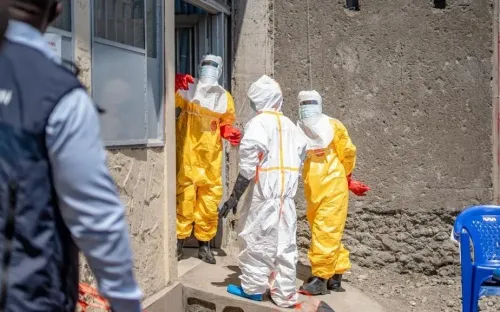
Uganda confirmed three new Ebola cases on Saturday, 23 May, raising the country's total infection count to five amid a rapidly evolving outbreak that spans both Uganda and the Democratic Republic of Congo (DRC). The development comes as the World Health Organisation (WHO) upgraded the public health risk of the DRC Ebola outbreak from high to very high at the national level.
Who the New Cases Are
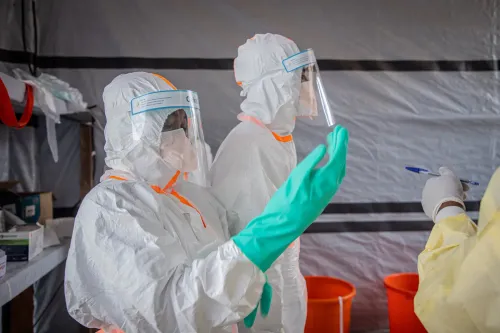
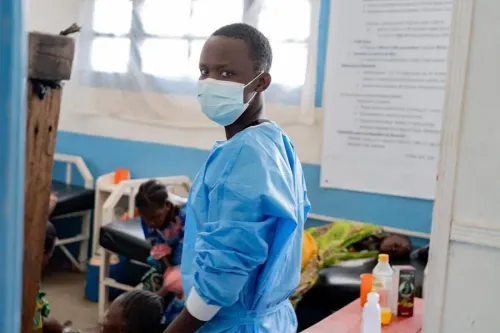
According to Uganda's Ministry of Health, the three newly confirmed patients include a Ugandan driver who transported the country's first confirmed Ebola case, a Ugandan health worker exposed while caring for that same patient, and a Congolese woman from the DRC who crossed into Uganda displaying active symptoms. All three are now receiving treatment, the ministry confirmed.
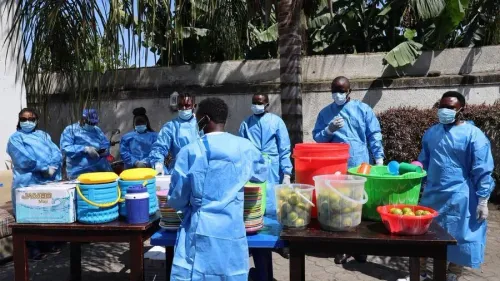
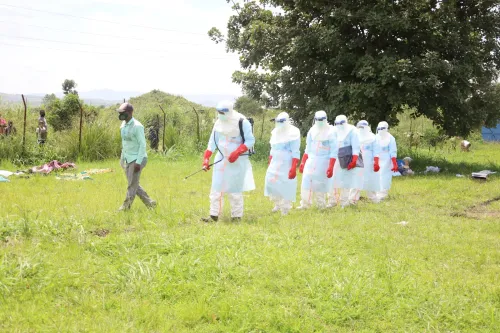
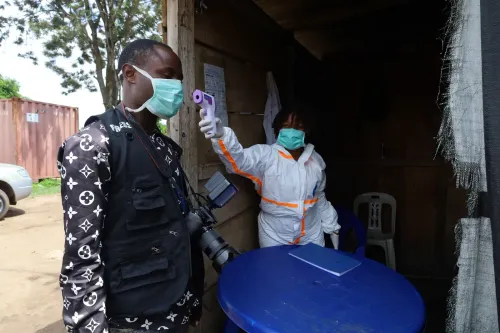
The ministry also stated that all contacts linked to the confirmed cases have been identified and are under close monitoring by response teams — a critical containment step in Ebola outbreak management.
WHO's Warning and Risk Escalation
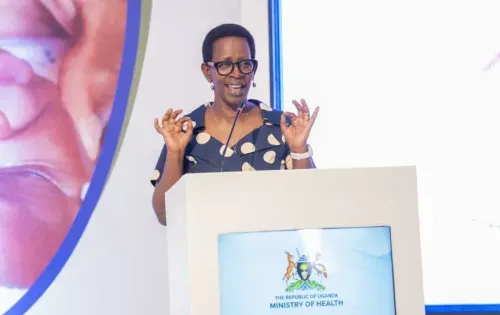
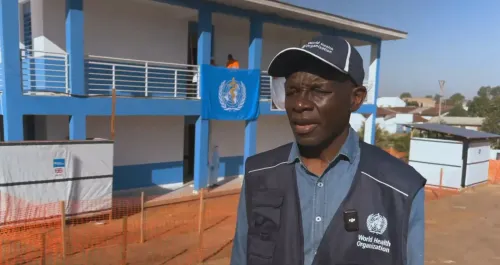
Tedros Adhanom Ghebreyesus, Director-General of the World Health Organisation (WHO), acknowledged Uganda's Ministry of Health for its efforts to detect, monitor, and care for suspected and confirmed Ebola patients. He issued a stark caution, however.
'At this critical moment in the outbreak response, it is vital that authorities maintain high vigilance to control the expansion of the virus,' Tedros said. He added: 'WHO is working side by side with Africa CDC and partners in the DRC and Uganda, to contain the outbreak, support affected people, and bolster a coordinated response.'
On Friday, Tedros told a press conference: 'We are revising our risk assessment of Ebola to very high at the national level, high at the regional level, and low at global level.' The global-level risk remains low, but the regional escalation signals heightened concern for East and Central Africa.
Africa CDC and UN Response
The Africa Centres for Disease Control and Prevention (Africa CDC) called for enhanced regional solidarity to rapidly contain the outbreak across the DRC and Uganda. The body has been coordinating with WHO and national health authorities on a unified response strategy.
In a significant financial commitment, Tom Fletcher, United Nations Under-Secretary-General for Humanitarian Affairs and Emergency Relief Coordinator, announced on Friday that he is allocating up to $60 million from the UN's Central Emergency Response Fund (CERF) to accelerate the Ebola response in Congo and the wider region. This represents one of the larger single emergency allocations for an Ebola outbreak in recent years.
Cross-Border Dimension and What It Means
The confirmation of a Congolese national entering Uganda with active symptoms underscores the cross-border transmission risk that has complicated containment efforts. The DRC has battled multiple Ebola outbreaks over the past decade, but the current strain's spread into Uganda adds a regional layer that demands coordinated border health surveillance.
Notably, Uganda has managed previous Ebola incursions — including a 2022 outbreak of the Sudan strain — and its health system has developed institutional experience in contact tracing and isolation protocols. Whether that experience is sufficient against the current outbreak's pace will become clearer in the coming days as contact monitoring data matures.
With the UN funding unlocked and WHO and Africa CDC engaged, the next critical window is the 21-day incubation period monitoring of all identified contacts — any new cases emerging from that pool will determine whether the outbreak is being contained or is widening.
Point of View
But the cross-border dimension is the variable that previous outbreaks did not present so early. The WHO's risk escalation to 'very high' nationally is not bureaucratic language; it is a signal that the agency sees the DRC situation as potentially beyond the capacity of national systems alone. The $60 million UN allocation is meaningful, but speed of deployment — not just the headline figure — will determine whether it arrives in time to matter.
NationPress
25 Sept 2026
Frequently Asked Questions
How many Ebola cases have been confirmed in Uganda?
Uganda has confirmed a total of five Ebola cases as of 23 May, following the addition of three new patients — a driver, a health worker, and a Congolese woman who entered the country with symptoms. All confirmed patients are currently receiving treatment.
Why did WHO upgrade the DRC Ebola outbreak risk to 'very high'?
The WHO revised its risk assessment to 'very high' at the national level in the DRC because the outbreak has shown signs of wider spread, including cross-border transmission into Uganda. The regional risk is rated high, while the global risk remains low.
Who is funding the Ebola response in the DRC and Uganda?
The United Nations has allocated up to $60 million from its Central Emergency Response Fund (CERF), announced by UN emergency relief coordinator Tom Fletcher on Friday. WHO and Africa CDC are also providing direct operational support.
How did a Congolese woman end up as a confirmed case in Uganda?
According to Uganda's Ministry of Health, a Congolese woman from the DRC crossed into Uganda while already displaying Ebola symptoms and has since been confirmed as one of the five cases. Her entry highlights the cross-border transmission risk central to this outbreak.
What is being done to prevent further spread in Uganda?
Ugandan health authorities have identified all contacts linked to confirmed cases and placed them under close monitoring. WHO and Africa CDC are coordinating with national teams on containment, and the 21-day incubation window for all contacts is the critical surveillance period ahead.