Uganda tightens Ebola controls as case count holds at 19; DRC crosses 635
Synopsis
Uganda has recorded no new Ebola cases in five days, but the government is not standing down — mass gatherings are suspended, border districts are on alert, and a new clinical finding suggests the Bundibugyo virus concentrates in saliva and stool rather than blood. Meanwhile, the DRC source outbreak has crossed 635 confirmed cases, with WHO's highest alert already triggered.
Key Takeaways
Uganda has recorded 19 confirmed Ebola cases and 2 deaths , with no new cases in the past five days as of 11 June .
Health Minister Chris Baryomunsi announced suspension of mass gatherings including weddings and market days in border districts.
Permanent Secretary Diana Atwine noted the Bundibugyo Ebola virus is more concentrated in saliva, vomitus, and stool than in blood once symptoms appear.
The DRC has recorded 635 confirmed cases as of 9 June , with 30 total recoveries and contact tracing coverage rising to 61.1 per cent .
The WHO declared the DRC outbreak a public health emergency of international concern on 17 May .
490 tonnes of medicines have been deployed across Ituri, North Kivu, and South Kivu provinces in the DRC.
Uganda's Ministry of Health has announced a fresh set of Ebola prevention measures to contain any possible spillover from the ongoing outbreak in neighbouring Democratic Republic of the Congo (DRC), even as the country has recorded no new cases in the past five days. The cumulative tally in Uganda stands at 19 confirmed cases, including two deaths, as of 11 June.
New Prevention Measures Rolled Out
Health Minister Chris Baryomunsi, speaking after President Yoweri Museveni's national address on the outbreak on Wednesday, said prevention guidelines have been distributed to all districts bordering the eastern DRC — the epicentre of the current outbreak. Mass gatherings, including weddings and market days, have been suspended, and schools have been directed to strictly adhere to the ministry's health protocols.
The measures signal a deliberate escalation in Uganda's preparedness posture, even in the absence of active transmission. This is consistent with the country's response playbook from earlier outbreaks, where border-district surveillance has historically been the first line of defence.
New Scientific Insight on Virus Concentration
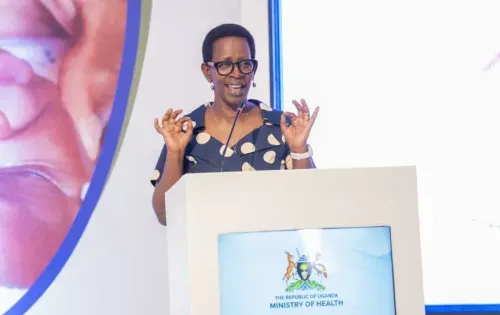
Diana Atwine, permanent secretary at the Ministry of Health, shared an observation that could have broader implications for global Ebola response. Recent findings indicate that once symptoms appear, the Bundibugyo Ebola virus is more concentrated in the alimentary canal than in the bloodstream.
'We have seen that when people start getting symptoms, the virus is highly concentrated in the saliva, vomitus and the stool,' Atwine said, adding that the finding could advance global knowledge on combating Ebola. She urged the public to avoid sharing cups or drinking utensils and to refrain from eating cracked fruits during the fruit season, as partial animal consumption of such fruit is difficult to detect.
DRC Outbreak: 635 Cases and Counting
Across the border, the DRC's confirmed Ebola case count has climbed to 635 as of 9 June, according to DRC Health Minister Roger Kamba. In a post on social media platform X on Wednesday, Kamba said the outbreak — caused by the Bundibugyo Ebola virus — continues to pose challenges, though the response is gaining momentum as more patients recover and contact tracing improves.
The proportion of contacts under follow-up has risen to 61.1 per cent, up from 56.4 per cent a day earlier. Kamba also announced eight new recoveries — seven in Nyankunde and one in Mongbwalu, both in the eastern province of Ituri — bringing total recoveries to 30. 'Each recovery sends a strong message: come for treatment, as early care saves lives,' he said.
Resources Deployed and International Alert
According to Kamba, 490 tonnes of medicines have been deployed, laboratories strengthened, and response teams mobilised around the clock across Ituri, North Kivu, and South Kivu provinces. The DRC declared its latest Ebola outbreak on 15 May. Two days later, on 17 May, the World Health Organization (WHO) declared the outbreak a public health emergency of international concern (PHEIC) — its highest alert level.
With Uganda's border districts on heightened watch and the DRC's case count still rising, the trajectory of the outbreak over the coming weeks will be closely monitored by regional and global health authorities.
Point of View
But five days of silence in an active cross-border outbreak is not a clearance — it is a pause. The more significant detail is the clinical observation from Atwine: if the Bundibugyo strain concentrates in alimentary-canal secretions rather than blood, standard blood-based triage protocols may need recalibration, a point that deserves far more attention than it is getting. On the DRC side, a jump from 56.4 per cent to 61.1 per cent contact tracing in a single day is progress, but with 635 cases and a WHO PHEIC already declared, the window for containment is narrowing. The real risk is fatigue — both in the field and in donor attention — setting in before the curve bends.
NationPress
19 Sept 2026
Frequently Asked Questions
How many Ebola cases has Uganda confirmed so far?
Uganda has confirmed a cumulative total of 19 Ebola cases, including two deaths, as of 11 June. The country has not recorded any new cases in the past five days.
What new Ebola prevention measures has Uganda announced?
Uganda's Ministry of Health has suspended mass gatherings including weddings and market days in border districts and distributed prevention guidelines to all districts bordering eastern DRC. Schools have been directed to strictly follow ministry health protocols.
What is the current Ebola situation in the DRC?
The DRC has recorded 635 confirmed Ebola cases as of 9 June, caused by the Bundibugyo Ebola virus. There have been 30 total recoveries, and 490 tonnes of medicines have been deployed across Ituri, North Kivu, and South Kivu provinces.
Why did the WHO declare a public health emergency over this Ebola outbreak?
The World Health Organization declared the DRC's Ebola outbreak a public health emergency of international concern on 17 May — its highest alert level — due to the scale and cross-border risk posed by the Bundibugyo strain. The declaration came two days after the DRC officially declared the outbreak on 15 May.
What is the new scientific finding about how Ebola spreads?
Uganda's Ministry of Health Permanent Secretary Diana Atwine stated that the Bundibugyo Ebola virus appears to be more concentrated in the alimentary canal — specifically in saliva, vomitus, and stool — than in the blood once symptoms appear. Authorities say this finding could help advance global strategies for combating Ebola.