DR Congo Ebola outbreak: 1,094 cases in first month, WHO flags record caseload
Synopsis
The DRC's Ebola outbreak has produced the highest first-month case count ever recorded on the continent — 1,094 confirmed cases in just over five weeks — with WHO warning of 'very high' risk as the virus expands into new health zones and spills across the Uganda border. Treatment beds have jumped from a handful to over 500, but breaking community transmission in conflict-affected Ituri remains the critical test.
Key Takeaways
The DRC has recorded 1,094 confirmed Ebola cases and 277 deaths since the outbreak was declared on 15 May 2025 .
The WHO confirmed this is the highest first-month caseload in any Ebola outbreak in Africa.
Treatment capacity has grown from a handful of beds to over 500 beds across 19 health zones ; daily testing has risen from 30 to more than 2,000 tests.
Ituri province accounts for approximately 90% of all infections; DRC President Tshisekedi plans to visit the epicentre.
Uganda has confirmed 20 cases (15 imported), with the DRC and Uganda launching a formal cross-border collaboration framework on 24 June .
The WHO rates Ebola risk as very high in the DRC and high in Uganda.
The Democratic Republic of the Congo (DRC) has recorded 1,094 confirmed Ebola cases, including 277 deaths, since the outbreak was declared on 15 May 2025 — with the World Health Organization (WHO) confirming this is the highest first-month caseload ever registered in an Ebola outbreak on the African continent. Official data released on Tuesday, 24 June showed 387 patients currently under quarantine or receiving treatment, and 115 recoveries. Authorities have additionally logged 131 suspected cases, including 44 suspected deaths.
Record Scale of the Outbreak
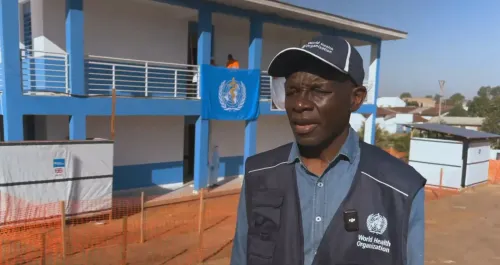
Abdirahman Mahamud, Director of Health Emergency Alert and Response Operations at the WHO, told a press briefing in Geneva on Tuesday: 'This is the largest number of confirmed cases in the first month of an Ebola disease outbreak in Africa.' The DRC health ministry's daily epidemiological report noted a consistent week-on-week rise in confirmed cases, pointing to ongoing community transmission as the primary driver of the surge.
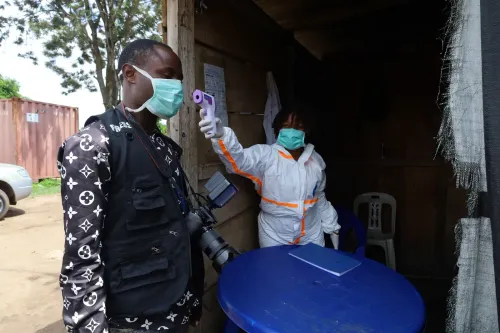
Notably, intensified public health measures — including stronger epidemiological and laboratory surveillance and the decentralisation of diagnostic capacity — have contributed to earlier detection, which in turn confirms expanded community transmission rather than simply reflecting improved testing alone.
Response Capacity Scaled Up Rapidly
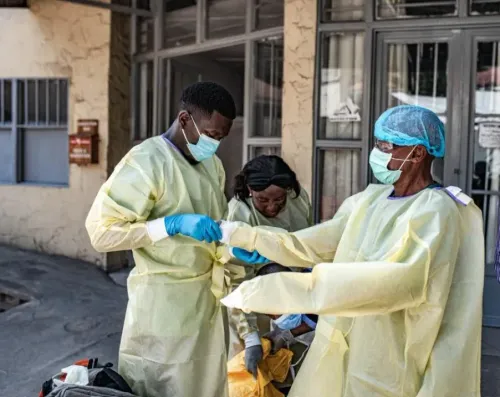
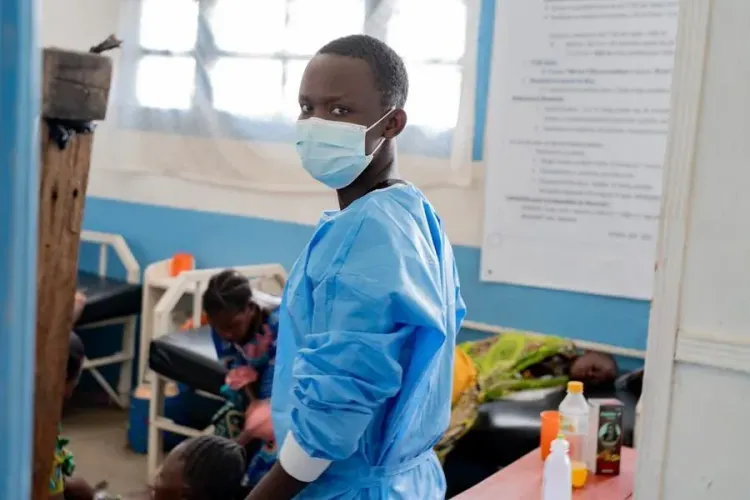
According to Mahamud, treatment capacity has expanded significantly over the past two weeks, growing 'from a handful to over 500 beds across 19 health zones.' Laboratory testing has seen an equally sharp ramp-up: from roughly 30 tests per day in the capital Kinshasa at the outbreak's start to more than 2,000 tests per day through a network of eight decentralised laboratories across Ituri, North Kivu, and South Kivu provinces.
This rapid scale-up mirrors lessons drawn from past DRC outbreaks, where delayed decentralisation of diagnostics allowed the virus to spread unchecked into remote health zones before containment measures could take hold.
Presidential Response and Regional Cooperation
DRC President Félix Tshisekedi announced on Tuesday that he would travel to Ituri province — the epicentre of the outbreak, accounting for approximately 90 per cent of all infections — to personally oversee response operations on the ground. He made the remarks at a joint press conference in Kinshasa alongside visiting Burundian President Évariste Ndayishimiye, whose country currently holds the rotating presidency of the African Union (AU).
Prior to the press conference, both leaders were briefed by the DRC's national Ebola response task force. Tshisekedi called for stronger regional cooperation anchored in prevention, epidemiological surveillance, and rapid information-sharing. Ndayishimiye urged African nations and the broader international community not to close borders — a measure that has historically hampered outbreak response by driving cases underground.
Uganda Cross-Border Spread and Joint Action
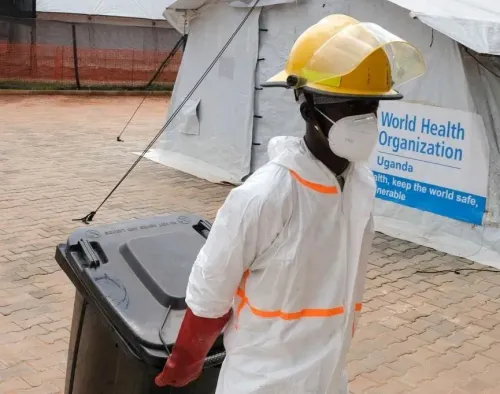
Uganda, which shares a border with Ituri province, confirmed one additional Ebola case on Tuesday, bringing its total to 20 confirmed cases — including 14 recoveries and 2 deaths. Of these, 15 cases were imported, according to Uganda's health ministry. On the same day, Uganda and the DRC formally launched a cross-border collaboration framework covering shared surveillance, joint deployment of rapid response teams, mobile laboratories, and Ebola treatment centres along the eastern DRC–western Uganda corridor.
The WHO's risk assessment, updated last Friday, rated the Ebola-related health risk in the DRC as very high, citing ongoing transmission and the outbreak's expansion into new health zones. The risk level in Uganda was assessed as high, given confirmed cross-border spread through imported cases and the dense epidemiological links along the shared border corridor. The situation underscores the challenge of containing an outbreak that straddles one of central Africa's most porous and conflict-affected frontiers.
What Comes Next
With treatment and testing capacity now scaling faster than in the outbreak's first weeks, health authorities face the harder task of breaking community transmission chains in remote and conflict-affected zones. President Tshisekedi's planned visit to Ituri signals a political commitment to front-line engagement, though the durability of the regional cooperation framework — and international funding flows — will ultimately determine how quickly the trajectory bends.
Point of View
094-case first-month figure is not just a statistical record — it is a structural warning. Past DRC outbreaks were eventually contained, but each one that breached the Ituri corridor tested the limits of a health system already strained by conflict and under-investment. The rapid scale-up to 2,000 tests per day and 500 treatment beds is genuinely encouraging, but speed of response has historically lagged speed of transmission in eastern DRC. The real variable is not laboratory capacity — it is community trust and the ability to reach cases in areas where armed groups control access. Closing borders, as Burundian President Ndayishimiye warned against, would be counterproductive; but the cross-border framework with Uganda is only as strong as the political will and funding that backs it in the weeks ahead.
NationPress
24 Jun 2026
Frequently Asked Questions
How many Ebola cases has the DRC reported in the current outbreak?
The DRC has reported 1,094 confirmed Ebola cases, including 277 deaths, since the outbreak was declared on 15 May 2025. An additional 131 suspected cases, including 44 suspected deaths, have also been recorded.
Why is the WHO calling this a record Ebola outbreak?
The WHO has described this as the largest number of confirmed cases recorded in the first month of any Ebola outbreak in Africa. WHO Director of Health Emergency Alert and Response Operations Abdirahman Mahamud confirmed the record at a Geneva press briefing on 24 June.
Which province is the epicentre of the DRC Ebola outbreak?
Ituri province in eastern DRC is the epicentre, accounting for approximately 90 per cent of all infections. DRC President Félix Tshisekedi has announced plans to travel there to oversee response operations.
Has Ebola spread beyond the DRC?
Yes. Uganda has confirmed 20 Ebola cases, including 14 recoveries and 2 deaths, with 15 of those cases imported from the DRC. Uganda and the DRC launched a formal cross-border collaboration framework on 24 June to address the shared threat.
What is the current WHO risk assessment for the Ebola outbreak?
The WHO rates the Ebola health risk in the DRC as very high, citing ongoing community transmission and expansion into new health zones. The risk in Uganda is rated high due to confirmed cross-border spread and dense epidemiological links along the eastern DRC–western Uganda corridor.