Bangladesh 'green' shipbreaking yards: 84 accidents, 15 deaths since 2025
Synopsis
Bangladesh certified 23 of its 31 shipbreaking yards as 'green' under the Hong Kong Convention — yet the period since that treaty took force has seen 84 accidents, 15 deaths, and 81 injuries, culminating in nine workers killed by hydrogen sulphide gas on 14 August. The data makes a stark case that green certification without Basel Convention-level controls is, as critics put it, little more than greenwashing.
Key Takeaways
23 of Bangladesh's 31 shipbreaking yards hold 'green' certification under the Hong Kong Convention .
84 accidents were recorded between 26 June 2025 and 14 August 2026 , killing 15 workers and injuring 81 , according to BILS data.
Nine workers died on 14 August 2026 after hydrogen sulphide gas accumulated inside a tank at Ferdous Steel Ship Recycling Industries , Sitakunda.
The scrapped LNG carrier MT Rasi had arrived at Chattogram anchorage in July 2025 and was beached for demolition shortly after.
BELA argues green licences amount to greenwashing and calls for simultaneous compliance with the stricter Basel Convention .
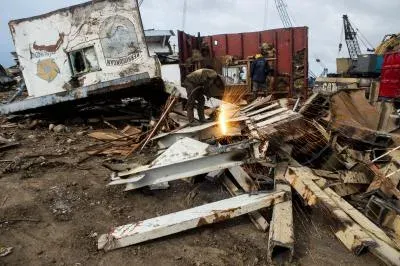
Falling girders, crane failures, and gas explosions were identified as the leading causes of accidents in the period.
Despite 23 of Bangladesh's 31 shipbreaking yards holding official 'green' certification, workers at these facilities continue to face lethal hazards — with 84 accidents recorded since the Hong Kong Convention entered into force on 26 June 2025, according to data compiled by the Bangladesh Institute of Labour Studies (BILS). The figures expose a widening chasm between paper compliance and ground-level safety in one of the world's largest ship recycling industries.
The Sitakunda Tragedy
The most recent and deadly illustration of this gap came on 14 August 2026, when nine workers died after inhaling toxic gas inside a scrap vessel at Ferdous Steel Ship Recycling Industries in Sitakunda's Bhatiari, according to a report by The Daily Star. Officials from the Department of Explosives confirmed that the deaths resulted from hydrogen sulphide gas that had accumulated inside a confined tank aboard the vessel. The scrapped LNG carrier MT Rasi had arrived at Chattogram anchorage in July 2025 and was beached for demolition later that month.
The Scale of the Crisis
BILS data covering the period from 26 June 2025 to 14 August 2026 — precisely the window since the Hong Kong Convention took effect — records 84 accidents, in which 15 workers were killed and 81 others injured. An analysis of the data identified falling girders and heavy objects, crane or wire failures, and gas explosions as the leading causes of incidents. This is not an isolated spike; the pattern points to systemic failures in occupational health and safety that certification alone has not addressed.
What the Hong Kong Convention Covers — and What It Doesn't
The Hong Kong International Convention for the Safe and Environmentally Sound Recycling of Ships is a global treaty adopted in May 2009 by the International Maritime Organisation (IMO), which finally entered into force on 26 June 2025. The convention is designed to ensure that ship dismantling does not harm human health, worker safety, or the environment. However, expert bodies argue the treaty sets an insufficient baseline. The Bangladesh Environmental Lawyers' Association (BELA) contends that shipyards should simultaneously comply with the more stringent Basel Convention on the Control of Transboundary Movements of Hazardous Wastes and Their Disposal.
Greenwashing Allegations
In a statement, BELA said: 'The shipbreakers have argued that the Hong Kong Convention coming into force means there is no need for the controls they faced under the Basel Convention. Yet we continue to see how compliance with the weaker Hong Kong Convention has done little to improve the occupational health and safety of workers who continue to face death in the industry.' Critics argue that the green licences granted to shipyards amount to little more than greenwashing — making false, exaggerated, or misleading claims about environmental and safety compliance while hazardous conditions persist on the ground.
What Happens Next
The 14 August deaths have intensified calls for Bangladesh to mandate simultaneous Basel Convention compliance alongside Hong Kong Convention certification. With the ship recycling industry central to Bangladesh's economy and global shipping lanes, pressure is mounting on regulators, shipowners, and international bodies to close the gap between green certification and verifiable worker safety.
Point of View
Easier to certify against, and conveniently silent on the transboundary hazardous waste controls that make Basel uncomfortable for shipowners. Eighty-four accidents in under fourteen months of the convention's operation is not a teething problem; it is evidence that certification without enforcement infrastructure is structurally meaningless. The nine deaths in Sitakunda should be read not as an isolated tragedy but as the predictable output of a system that rewards paperwork over accountability. Until green licences are tied to third-party, on-site safety audits with real consequences for non-compliance, the label will remain a marketing exercise.
NationPress
1 Oct 2026
Frequently Asked Questions
How many accidents have occurred in Bangladesh's 'green' shipbreaking yards since the Hong Kong Convention took effect?
According to data compiled by the Bangladesh Institute of Labour Studies (BILS), 84 accidents were recorded between 26 June 2025 and 14 August 2026 — the period since the Hong Kong Convention entered into force. These incidents resulted in 15 deaths and 81 injuries.
What happened at the Sitakunda shipbreaking yard on 14 August 2026?
Nine workers died after hydrogen sulphide gas accumulated inside a confined tank aboard the scrapped LNG carrier MT Rasi at Ferdous Steel Ship Recycling Industries in Sitakunda's Bhatiari. The vessel had arrived at Chattogram anchorage in July 2025 and was beached for demolition later that month.
What is the Hong Kong Convention and why is it controversial?
The Hong Kong International Convention for the Safe and Environmentally Sound Recycling of Ships is an IMO treaty adopted in May 2009 that entered into force on 26 June 2025. Critics, including the Bangladesh Environmental Lawyers' Association (BELA), argue it is weaker than the Basel Convention and insufficient to protect worker safety and the environment in shipbreaking yards.
Why are Bangladesh's green shipbreaking certifications being called 'greenwashing'?
Critics argue that the green licences granted to shipyards under the Hong Kong Convention make misleading claims about safety and environmental compliance while deadly accidents continue. BELA has stated that compliance with what it calls the 'weaker Hong Kong Convention' has done little to improve occupational health and safety for workers.
What do experts say should be done to improve safety in Bangladesh's shipbreaking industry?
Expert groups such as BELA argue that shipyards should comply with both the Hong Kong Convention and the more stringent Basel Convention on the Control of Transboundary Movements of Hazardous Wastes. They contend that green certification without Basel-level controls is inadequate to prevent deaths and injuries.