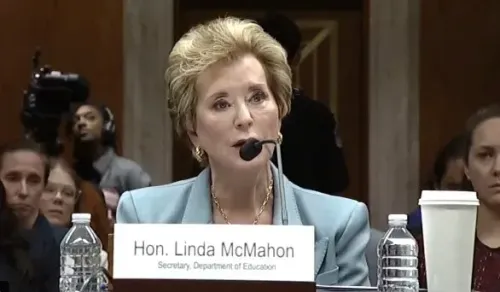
AI cannot replace teachers, says US Education Secretary Linda McMahon
Synopsis
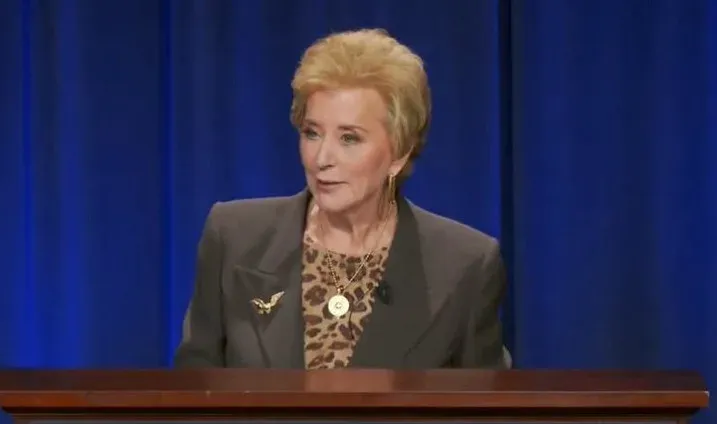
US Education Secretary Linda McMahon drew a firm line at the White House: AI is a tool, not a teacher. But her remarks on guardrails came bundled with a far larger agenda — dismantling the Department of Education entirely, returning control to states, and redirecting $1.7 trillion in student debt oversight to the Treasury. The AI caveat may be the headline; the institutional overhaul is the story.
Key Takeaways
US Education Secretary Linda McMahon said on 25 August that AI must be embraced in schools but 'cannot replace a teacher in the classroom.' McMahon visited the Alpha School in Austin, Texas , citing it as a model for responsible AI integration.
The Trump administration is pursuing inter-agency agreements to shift Department of Education functions to other federal bodies ahead of a potential congressional vote to close it.
A new federal tax credit of up to $1,700 per contributor is part of a school choice programme that governors can opt into.
An inter-agency agreement with the Treasury Department has been signed to transfer oversight of the $1.7 trillion student debt system in stages.
US Education Secretary Linda McMahon on Monday, 25 August said that artificial intelligence must be embraced in schools but requires guardrails and must never be treated as a substitute for human teachers. Speaking to reporters at a press gaggle at the White House in Washington, McMahon drew on a personal visit to a technology-forward school to make her case.
McMahon's Position on AI in Classrooms
'We need to embrace this technology, but it has to have guardrails because it's very important that we understand that AI cannot replace a teacher in the classroom,' McMahon said. She cited her visit to the Alpha School in Austin, Texas, as evidence of AI's potential when deployed thoughtfully alongside human educators.
McMahon described AI's most promising role as that of a personalised tutor — helping students who are falling behind revisit material, while simultaneously offering advanced content to those who are excelling. 'It has a really wonderful opportunity, used correctly, to service children,' she said. She stressed, however, that direct human interaction between teachers and students remains irreplaceable.
The Push to Dismantle the Department of Education
McMahon also outlined the Trump administration's broader agenda to dismantle the US Department of Education and return greater authority over schooling to individual states. She said President Donald Trump had directed her to pursue a 'hard reset' for federal education policy, citing decades of rising expenditure against a backdrop of declining test scores.
'The Department of Education was set up in 1980. We spent over $3 trillion. Our test scores have continued to decline,' McMahon said, attributing the framing to Trump. She described the department as functioning primarily as a conduit for congressionally authorised funds, arguing that many of its programmes pre-dated its creation and had operated under other federal agencies.
The administration is currently signing inter-agency agreements to shift responsibilities to those agencies — moves McMahon said are designed to demonstrate to Congress that the programmes can run more efficiently elsewhere. 'We know ultimately Congress must vote to close the Department of Education,' she acknowledged.
School Choice and the Federal Tax Credit
On school choice, McMahon said a federal tax credit included in the Trump administration's major tax and spending legislation represents 'the closest we've come so far to nationalizing the opportunity for school choice.' Under the programme, state governors may opt in and establish scholarship-granting organisations. Individuals contributing to those organisations would receive a tax credit of up to $1,700.
McMahon said the funding could enable families to move children out of underperforming schools, cover after-school or private tutoring costs, and support children with disabilities.
Student Debt Transfer and What Comes Next
McMahon confirmed that an inter-agency agreement has been signed with the Treasury Department to transfer oversight of the $1.7 trillion student debt system in stages. She said the administration is proceeding deliberately, assessing which responsibilities should move and when.
The US Department of Education was established as a Cabinet-level agency under legislation signed by President Jimmy Carter in 1979 and began operations in 1980. It oversees federal education funding, civil rights enforcement, student aid, and education data, while states and local authorities retain primary control of public schools. Whether Congress will ultimately vote to close it remains an open question.
Point of View
But it risks being drowned out by the administration's simultaneous push to eliminate the very agency responsible for enforcing those guardrails. Dismantling the Department of Education while expanding AI in classrooms creates a regulatory vacuum — who sets the standards, audits the tools, or protects student data if federal oversight is parcelled out to agencies with no education mandate? The $3 trillion spending critique is a legitimate talking point, but declining test scores predated the department's creation and have multiple causes. Returning control to states sounds efficient until one asks which states, and for which children.
NationPress
25 Aug 2026
Frequently Asked Questions
What did US Education Secretary Linda McMahon say about AI in schools?
McMahon said AI must be embraced in schools but must operate with guardrails and can never replace a human teacher. She described AI's best role as a personalised tutor — helping struggling students catch up and offering advanced content to high achievers.
Why does the Trump administration want to close the Department of Education?
President Trump has called for a 'hard reset,' arguing that over $3 trillion in federal education spending since 1980 has coincided with declining test scores. The administration believes returning control to states will produce better outcomes and is signing inter-agency agreements to demonstrate that departmental functions can operate elsewhere.
What is the new federal school choice tax credit?
It is a provision in the Trump administration's major tax and spending legislation allowing individuals to contribute to scholarship-granting organisations and receive a tax credit of up to $1,700. State governors must opt in, and the funds can be used for private schooling, tutoring, or support for children with disabilities.
What is happening with the $1.7 trillion student debt system?
The administration has signed an inter-agency agreement with the Treasury Department to transfer oversight of the $1.7 trillion student debt system in stages. McMahon said the process is being handled deliberately, with decisions made on which responsibilities move and when.
When was the US Department of Education established?
The Department of Education was created under legislation signed by President Jimmy Carter in 1979 and began operating in 1980. It handles federal education funding, civil rights enforcement, student aid, and education data, while states retain primary control over public schools.