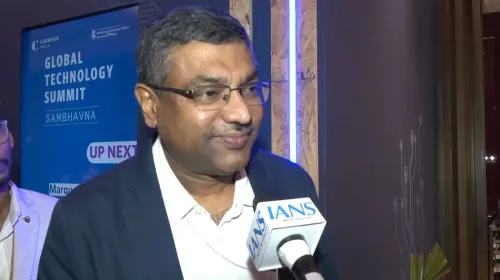
India crafting balanced AI regulatory framework: IT Secretary S Krishnan
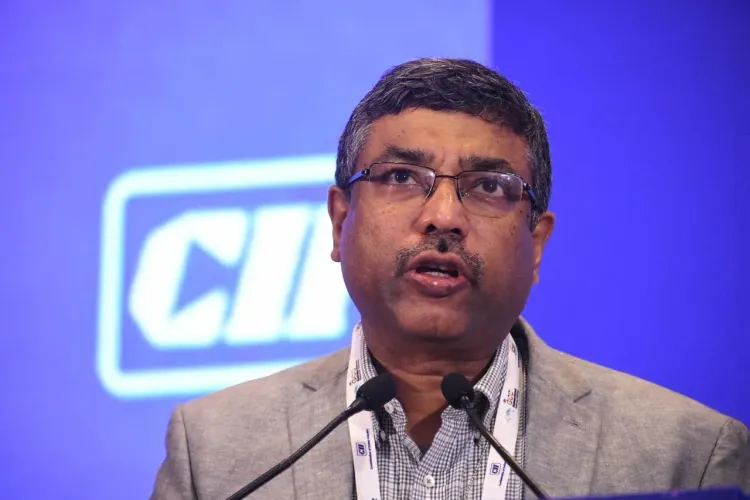
Synopsis
India is refusing to copy the EU's sweeping AI Act or the US's initially hands-off approach — instead, IT Secretary S Krishnan says the country is crafting its own calibrated framework that protects innovation while building guardrails for frontier AI models. With the IndiaAI Mission already running and global norms still forming, India is positioning itself as a third-way voice in the global AI governance debate.
Key Takeaways
IT Secretary S Krishnan confirmed India is developing a balanced AI regulatory framework focused on innovation and safeguards.
India will not replicate the EU AI Act or the US regulatory model, opting instead for a proportionate domestic approach.
Krishnan cited the US restricting access to frontier AI models as evidence of a global shift toward AI regulation.
India is engaged in international AI governance forums including the EU and the US-led Pax Silica initiative .
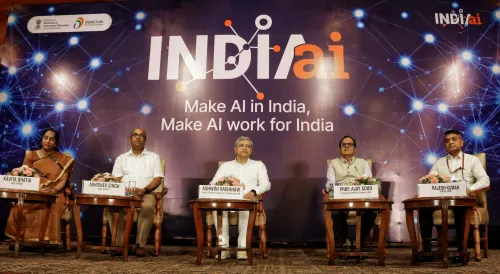
The IndiaAI Mission is simultaneously expanding India's domestic AI ecosystem and public computing infrastructure.
No firm timeline has been set for the framework; Krishnan acknowledged it 'will take some time.'
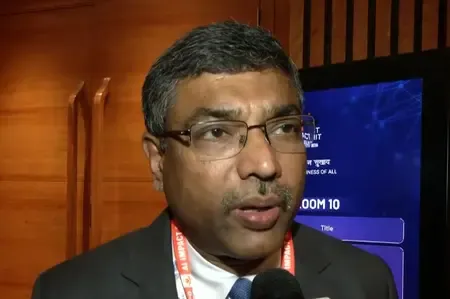
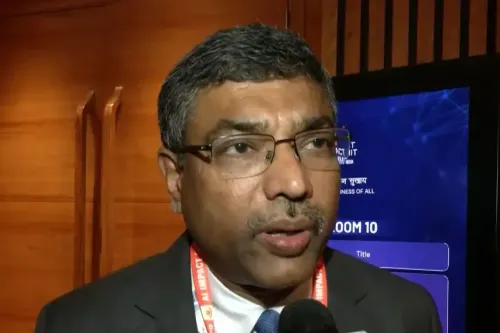
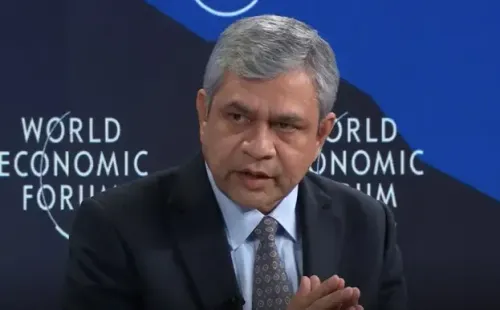
India is actively developing a balanced regulatory framework for artificial intelligence (AI) that aims to foster innovation while putting in place essential safeguards, Electronics and Information Technology Secretary S Krishnan said on 19 July. Speaking from New Delhi, Krishnan confirmed that India is drawing lessons from global regulatory approaches — including those of the United States and the European Union — as it charts its own course on AI governance.
India's Regulatory Stance
Krishnan was unequivocal that India will not simply replicate existing models. The government has ruled out adopting the EU's comprehensive AI Act wholesale, as well as the relatively lighter-touch approach the US initially favoured. Instead, policymakers are working towards a framework tailored to India's needs — one that addresses risks posed by frontier AI models while preserving enough flexibility for startups, research institutions, and innovation-led enterprises.
'Our response has to be a well-calibrated set of rules. We need safeguards and guardrails that AI platforms must follow, but at the same time regulation shouldn't stifle innovation,' Krishnan said.
Shifting Global Consensus on AI Regulation
Krishnan pointed to a notable shift in the global debate. The United States, once the loudest opponent of AI regulation, has moved to restrict access to certain frontier models — a development he cited as evidence of how rapidly thinking on AI governance is evolving worldwide.
'Globally, there's a belief that AI needs to be regulated. The loudest voice against AI regulation was from the US, but today they're regulating access to certain frontier models. That itself shows how the thinking has evolved,' he noted.
India's International Engagements
India has been an active participant in international AI governance discussions. Krishnan confirmed engagements with the EU and the US-led Pax Silica initiative, where key issues such as AI infrastructure, access to computing resources, and responsible AI development are on the agenda.
'We're part of various global fora looking at these issues and we've exchanged notes with countries and blocs including the EU and Pax Silica on what AI regulation could look like,' he said. This comes amid India simultaneously scaling its domestic AI ecosystem through the IndiaAI Mission, strengthening public computing infrastructure, and encouraging indigenous AI model development.
The Challenge of Regulating a Fast-Moving Technology
Krishnan acknowledged that the pace of AI advancement makes legislation uniquely difficult to design. 'The law has to keep pace with technology. That's a fine line we need to tread and designing such a framework is a challenge. It will take some time,' he said.
Notably, this is not just India's challenge — regulators across the world are grappling with the same tension between enabling technological progress and preventing potential harms from powerful AI systems. India's measured approach signals a preference for proportionality over precaution.
What Comes Next
No firm timeline has been announced for the release of a draft AI regulatory framework. The government's signals suggest a phased, consultative process rather than a rushed legislative push. With the IndiaAI Mission already operational and global AI governance norms still in flux, India's framework will likely evolve alongside — rather than ahead of — international consensus.
Point of View
But the absence of a timeline is a risk in itself — the technology will not wait for a consultative process to conclude. The government's insistence on not copying the EU AI Act is understandable given India's startup-heavy ecosystem, but the Pax Silica engagement raises questions about how much independence India actually retains in shaping its own norms. The IndiaAI Mission is building supply-side capacity; without a regulatory backbone, the governance gap between infrastructure and accountability will only widen. The real test is whether 'well-calibrated rules' translate into enforceable standards — or remain a holding statement.
NationPress
19 Oct 2026
Frequently Asked Questions
What is India's approach to AI regulation?
India is developing a balanced AI regulatory framework that prioritises both innovation and safeguards, without replicating the EU AI Act or the US model. IT Secretary S Krishnan has said the framework will be proportionate, practical, and future-ready, with specific guardrails for frontier AI models.
Who is leading India's AI regulatory framework development?
The Ministry of Electronics and Information Technology (MeitY) is leading the effort, with IT Secretary S Krishnan serving as the key spokesperson. The ministry is also overseeing the IndiaAI Mission, which is expanding India's domestic AI infrastructure.
How does India's AI policy differ from the EU AI Act?
India has explicitly ruled out adopting the EU's comprehensive AI Act, which imposes strict obligations across AI risk categories. India's approach is expected to be more flexible, with a focus on ensuring startups and research institutions are not overburdened by compliance requirements.
What is the Pax Silica initiative and why is India involved?
Pax Silica is a US-led international initiative that addresses AI infrastructure, computing access, and responsible AI development. India's participation reflects its intent to engage with global AI governance norms while retaining the right to shape its own domestic framework.
When will India's AI regulatory framework be ready?
No official timeline has been announced. IT Secretary S Krishnan acknowledged that designing AI legislation is a challenge given the speed of technological change, stating it 'will take some time.' A phased, consultative process is expected rather than an immediate legislative rollout.