Jaishankar at ASEAN forum: Attacks on merchant ships unacceptable, Indo-Pacific must stay free
Synopsis
At the 33rd ASEAN Regional Forum in Manila, EAM Jaishankar drew a hard line: attacks on merchant ships are unacceptable, terrorism must face consequences, and the South China Sea needs a legally binding Code of Conduct under UNCLOS. With Houthi strikes in the Red Sea and China-Philippines tensions simmering, India is positioning itself as a frontline voice for rules-based maritime order in the Indo-Pacific.
Key Takeaways
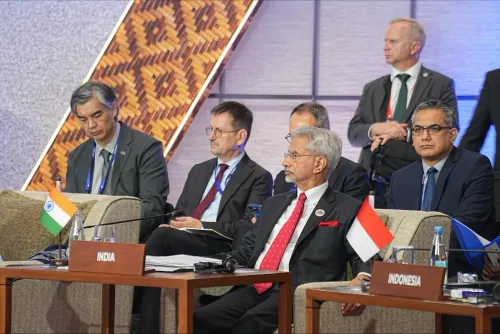
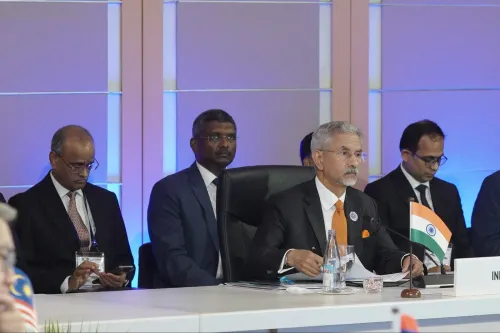
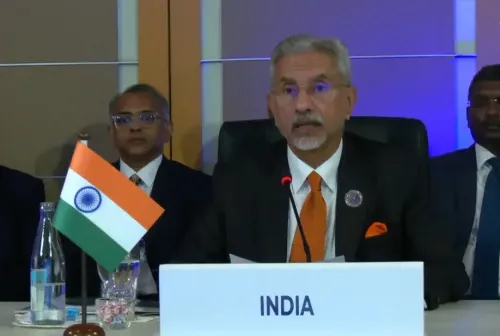
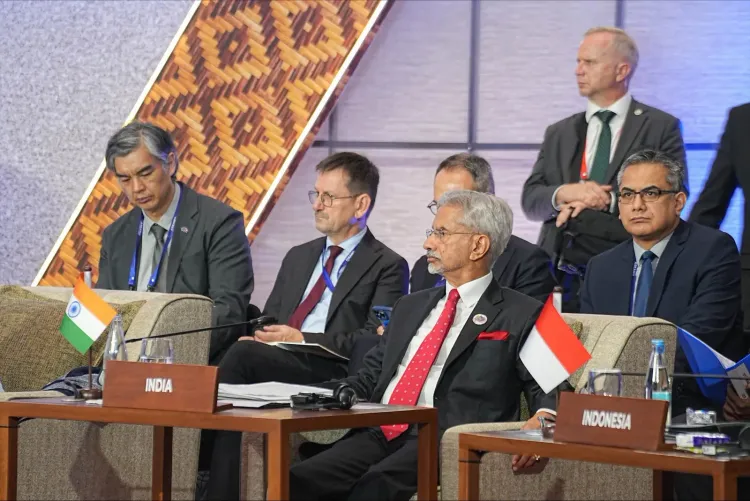
Jaishankar addressed the 33rd ASEAN Regional Forum Ministerial Meeting in Manila on 23 July .
He declared attacks on merchant shipping and civilian infrastructure “unacceptable” and called for unimpeded commerce through international waterways.
India welcomed the Manila Plan of Action and its five pillars , aligning them with New Delhi’s Indo-Pacific approach.
Jaishankar pushed for a legally binding Code of Conduct in the South China Sea, fully compliant with UNCLOS 1982 .
India co-chairs the ADMM+ Counter-Terrorism Working Group with Malaysia and is leading a compendium of best practices.
India’s Information Fusion Centre and Indo-Pacific Maritime Domain Awareness initiative were cited as active contributions to regional maritime security.
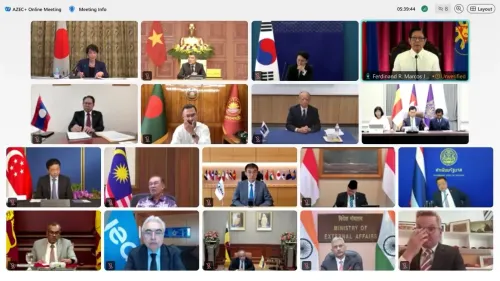
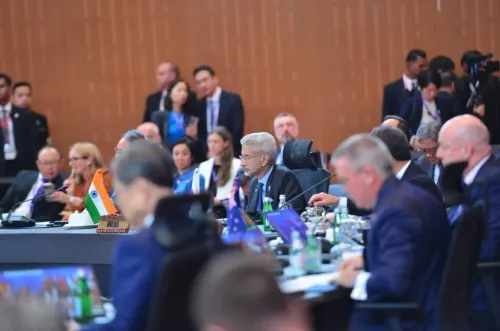
External Affairs Minister S. Jaishankar on Thursday, 23 July declared attacks on merchant shipping and civilian infrastructure “unacceptable”, asserting that commerce through international waterways must remain safe and unimpeded. He was addressing the 33rd ASEAN Regional Forum (ARF) Ministerial Meeting in Manila, one of the region’s most consequential multilateral security gatherings.
Key Statements at the ARF Meeting
Jaishankar underscored the forum’s centrality in addressing political and security challenges across the Indo-Pacific at a time of heightened global uncertainty. “Highlighted that attacks on maritime shipping and civilian infrastructure are unacceptable, and commerce through international waterways should remain safe and unimpeded,” he stated in a post on X following the meeting.
He also welcomed the Manila Plan of Action, noting that its five pillars are aligned with India’s own Indo-Pacific approach, which emphasises a collaborative framework for disaster relief, shared best practices, common standard operating procedures, and real-time as well as tabletop exercises.
India’s Maritime Security Role
Jaishankar outlined India’s active contributions to regional maritime security. “On maritime security, shared that the Information Fusion Centre in India, the Indo-Pacific Maritime Domain Awareness initiative, deployment of Indian forces from the North Arabian Sea to the Western Pacific, are making a valuable contribution to counter piracy, trafficking and narcotics trade as well as secure maritime commerce,” he said.
India also advocates for the Coalition for Disaster Resilient Infrastructure, regularly deploying field hospitals, search and rescue teams, and relief and medical supplies. Jaishankar noted that India has undertaken rehabilitation efforts following the cyclone in Sri Lanka, the Philippines, and Jamaica, and after earthquakes in Myanmar, Venezuela, and Afghanistan.
Zero Tolerance on Terrorism and Non-Proliferation
The minister called for zero tolerance against terrorism, warning that terrorist acts “would have consequences.” He stressed the need to choke financing channels that fuel extremism, adding that India co-chairs the ASEAN Defence Ministers’ Meeting Plus (ADMM+) Experts’ Working Group on Counter-Terrorism with Malaysia and is leading a compendium of best practices.
Jaishankar also urged the international community to remain “on guard against those who undermine non-proliferation and disarmament,” and advocated a responsible, human-centric approach to artificial intelligence alongside deeper cooperation on cybercrime.
South China Sea and the UNCLOS Framework
Reaffirming India’s position on the South China Sea, Jaishankar called for “a substantive, effective and legally binding Code of Conduct (CoC) fully compliant with UNCLOS 1982 that does not prejudice the legitimate rights of all users.” His remarks came amid a fresh confrontation between the Philippines and China in the disputed waters.
The South China Sea is one of the world’s busiest maritime trade corridors, claimed in whole or in part by China, the Philippines, Vietnam, Malaysia, Brunei, and Taiwan. Repeated coast guard and naval confrontations have made it a primary strategic flashpoint in the Indo-Pacific. India’s push for a legally binding CoC signals New Delhi’s intent to remain a norm-setting voice in the region, even as it stops short of directly naming Beijing.
What Comes Next
India’s posture at the ARF signals a continued deepening of its Act East policy and its role as a net security provider in the Indo-Pacific. With maritime commerce under pressure from multiple flashpoints — including Houthi attacks in the Red Sea and China-Philippines tensions — New Delhi’s multilateral engagement at forums like the ARF is likely to intensify in the months ahead.
Point of View
Even as it avoids naming China directly. This matters because India’s trade exposure through the South China Sea is substantial, and the Houthi disruptions in the Red Sea have already demonstrated how quickly maritime chokepoints can scramble supply chains. The ADMM+ co-chairmanship with Malaysia on counter-terrorism also reveals a quiet but deliberate strategy: embed India into ASEAN’s security architecture at the working-group level, not just the ministerial one. The question is whether New Delhi’s norm-setting ambitions will be backed by the operational presence needed to make them credible.
NationPress
23 Jul 2026
Frequently Asked Questions
What did EAM Jaishankar say at the ASEAN Regional Forum in Manila?
Jaishankar declared attacks on merchant shipping and civilian infrastructure “unacceptable” and called for commerce through international waterways to remain safe and unimpeded. He also backed a legally binding Code of Conduct in the South China Sea under UNCLOS 1982 and called for zero tolerance on terrorism.
What is the ASEAN Regional Forum and why does it matter?
The ASEAN Regional Forum (ARF) is a multilateral dialogue platform focused on political and security issues across the Indo-Pacific. It brings together ASEAN members and partner countries, including India, China, the US, and Japan, making it a key venue for managing regional tensions.
What is India’s position on the South China Sea dispute?
India supports a legally binding Code of Conduct in the South China Sea that is fully compliant with UNCLOS 1982 and does not prejudice the legitimate rights of all users. New Delhi stops short of directly naming China but consistently advocates for rules-based maritime order.
How is India contributing to Indo-Pacific maritime security?
India operates the Information Fusion Centre and the Indo-Pacific Maritime Domain Awareness initiative, and deploys forces from the North Arabian Sea to the Western Pacific to counter piracy, trafficking, and narcotics trade. It also deploys field hospitals and relief teams across disaster-hit nations in the region.
What is India’s role in ASEAN counter-terrorism efforts?
India co-chairs the ASEAN Defence Ministers’ Meeting Plus (ADMM+) Experts’ Working Group on Counter-Terrorism alongside Malaysia and is leading the production of a compendium of best practices for the grouping.