Measles outbreak in Bangladesh pushes 9 in 10 families into debt
Synopsis
A joint BDRCS-IFRC assessment of 2,746 families reveals that Bangladesh's measles outbreak is not just a health emergency — it is a financial catastrophe. With 9 in 10 families borrowing to pay for treatment and average costs hitting Tk 16,000 against monthly incomes as low as Tk 6,000, experts say the government's pledge of free primary healthcare has been conspicuously absent when it is needed most.
Key Takeaways
A joint BDRCS-IFRC report assessed 2,746 families with measles patients across 12 government hospitals in Bangladesh .
At least 9 in 10 affected families have taken out loans to cover treatment costs; 6 in 10 have exhausted their savings.
Average measles treatment expenditure per family stands at approximately Tk 16,000 , against monthly household incomes of Tk 6,000–Tk 20,000 .
Public health expert Mushtuq Husain described the situation as 'medical impoverishment', noting the government's healthcare pledges have not materialised during the crisis.
The BDRCS is providing cash assistance to the most vulnerable families while the IFRC has called for stronger social protection systems.
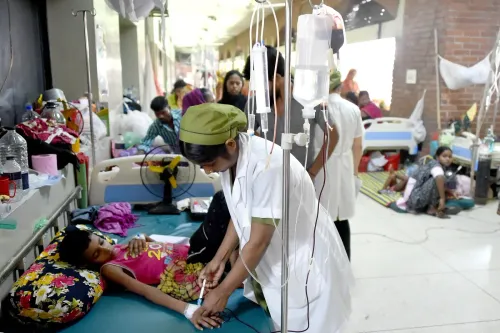
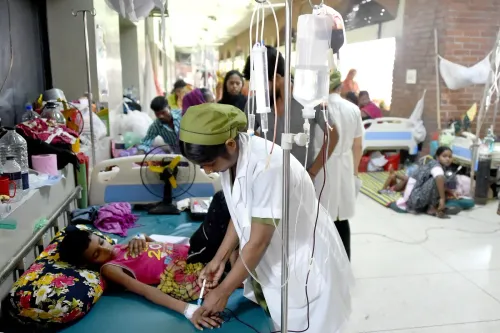
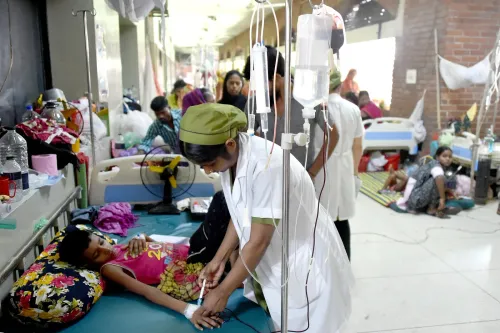
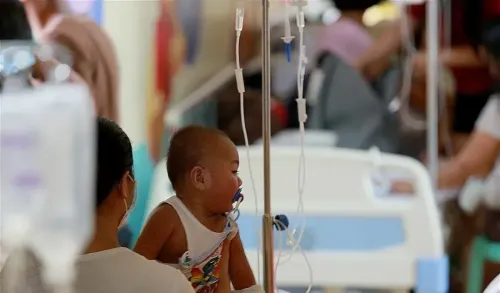
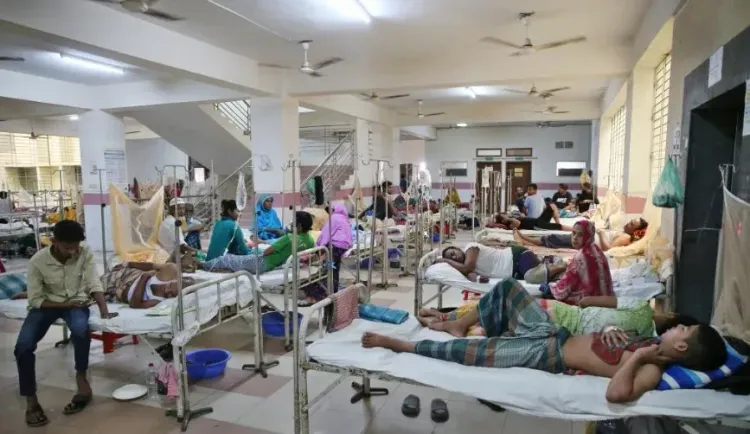
A measles outbreak sweeping Bangladesh has triggered what public health experts are calling 'medical impoverishment', with at least 9 in 10 affected families forced to borrow money for treatment and 6 in 10 having depleted their savings entirely, according to a joint assessment published on Tuesday, 4 August. The findings, drawn from 2,746 families with measles patients receiving care at 12 government medical colleges and district hospitals across the country, lay bare the severe economic toll of the ongoing outbreak.
Scale of the Financial Burden
The joint report by the Bangladesh Red Crescent Society (BDRCS) and the International Federation of Red Cross and Red Crescent Societies (IFRC) found that each affected family spent an average of approximately Bangladeshi Taka (Tk) 16,000 on measles-related treatment. For households earning between Tk 6,000 and Tk 20,000 a month — the income range of the majority of infected children's families, according to the assessment — this expenditure represents a catastrophic financial shock.
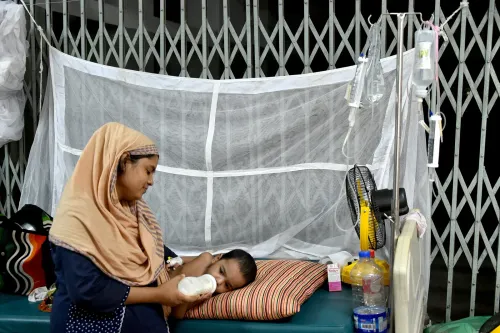
Many parents were also compelled to abandon work to care for hospitalised children, leaving some without income and others unemployed after losing their jobs entirely.
Experts Warn of 'Medical Impoverishment'
Public health expert Mushtuq Husain described the situation as a textbook case of what health economists term 'medical impoverishment' — a condition in which out-of-pocket healthcare costs push households below the poverty line. He noted that the government's own election manifesto had pledged free primary healthcare, a commitment he argued has not been reflected in the response to the current crisis.
'It is an extremely painful experience for any family. The incumbent government pledged in its election manifesto to ensure free primary healthcare. Yet, during this measles crisis, we have seen no reflection of that commitment. It is precisely during times like these that such support is needed most,' Husain said.
Syed Abdul Hamid, Professor at the Institute of Health Economics, Dhaka University, echoed those concerns, arguing that subsidising even diagnostic test costs at public hospitals could offer meaningful relief. 'If the government at least covered part of the cost of diagnostic tests at public hospitals, these families would receive some relief,' he said.
Humanitarian Response Under Way
Kabir M. Ashraf Alam, Secretary General of the Bangladesh Red Crescent Society, confirmed that the organisation has begun providing cash assistance to the most vulnerable families alongside community awareness programmes. He acknowledged that the outbreak has simultaneously created a health emergency and a financial crisis for thousands of households.
Alberto Bocanegra, Head of the IFRC Delegation in Bangladesh, stressed that the crisis extends well beyond hospital wards. 'The impact of this public health emergency does not end at the hospital door. Families caring for sick children or relatives face significant financial constraints. The findings demonstrate that both humanitarian assistance and robust social protection systems are essential during public health emergencies,' he said.
Broader Context and What Comes Next
Measles, a vaccine-preventable disease, disproportionately strikes low-income communities with limited immunisation coverage. This outbreak in Bangladesh underscores the compounding vulnerabilities faced by households already operating at subsistence income levels. Notably, the concentration of cases among children from low-income families points to systemic gaps in routine immunisation reach.
With humanitarian organisations calling for stronger social protection frameworks and experts urging government cost-sharing on diagnostics, the pressure is now on Dhaka to translate its healthcare pledges into measurable action before the outbreak widens further.
Point of View
Not merely a health event. The gap between a government manifesto pledge of free primary healthcare and the reality of families borrowing at Tk 16,000 per episode is not a technicality — it is a policy failure. What is missing from mainstream coverage is the structural dimension: measles is vaccine-preventable, and its concentration among low-income children signals a breakdown in routine immunisation reach long before the outbreak peaked. Cash transfers and awareness campaigns are necessary but insufficient; without government cost-sharing on diagnostics and a credible immunisation catch-up drive, the next outbreak will produce the same financial wreckage.
NationPress
18 Sept 2026
Frequently Asked Questions
What has the Bangladesh measles outbreak revealed about its financial impact on families?
A joint assessment by the BDRCS and IFRC found that at least 9 in 10 families affected by the measles outbreak in Bangladesh have been forced to borrow money to cover treatment costs, while 6 in 10 have drained their savings. The average treatment expenditure per family was approximately Tk 16,000, a devastating sum for households earning between Tk 6,000 and Tk 20,000 a month.
What is 'medical impoverishment' and why are experts using it to describe this outbreak?
'Medical impoverishment' is a term used by health economists to describe situations where out-of-pocket healthcare costs push households into poverty. Experts like public health specialist Mushtuq Husain have applied it to the Bangladesh measles crisis because treatment costs are consuming a large share of low-income families' monthly earnings, forcing them into debt and unemployment.
How many families were covered in the BDRCS-IFRC measles assessment?
The joint assessment examined data from 2,746 families with measles patients undergoing treatment at 12 government medical colleges and district hospitals across Bangladesh.
What relief measures are currently in place for affected families?
The Bangladesh Red Crescent Society is providing cash assistance to the most vulnerable families and running community awareness programmes. The IFRC has called for both expanded humanitarian assistance and stronger government social protection systems to address the financial fallout of the outbreak.
What have experts recommended to ease the burden on measles-affected families?
Professor Syed Abdul Hamid of the Institute of Health Economics at Dhaka University has recommended that the government subsidise diagnostic test costs at public hospitals as an immediate measure. More broadly, experts have urged the government to honour its manifesto pledge of free primary healthcare, particularly during public health emergencies.