Black flags in PoK expose Pakistan's unfulfilled promises one year on

Synopsis
A year after Islamabad signed a formal deal with the JAAC to end PoK protests, black flags and 'Black Day' protests mark the anniversary — with electricity costs, healthcare, and institutional reforms still undelivered. The question now is not what Pakistan promised, but whether its signature means anything at all.
Key Takeaways
The JAAC declared 4 October 2026 a 'Black Day' in PoK , one year after Islamabad signed a pact to address the region's grievances.
The October 2025 agreement included Rs 10 billion for electricity upgrades, health cards, MRI and CT scanners, new education boards, and a 20-minister cabinet cap .
By 28 September 2026 , the JAAC was still demanding written, verifiable proof of implementation rather than fresh political assurances.
Journalist Dimitra Staikou , writing for Europa Wire, documented the human toll — including a cardiac patient in Keri Kot carried by hand to the road due to the absence of an ambulance.
The protest signals a fundamental breakdown of trust between PoK's population and the Pakistani state.
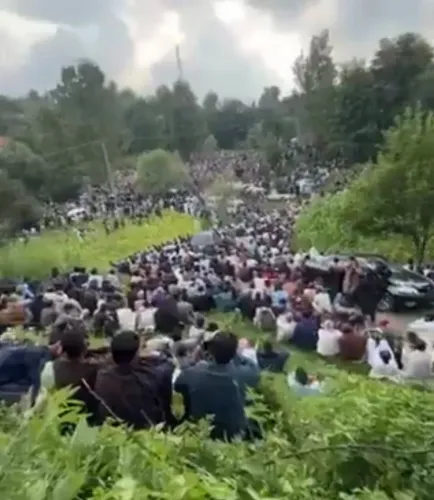
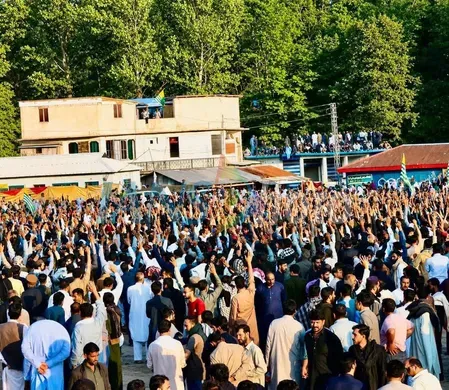
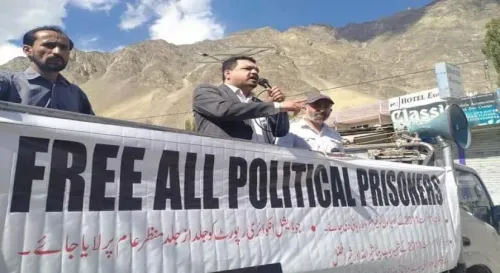
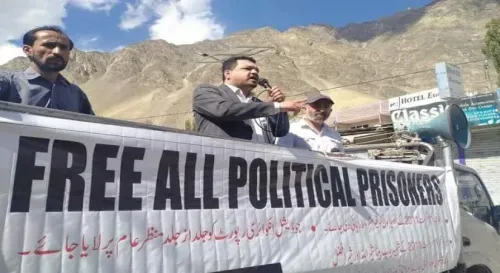
A year after Islamabad signed a formal agreement with the Joint Awami Action Committee (JAAC) to end prolonged protests in Pakistan-occupied Kashmir (PoK), the group marked 4 October 2026 as a 'Black Day' — hoisting black flags and holding protest programmes across the territory — exposing what critics describe as a systematic failure to honour commitments made to the region's residents.
The Agreement That Was Meant to Change Things
The October 2025 pact between Islamabad and the JAAC was brokered to address a range of long-standing grievances in PoK, spanning electricity costs, healthcare access, education, infrastructure, political representation, government privileges, and institutional reforms. On paper, it carried concrete commitments: funding for health cards, MRI and CT scanners, Rs 10 billion earmarked for upgrading the electricity system, new education boards, and cabinet reforms including a cap of 20 ministers. The pact also proposed a committee to examine the contentious matter of 12 reserved seats in the PoK Legislative Assembly.
One Year Later: Demands Without Delivery
According to a report by Europa Wire, the ground reality a year on presents a starkly different picture. By 28 September 2026 — just days before the anniversary — the JAAC was still pressing Islamabad for verifiable proof that the commitments had been implemented, rather than receiving fresh political assurances. The group's decision to observe the pact's anniversary as a 'Black Day' signals a fundamental breakdown of trust between the population of PoK and the Pakistani state.
The Human Cost Behind the Headlines
Greek lawyer, writer, and journalist Dimitra Staikou, writing for Europa Wire, grounded the political dispute in a deeply personal account. She cited 45-year-old construction worker Zaheer Iqbal, whose elder brother collapsed with severe chest pains in mid-June in the mountain village of Keri Kot. With no ambulance available, Iqbal, his sons, and neighbours carried him on an improvised stretcher to the nearest road, siphoning petrol from motorcycles to transport him to the government hospital in Hajira. Even after doctors stabilised him, a further journey of roughly 140 km to Islamabad was required — demanding yet another vehicle and more fuel.
Staikou wrote that the crisis in PoK was being felt 'not through political statements but through every litre of fuel and every minute lost in reaching medical care,' adding that these were the human realities behind demands that 'can sound technocratic on paper.'
Staikou's Central Question
Drawing a direct contrast between last year's agreement and this year's protests, Staikou posed what she described as an unavoidable question: 'Between those two images lies a question that no new promise can evade: what is a state's signature worth when, a year later, those to whom the promise was made are still demanding that it be honoured?'
What This Signals Going Forward
The JAAC's shift from negotiations to symbolic protest — complete with black flags and formal 'Black Day' observances — suggests the group has lost confidence in assurances alone and is now demanding measurable, documented proof of implementation. This comes amid broader international attention on governance in PoK and adds further pressure on Islamabad to demonstrate credible follow-through. Whether Pakistan moves beyond promises to verifiable action will determine whether this anniversary protest remains symbolic or becomes a catalyst for a fresh wave of unrest in the region.
Point of View
Promise implementation, and wait for the momentum to dissipate. The JAAC's demand for written, verifiable proof — rather than fresh assurances — shows a population that has learned from exactly this cycle. What is notable here is the internationalisation of the grievance: a Greek journalist writing for a European outlet, citing a construction worker in Keri Kot, is precisely the kind of visibility Islamabad prefers to avoid. The question mainstream coverage underplays is structural — PoK residents pay Pakistani electricity tariffs but are governed under a framework that denies them full constitutional rights, creating a permanent grievance architecture that no single pact can dismantle.
NationPress
6 Oct 2026
Frequently Asked Questions
Why did the JAAC declare 4 October 2026 a 'Black Day' in PoK?
The JAAC declared 4 October a 'Black Day' to mark the first anniversary of a 2025 agreement with Islamabad that the group says has not been implemented. Black flags were raised and protest programmes were held across Pakistan-occupied Kashmir to demand verifiable proof of the pact's fulfilment.
What did the October 2025 agreement between Pakistan and JAAC promise?
The pact committed to funding health cards, MRI and CT scanners, Rs 10 billion for electricity system upgrades, new education boards, institutional reforms, a cabinet cap of 20 ministers, and a committee to examine 12 reserved seats in the PoK Legislative Assembly. It was designed to address long-standing grievances over electricity costs, healthcare, education, and political representation.
What is the JAAC and what does it represent?
The Joint Awami Action Committee (JAAC) is a civil society and political platform in Pakistan-occupied Kashmir that has led sustained protests over electricity costs, healthcare access, education, and governance. It emerged as a major force after mass protests forced Islamabad to negotiate the 2025 agreement.
How has the undelivered deal affected ordinary residents of PoK?
According to the Europa Wire report, residents continue to face prohibitive fuel costs and collapsed healthcare infrastructure. The report cited a case from mid-June 2026 in which a cardiac patient in the village of Keri Kot had to be carried by hand to the nearest road because no ambulance was available, with neighbours siphoning motorcycle petrol for the hospital journey.
What happens next in Pakistan-occupied Kashmir?
The JAAC has made clear it will no longer accept political assurances without written, measurable proof of implementation. The group's escalation to symbolic protests and international attention, including coverage in European outlets, increases pressure on Islamabad. Whether Pakistan acts on its commitments will determine if the situation stabilises or escalates into a fresh wave of unrest.