US Navy awards Boeing $20 billion F/A-XX sixth-gen fighter contract

Synopsis
Boeing has landed one of the US military's largest single aviation contracts — over $20 billion to build the F/A-XX, the Navy's first new carrier fighter in decades. The sixth-generation jet will fly alongside autonomous wingmen and eventually retire the Super Hornet, marking a pivotal shift in how America projects air power from its carriers.
Key Takeaways
The US Navy awarded Boeing a contract worth more than $20 billion on 30 September 2026 for the sixth-generation F/A-XX strike fighter.
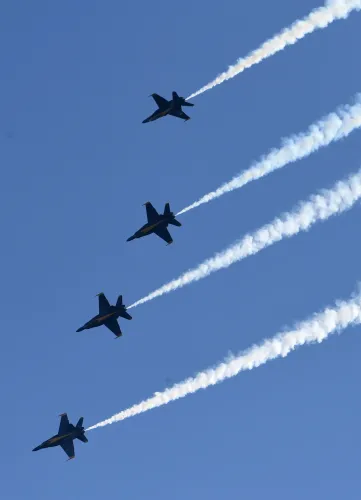
The F/A-XX will eventually replace the F/A-18E/F Super Hornet and EA-18G Growler , beginning in the 2030s .
The contract covers full-scale development, including multiple test aircraft for ground, airworthiness, and weapons integration testing.
The aircraft will be interoperable with autonomous Collaborative Combat Aircraft (CCA) , operating as part of a crewed-uncrewed teaming system.
The F/A-XX will serve alongside the F-35C , giving the Navy a mixed fifth- and sixth-generation carrier air wing.
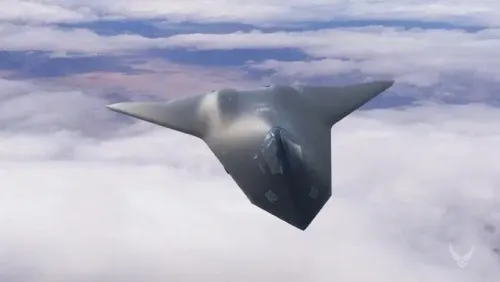
The US Navy has awarded Boeing a contract worth more than $20 billion to develop the sixth-generation F/A-XX strike fighter — a carrier-based aircraft slated to eventually replace the F/A-18E/F Super Hornet and EA-18G Growler beginning in the 2030s. The award, announced on Tuesday, 30 September 2026, positions Boeing at the centre of one of the most consequential US military aviation programmes in a generation.
What the Contract Covers
The deal funds the full-scale development phase of the F/A-XX under the broader Next Generation Air Dominance (NGAD) programme, overseen by the Department of Defense. The contract scope includes multiple test aircraft for ground testing, airworthiness trials, and systems and weapons integration assessments. Boeing will develop and deliver the platform to augment the Navy's existing carrier air fleet before transitioning to full fleet replacement later in the decade.
What Officials Said
Michael P. Duffey, Under Secretary of Defense for Acquisition and Sustainment, described the aircraft as a linchpin of US deterrence strategy. 'The F/A-XX is a critical pillar in our commitment to maintaining peace through strength. F/A-XX will dominate contested airspace, extend operational reach, and deliver a decisive combat advantage for the warfighter,' he said.
Duffey added that the platform represents 'a crucial, non-negotiable investment in America's national security and long-term air combat capabilities,' and that the partnership with Boeing was aimed at fielding capabilities 'rapidly.'
Acting Secretary of the Navy Hung Cao called the award a generational milestone. 'The Sixth-Generation fighter is a generational leap in air superiority and will provide the world's best aviators with unparalleled capabilities to fight, win, and come home safe,' Cao said.
Key Capabilities of the F/A-XX
A defining feature of the programme is the aircraft's ability to operate alongside both crewed and uncrewed platforms. The F/A-XX will be interoperable with Collaborative Combat Aircraft (CCA) — autonomous wingmen designed to extend a manned fighter's reach and lethality. According to the department, the F/A-XX will actively enhance the capability of every CCA it operates with, creating a networked, hybrid air combat system rather than a standalone platform.
The fighter will also serve alongside the existing F-35C aboard US carriers, giving the Navy a mix of fifth- and sixth-generation combat aircraft in its carrier air wings — a deliberate layered approach to air dominance.
Strategic Context and What It Means
The F/A-XX award comes as the US military accelerates efforts to modernise its combat aviation fleet amid evolving great-power competition, particularly with China, whose own sixth-generation fighter programmes have drawn significant Pentagon attention. The Super Hornet, introduced in the 1990s, has been the backbone of carrier aviation for over three decades; the F/A-XX marks the first replacement cycle in that timeframe.
Notably, Boeing — which has faced mounting commercial aviation pressures in recent years — stands to benefit substantially from the long-term defence revenue this contract could generate, spanning development, production, and sustainment phases well into the 2040s.
With full-scale development now underway, the next critical milestones will be early flight tests and weapons integration trials, which will shape the programme's timeline toward initial operational capability in the 2030s.
Point of View
It is a node in a networked combat system. For Boeing, the contract is a lifeline at a moment of deep commercial turbulence, but defence programme history is littered with cost overruns and timeline slippage — the B-21 and F-35 being cautionary examples. The real test will be whether the $20 billion figure holds as development matures and requirements evolve.
NationPress
30 Sept 2026
Frequently Asked Questions
What is the US Navy's F/A-XX programme?
The F/A-XX is a sixth-generation carrier-based strike fighter being developed by Boeing under the US Navy's Next Generation Air Dominance (NGAD) programme. It is designed to eventually replace the F/A-18E/F Super Hornet and EA-18G Growler beginning in the 2030s, with the ability to operate alongside autonomous Collaborative Combat Aircraft.
How much is the Boeing F/A-XX contract worth?
The US Navy has awarded Boeing a contract worth more than $20 billion for the full-scale development phase of the F/A-XX. The deal covers multiple test aircraft for ground, airworthiness, systems, and weapons integration testing.
When will the F/A-XX enter service?
The F/A-XX is expected to begin replacing legacy Super Hornets and Growlers in the 2030s. Full-scale development has just commenced, and the programme timeline will be shaped by upcoming flight tests and weapons integration milestones.
What makes the F/A-XX different from existing US Navy fighters?
The F/A-XX is a sixth-generation platform designed to operate alongside autonomous Collaborative Combat Aircraft (CCA), giving it networked, crewed-uncrewed teaming capabilities. It will also serve alongside the F-35C, extending the Navy's carrier air wing into a mixed fifth- and sixth-generation force with greater reach and lethality than current configurations.
Why is this contract significant for Boeing?
The $20 billion-plus award represents one of the largest single US military aviation contracts in recent years and comes at a time when Boeing has faced significant commercial pressures. The programme is expected to generate revenue across development, production, and sustainment phases extending well into the 2040s.