China's BRI failing across South Asia amid debt, security and terrain challenges: Report
Synopsis
China's Belt and Road Initiative is faltering across South Asia — from a $392 million Colombo port withdrawal to CPEC's debt and security quagmire, Nepal's terrain barriers and Bangladesh's political pivot. A new Mekong News report finds that strategic proximity to Beijing has not been enough to rescue BRI projects from deep structural failures.
Key Takeaways
China Merchants Port Holdings withdrew from a $392 million logistics hub joint venture at Sri Lanka's Port of Colombo , renewing doubts about BRI viability.
The move drew comparisons with the Hambantota Port deal, in which Sri Lanka leased the port to a Chinese company for 99 years in 2017 under financial pressure.
CPEC has been hampered by economic instability, energy-sector liabilities and attacks on Chinese nationals and project sites in Pakistan .
In Nepal , high Himalayan infrastructure costs and financing concerns have blocked progress on BRI-linked connectivity ambitions.
Bangladesh PM Tarique Rahman's trip to Japan highlighted how political transitions can shift a country's strategic infrastructure alignments.
The Maldives remains caught between economic opportunity and the need to preserve sovereignty while balancing India and China .
China's Belt and Road Initiative (BRI) is running into mounting headwinds across South Asia, stymied by a combination of economic instability, political transitions, security threats and difficult geography, according to a new report by Mekong News. The findings draw on a string of recent setbacks, most notably the withdrawal of state-owned China Merchants Port Holdings from a $392 million joint venture to develop a logistics hub at Sri Lanka's Port of Colombo.
Sri Lanka: A Cautionary Tale of Withdrawal
The exit of China Merchants Port Holdings from the Colombo logistics project has revived uncomfortable questions about the BRI's ability to translate large-scale infrastructure pledges into sustainable development outcomes, the report noted. The withdrawal drew fresh comparisons with Sri Lanka's Hambantota Port, which was leased to a Chinese company for 99 years in 2017 after the island nation struggled under mounting debt pressures — a deal that became one of the most cited examples globally of so-called 'debt-trap diplomacy', though analysts remain divided on that characterisation.
CPEC: Security and Debt Liabilities Cloud Pakistan Corridor
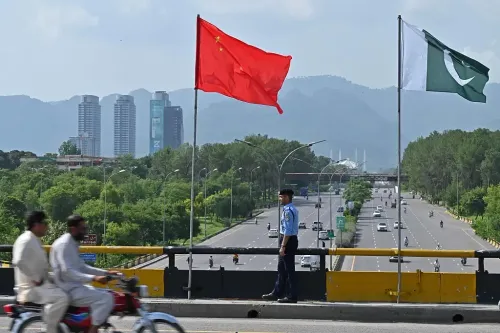
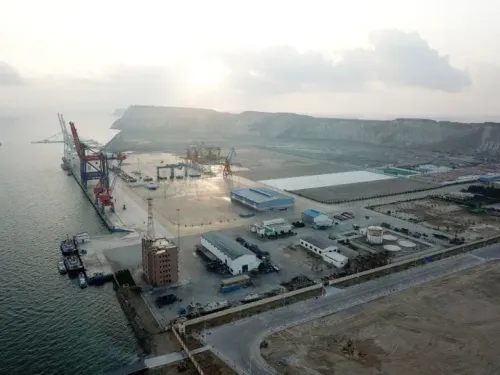
The China-Pakistan Economic Corridor (CPEC), designed to link China's Xinjiang region with Pakistan's Arabian Sea coast via transport and energy infrastructure anchored at Gwadar Port, has faced compounding difficulties. Economic instability, unresolved energy-sector liabilities and persistent security threats — including attacks on Chinese nationals and project sites — have complicated implementation, the report said. 'The broader lesson is that infrastructure investment does not automatically generate sufficient revenue to service debt or produce sustainable development,' the report stated. 'Although Pakistan remains strategically important to Beijing, close political relations have proved insufficient to guarantee the economic success of major infrastructure commitments.'
Nepal and Bangladesh: Terrain, Financing and Political Flux
In Nepal, the formidable Himalayan terrain has driven up infrastructure costs sharply, while financing concerns and practical cross-border connectivity challenges have stalled ambitions to diversify trade and transport links under the BRI framework. In Bangladesh, the report pointed to how political transitions can fundamentally reshape long-term infrastructure and investment relationships. Though Chinese capital has played a significant role in supporting Bangladeshi infrastructure and industrial development, shifts in the political landscape have demonstrated that strategic priorities can pivot with incoming governments. Bangladeshi Prime Minister Tarique Rahman's recent trip to Japan was cited as evidence that bilateral ties with a previous government are no substitute for broader political legitimacy or durable long-term interests.
Maldives: Sovereignty Debate at the Centre
In the Maldives, Chinese-backed infrastructure projects and closer diplomatic ties have become flashpoints in a wider national debate over foreign influence, economic dependence and sovereignty. 'As a small island state situated in a strategically important part of the Indian Ocean, the Maldives must balance economic opportunities with the need to preserve its decision-making autonomy and maintain relations with competing regional powers, particularly India and China,' the report noted. This comes amid a broader Indo-Pacific realignment, where smaller nations are increasingly scrutinising the terms attached to large infrastructure financing.
The Pattern Across the Region
Taken together, the BRI's South Asian trajectory reveals a persistent gap between Beijing's headline investment commitments and on-the-ground implementation realities. Each country presents a distinct set of complications — debt sustainability in Sri Lanka, security volatility in Pakistan, topographic and financing barriers in Nepal, political transitions in Bangladesh, and sovereignty sensitivities in the Maldives. The Mekong News report suggests that geopolitical proximity to China has not been sufficient to insulate BRI projects from these structural vulnerabilities. How Beijing recalibrates its approach across the region will be closely watched.
Point of View
It signals that even China's most committed regional partners are not bankable propositions. What mainstream coverage tends to underplay is the cumulative reputational cost: each high-profile BRI stumble strengthens the hands of regional governments inclined to diversify partnerships — with Japan, India and the US all actively courting the same capitals Beijing once considered locked in.
NationPress
11 Nov 2026
Frequently Asked Questions
Why did China Merchants Port Holdings withdraw from the Colombo logistics project?
China Merchants Port Holdings pulled out of a $392 million joint venture to develop a logistics hub at Sri Lanka's Port of Colombo, with the Mekong News report attributing the decision to wider weaknesses in translating large-scale BRI investments into sustainable development outcomes. The withdrawal reflects broader economic and financial pressures that have dogged BRI projects across South Asia.
What is the significance of the Hambantota Port comparison?
Sri Lanka leased the Hambantota Port to a Chinese company for 99 years in 2017 after struggling with debt repayments, making it one of the most cited cases of infrastructure financing leading to strategic asset transfers. The Colombo logistics hub withdrawal has renewed scrutiny of whether BRI arrangements serve host-country interests sustainably.
What challenges is CPEC facing in Pakistan?
The China-Pakistan Economic Corridor has been constrained by economic instability, unresolved energy-sector liabilities and security threats, including attacks on Chinese nationals and project sites. According to the report, close political ties between Islamabad and Beijing have not been enough to guarantee the economic viability of the corridor's major commitments.
How have political changes in Bangladesh affected BRI-linked investments?
Bangladesh's political transition illustrated how incoming governments can reassess the strategic priorities of their predecessors, affecting long-term infrastructure and investment relationships. Prime Minister Tarique Rahman's visit to Japan was highlighted as a signal that relations forged under a previous government do not automatically carry forward.
How does the Maldives fit into the BRI challenge in South Asia?
The Maldives faces a delicate balancing act between accepting Chinese-backed infrastructure financing and preserving national sovereignty and decision-making autonomy. As a small Indian Ocean island state, it must also manage its relationships with competing regional powers, particularly India and China, making BRI-linked projects a subject of ongoing domestic debate.