Canada suspends visas, imposes 21-day quarantine over Ebola outbreak

Synopsis
Canada has moved swiftly — suspending visas and mandating a 21-day quarantine for travellers from three Ebola-affected countries, with the FIFA World Cup looming as a key trigger. With an average fatality rate of 50 per cent and no treatment guarantee, Ottawa is betting that a hard border response now is cheaper than a containment crisis later.
Key Takeaways
Canada suspended visas for nationals of the DRC , Uganda , and South Sudan for 90 days , effective 27 May 2025 at 23:59 ET .
A mandatory 21-day quarantine applies to asymptomatic arrivals from affected areas, running from 30 May to 29 August 2025 .
Symptomatic travellers will be isolated at a hospital under the Quarantine Act .
The Public Health Agency of Canada confirmed there are currently no Ebola cases in North America.
The upcoming FIFA World Cup was cited as a factor in the decision to act pre-emptively.
The WHO puts Ebola's average case fatality rate at approximately 50 per cent .
Canada has announced a series of temporary border measures to curb the risk of the Ebola virus entering and spreading within the country, effective from 27 May 2025. The Public Health Agency of Canada said the steps are a precautionary response to the ongoing Ebola outbreak in the Democratic Republic of the Congo (DRC) and rising transmission risks in Uganda and South Sudan.
Key Measures Announced
Starting Wednesday at 23:59 Eastern Time, Canada will suspend immigration documents — including previously approved temporary resident visas, electronic travel authorisations, and permanent resident visas — for nationals of the DRC, Uganda, and South Sudan for a period of 90 days. The processing of new visa applications from residents of these three countries will also be temporarily paused, according to the official news release.
A separate mandatory 21-day quarantine measure will take effect from 30 May at 23:59 Eastern Time and remain in force until 29 August. Under this provision, Canadian citizens, permanent residents, persons registered under the Indian Act, and eligible foreign nationals who have visited the affected regions within the previous 21 days and show no symptoms will be required to quarantine upon arrival. Travellers displaying symptoms will be isolated at a hospital for further clinical assessment under the Quarantine Act.
Why Canada Is Acting Now
The Canadian government stressed that the risk to people currently in Canada remains low and that there are no confirmed Ebola cases anywhere in North America at present. Officials cited the severity of the disease, the evolving international situation, and the imminent FIFA World Cup — which is expected to bring a significant surge in cross-border travel — as reasons for the precautionary approach.
Notably, this is not the first time Canada has invoked emergency travel restrictions in response to a global disease outbreak. The measures echo steps taken during previous public health emergencies, though the 21-day quarantine requirement under the Quarantine Act represents a particularly firm intervention.
What Is Ebola and How Dangerous Is It
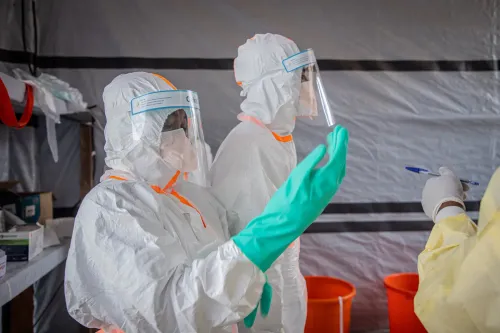
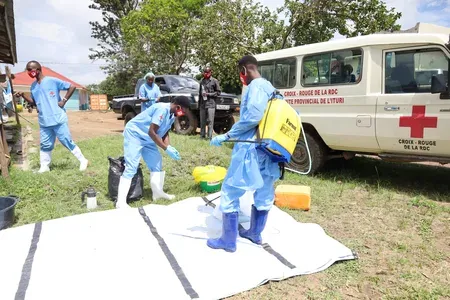
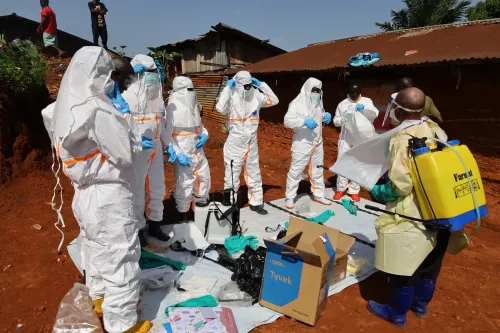
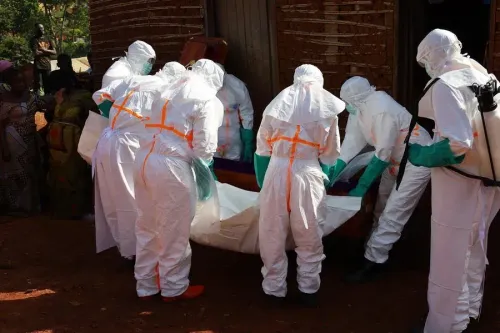
According to the World Health Organization (WHO), Ebola is a severe and often fatal illness that affects humans and other primates. The virus is typically transmitted to people through contact with wild animals — including fruit bats, porcupines, and non-human primates — and subsequently spreads through direct contact with the blood, secretions, or bodily fluids of infected individuals, or with contaminated surfaces such as bedding and clothing.
The average case fatality rate for Ebola stands at approximately 50 per cent, though historical outbreaks have recorded rates ranging from 25 to 90 per cent. The deadliest recorded outbreak — the 2014–2016 West Africa epidemic — resulted in more deaths than all previous outbreaks combined, spreading across Guinea, Sierra Leone, and Liberia.
What Happens Next
The visa suspension and quarantine measures are set to be reviewed as the international situation evolves. Authorities have not yet indicated whether the restrictions could be extended beyond the initial 90-day and 29 August deadlines. With the FIFA World Cup approaching, health officials are expected to monitor incoming traveller data closely in the weeks ahead.
Point of View
And invoking the Quarantine Act signals that Ottawa is treating this as a credible containment risk, not a routine health advisory. The FIFA World Cup angle is the underdiscussed driver here: a mass international gathering creates exactly the kind of high-volume travel corridor that makes disease surveillance harder. Critics may argue the blanket suspension of visas for entire nationalities is disproportionate given the absence of any confirmed North American cases, and raises questions about whether the measures are calibrated to epidemiological risk or political optics. The real test will be whether these restrictions are lifted on schedule or quietly extended — a pattern seen with pandemic-era emergency powers.
NationPress
10 Oct 2026
Frequently Asked Questions
What border measures has Canada announced over Ebola concerns?
Canada has suspended immigration documents — including temporary resident visas, electronic travel authorisations, and permanent resident visas — for nationals of the DRC, Uganda, and South Sudan for 90 days from 27 May 2025. A separate mandatory 21-day quarantine for asymptomatic travellers from affected areas takes effect on 30 May 2025.
Who is affected by Canada's Ebola quarantine requirement?
The 21-day quarantine applies to Canadian citizens, permanent residents, persons registered under the Indian Act, and eligible foreign nationals who have visited the affected areas within the previous 21 days and do not have symptoms. Travellers with symptoms will be hospitalised for assessment under the Quarantine Act.
Why has Canada introduced these Ebola travel restrictions?
The Public Health Agency of Canada cited the active Ebola outbreak in the DRC and rising risks in Uganda and South Sudan, combined with the approaching FIFA World Cup, which is expected to significantly increase international travel volumes. Officials described the measures as precautionary, noting there are no Ebola cases in North America.
How dangerous is the Ebola virus?
According to the WHO, Ebola has an average case fatality rate of approximately 50 per cent, with historical outbreaks recording rates between 25 and 90 per cent. It spreads through direct contact with the bodily fluids of infected individuals or contaminated surfaces.
How long will Canada's Ebola travel restrictions last?
The visa suspension runs for 90 days from 27 May 2025. The mandatory quarantine measure is in force from 30 May until 29 August 2025. Authorities have not yet indicated whether either measure will be extended beyond these dates.