US mobilises $112 mn for Ebola response in DRC, sets up Kenya quarantine facility
Synopsis
The Trump administration mobilised $112 million and deployed over 30 trained federal officers to Kenya within days of the DRC Ebola alert — standing up a 50-bed quarantine facility at Wajir Air Base that goes live on 29 May. The speed and scale signal genuine alarm about cross-border exposure risk for American nationals, and the two-phase biocontainment plan suggests Washington is preparing for a scenario where the outbreak is not quickly contained.
Key Takeaways
The Trump administration mobilised $112 million for the Ebola outbreak in the Democratic Republic of Congo within two weeks.
A 50-bed quarantine facility is being established at Wajir Air Base, Kenya , operational from 29 May 2025 .
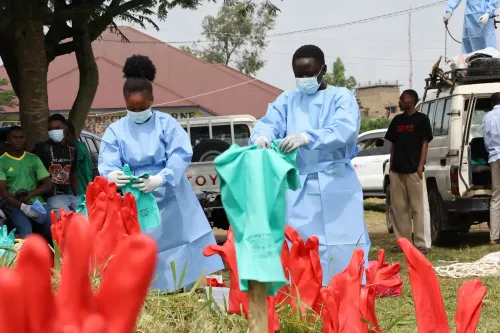
Over 30 Commissioned Corps officers — several veterans of the 2014–15 Ebola response — have already departed for Kenya. $80 million of the total covers PPE, border screening, surveillance, contact tracing, and diagnostics.
The two-phase plan includes biocontainment and isolation units for symptomatic or positive patients, alongside coordination with Britain on logistics.
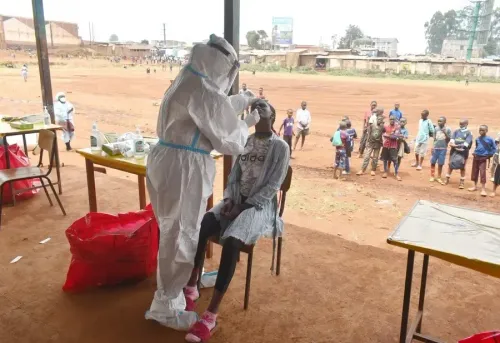
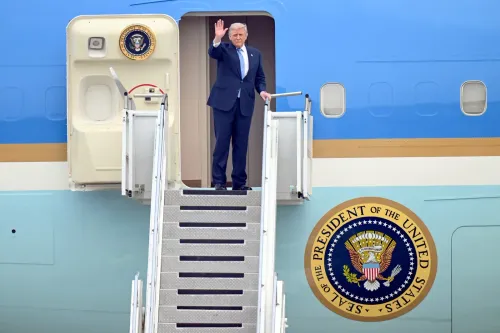
The Trump administration on Thursday, 28 May announced it has mobilised $112 million and established a 50-bed quarantine facility in Kenya as part of a rapid response to the ongoing Ebola outbreak in the Democratic Republic of Congo (DRC). Senior administration officials said the response was launched within 24 hours of receiving outbreak alerts, with multiple federal agencies coordinating the operation.
Quarantine Facility at Wajir Air Base
The quarantine facility is being established at Wajir Air Base in Kenya and is expected to become operational on Friday, 29 May. Officials said the Kenyan government has given full approval, with direct consultations held at the presidential level. Aircraft have been placed on standby to transport patients to the facility if required.
'We have set up a camp in Kenya that will be a facility that we will use to quarantine American citizens who may have been exposed to the Glendo Gio variant of the Ebola virus,' a senior official said during a background briefing.
Two-Phase Response Plan
The operation is structured in two phases. The first phase centres on the quarantine facility for American citizens deemed at high risk of exposure. The second phase will add biocontainment and isolation units — three isolation units capable of housing four patients each, and two biocontainment units capable of housing two patients each — for individuals who develop symptoms or test positive.
Officials noted that the facility offers 'superior ability to care for patients and to quarantine' compared with the Monrovia Medical Unit deployed during the 2014–15 West Africa Ebola outbreak. Patients requiring intensive medical support would be transferred to advanced medical centres closer to the region.
Trained Personnel Already Deployed
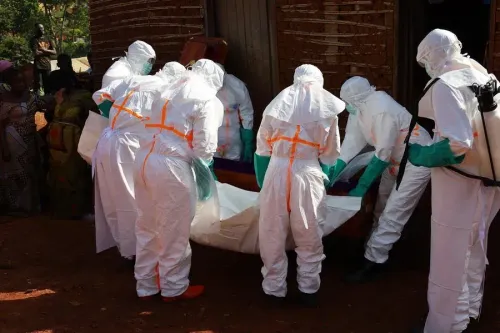
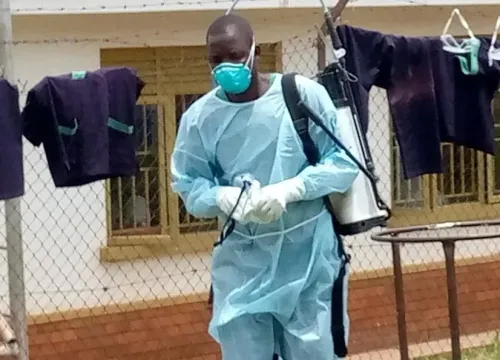
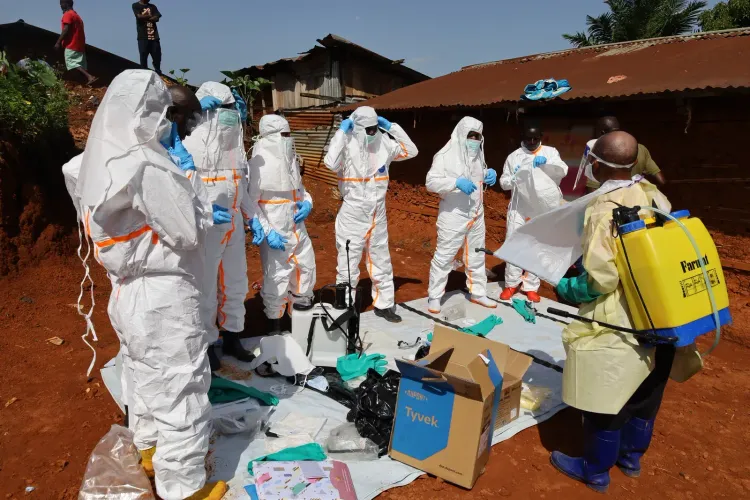
A cadre of over 30 Commissioned Corps officers was brought into the Washington DC area, where they underwent specialised training on Monday, Tuesday, and Wednesday before departing for Kenya on Wednesday evening. Their training covered personal protective equipment (PPE), quarantine procedures, and Ebola patient care.
Several of the officers previously participated in the US response to the 2014–15 Ebola outbreak in West Africa, lending field experience to the current deployment.
Funding and International Coordination
A second senior official confirmed that the $112 million was mobilised through foreign assistance funding in under two weeks. This includes a recently announced $80 million in new commitments covering PPE procurement, delivery, border screening, surveillance, contact tracing, and diagnostic supplies.
The United States is also coordinating closely with Britain on access and logistics. Officials emphasised that shorter transport times to the Kenyan facility would give exposed or symptomatic Americans faster access to specialised treatment than longer-distance transfers would allow. 'Time can be of the essence,' one official said.
What Comes Next
With the facility set to go live on 29 May, attention will shift to how quickly the biocontainment units can be made operational and whether the DRC outbreak — driven by the Glendo Gio variant — spreads to neighbouring countries. The scale and speed of the US response signals a heightened concern about cross-border transmission risk, particularly for American nationals operating in the region.
Point of View
Not the DRC, which raises a pointed question: is this primarily a consular protection operation for American nationals rather than a broader outbreak-containment effort? The Glendo Gio variant designation suggests a strain distinct enough to warrant a bespoke response, yet details on its transmissibility and severity remain sparse in official disclosures. How the biocontainment phase scales — and whether Washington extends support beyond its own citizens — will determine whether this is remembered as decisive leadership or a narrowly scoped self-protection exercise.
NationPress
14 Oct 2026
Frequently Asked Questions
Why has the US established an Ebola quarantine facility in Kenya?
The US set up the facility in Kenya to quarantine American citizens who may have been exposed to the Glendo Gio variant of Ebola during the ongoing outbreak in the Democratic Republic of Congo. Kenya was chosen in coordination with its government, and the Wajir Air Base location allows shorter transport times for exposed nationals than moving them over longer distances.
How much has the US committed to the Ebola response?
The Trump administration has mobilised $112 million through foreign assistance funding in under two weeks. This includes $80 million in new commitments for PPE procurement, border screening, surveillance, contact tracing, and diagnostic supplies.
When will the Kenya quarantine facility become operational?
The 50-bed quarantine facility at Wajir Air Base, Kenya, is expected to become operational on Friday, 29 May 2025. Aircraft are on standby to transport patients, and over 30 trained Commissioned Corps officers have already arrived.
What is the Glendo Gio variant of Ebola?
The Glendo Gio variant is the strain of the Ebola virus identified in the current Democratic Republic of Congo outbreak, according to US officials. The US response has been specifically tailored to this variant, though detailed public information on its transmissibility or severity remains limited in official briefings.
How does the current US Ebola response compare to the 2014–15 outbreak response?
Officials described the Wajir Air Base facility as having superior patient care and quarantine capabilities compared with the Monrovia Medical Unit used during the 2014–15 West Africa Ebola outbreak. Several of the deployed officers also served during that earlier response, bringing direct field experience to the current operation.