CDC extends green-card health entry rule for 6 months
Synopsis
The CDC has stretched a May amendment for six more months, keeping green-card holders inside public-health entry rules tied to Ebola in Congo, Uganda and South Sudan. The notice does not ban travel from India. US citizens stay exempt. Comments on a separate 10 November order close 30 November.
Key Takeaways
The CDC on 25 November extended for six months a rule allowing green-card holders to be covered by public-health entry restrictions.
The move preserves a May amendment that removed their automatic exemption; it was due to lapse on 27 November .
The extension does not block entry and imposes no new restriction on travel from India .
A separate Ebola order covers travellers, including green-card holders, present in the Democratic Republic of Congo , Uganda or South Sudan in the previous 21 days .
US citizens and US nationals remain exempt.
Public comments on the 10 November order close on 30 November .
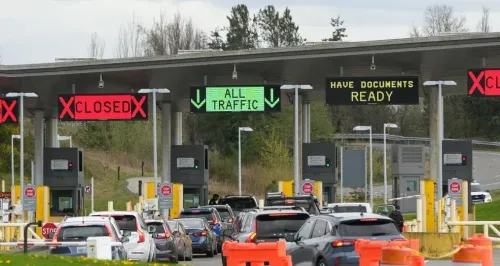
The US Centres for Disease Control and Prevention (CDC) on 25 November announced a six-month extension of a regulation that allows green-card holders to be covered by certain public health entry restrictions. The action preserves a May amendment that removed their automatic exemption and does not itself block anyone’s entry or impose a new restriction on travel from India.
The amendment was due to expire on 27 November. Under a notice scheduled for publication on Wednesday, it will remain effective for six months from publication unless the US health secretary ends it sooner. US citizens and US nationals remain exempt from this regulation.
What the extension actually covers
The regulation is a legal wrapper, not a standalone travel ban. It determines who can be subjected to public-health entry measures already in force. Lawful permanent residents had previously enjoyed an automatic exemption; the May amendment took that exemption away. Extending it keeps green-card holders inside the same framework that applies to other non-citizen travellers when a disease-related order is active.
A separate Ebola order sets the restrictions currently in force. It covers travellers, including green-card holders, who departed from or were present in the Democratic Republic of Congo, Uganda or South Sudan during the previous 21 days, subject to exceptions.
Why the CDC pointed to Africa, not India
The CDC cited the continuing outbreak of Ebola disease caused by the Bundibugyo virus in the Democratic Republic of the Congo as the reason for extending the regulation. Uganda had contained its outbreak but remained vulnerable to imported infections, the agency said. South Sudan had reported no confirmed cases in the current outbreak, but the CDC cited cross-border movement and limited surveillance.
Notably, India is not among the countries named in the operational Ebola order. The extension therefore does not create a new India-specific health screen at the US border. This comes amid recurring concern in the Indian diaspora whenever Washington renews outbreak-era entry tools.
Pushback on country-based screening
In comments on the interim rule, some people urged the CDC to assess travellers individually rather than rely on their presence in a designated country. They suggested taking account of where a person had been, for how long and under what circumstances. The agency said individual assessments could identify differences in exposure but would be harder to carry out with available staff and resources.
That is a familiar tension in outbreak-era border policy: list-based rules are faster to administer at ports of entry, while finer-grained exposure histories are more accurate and more labour-intensive. The CDC has chosen the former, citing capacity.
How the orders have stacked since May
The CDC first issued an entry suspension in May and amended it after the rule on lawful permanent residents changed. It has since renewed the suspension through separate orders. The latest of those, issued on 10 November, retained the existing restrictions. The CDC is accepting public comments on that order through 30 November.
Unless the health secretary rescinds it earlier, the green-card coverage rule will run for six months from the date the notice is published. Travellers — including Indian green-card holders — are affected only if they fall within the operational Ebola order, meaning recent presence in the Democratic Republic of Congo, Uganda or South Sudan. Further CDC orders could still reshape the country list if the Bundibugyo outbreak changes.
Point of View
The risk is reading this as a blanket US entry freeze. It is not. The CDC has only prolonged a May legal tweak that lets lawful permanent residents be swept into existing public-health orders — currently an Ebola screen tied to three African countries. Commenters asked for individual risk checks, and the agency conceded those would catch real differences in exposure, then declined them on staffing grounds. That is the accountability gap: a country-list tool that is easier to run than it is precise, while India itself is not on the list.
NationPress
25 Nov 2026
Frequently Asked Questions
What did the CDC announce about green-card holders?
The CDC announced a six-month extension of a regulation that allows green-card holders to be covered by certain public health entry restrictions. It preserves a May amendment that removed their automatic exemption and was due to expire on 27 November.
Does the CDC extension ban travel from India?
No. The extension does not itself block anyone’s entry and does not impose a new restriction on travel from India. US citizens and US nationals also remain exempt from the regulation.
Which countries are covered by the current Ebola entry restrictions?
A separate Ebola order covers travellers, including green-card holders, who departed from or were present in the Democratic Republic of Congo, Uganda or South Sudan during the previous 21 days, subject to exceptions. The CDC cited a continuing Bundibugyo virus outbreak in Congo.
How long will the green-card health entry rule last?
It will remain effective for six months from publication of the notice unless the US health secretary ends it sooner. The underlying May amendment had been due to expire on 27 November.
Why did the CDC not assess travellers individually?
The CDC said individual assessments could identify differences in exposure but would be harder to carry out with available staff and resources. Some commenters had urged the agency to consider where a person had been, for how long and under what circumstances, rather than relying on presence in a designated country.