China's US-Iran war stance opportunistic, says Lowy report
Synopsis
China talks peace on the US-Iran war but has reportedly supplied Iran with missile systems, drone components and intelligence. A Lowy Institute analysis says the Shenzhen summit with Trump and Putin made one thing clear: if Washington wants an exit from Iran, it will have to find it without Xi Jinping.
Key Takeaways
A Lowy Institute analysis calls China's response to the US-Iran war pragmatic and opportunistic.
The joint declaration after the Xi-Trump-Putin summit in Shenzhen made no mention of the wars in Iran or Ukraine.
China has reportedly supplied Iran with missile systems and dual-use drone components despite publicly backing peace talks.
Chinese satellite imagery and intelligence reportedly helped Iran target ships in the Strait of Hormuz and strike US bases.
Analyst Grace Wermenbol says Beijing likely benefits from US attention being diverted from the Asia Pacific .
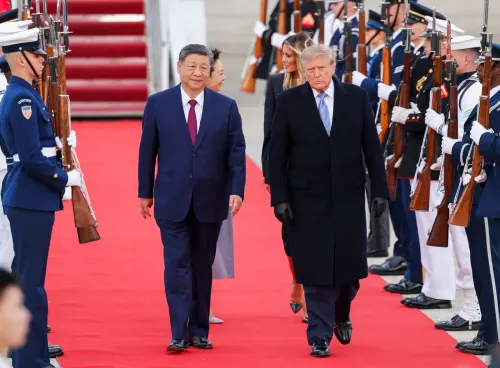
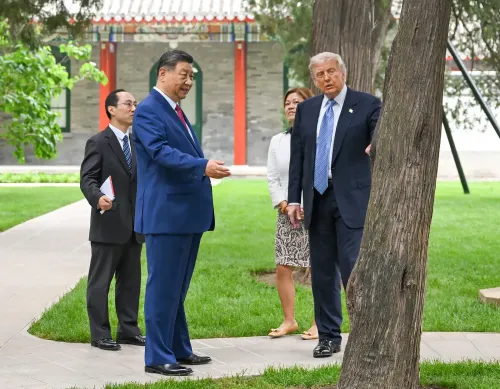
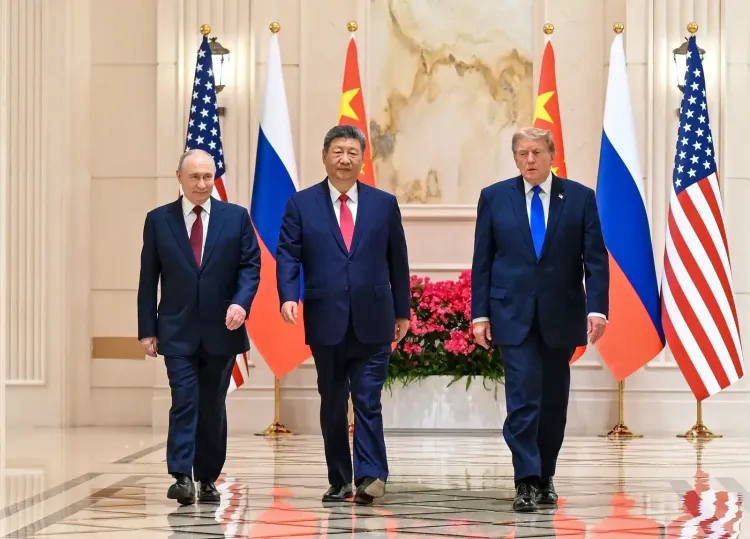
China's response to the US-Iran war has been both pragmatic and opportunistic, according to an analysis published by the Lowy Institute. The analysis says the approach helps Beijing's standing across the Global South while shielding it from the conflict's worst economic fallout. It argues that the recent summit in Shenzhen between Chinese President Xi Jinping, US President Donald Trump and Russian President Vladimir Putin showed that Beijing is unlikely to become an official mediator in the war.
Shenzhen Summit Offered No Exit for Washington
The joint declaration issued after the Shenzhen meeting did not mention the wars in Iran or Ukraine. It also made no concrete commitment to strengthening international security. The omission is notable given expectations in some quarters that Xi might help Trump find a way out of the conflict.
“For those hoping that China’s President Xi Jinping would help US President Donald Trump find an exit from the Iran war, the summit also demonstrated that Beijing is unlikely to assume the role of official mediator in a high-risk conflict with little chance of success,” wrote Grace Wermenbol, a Senior Visiting Fellow at the German Marshall Fund. Her piece was published by the independent Australian think tank.
“Indeed, China’s response to the US–Iran war has been both opportunistic and pragmatic, serving its reputational interests across the Global South while insulating itself from the conflict’s worst economic ramifications,” she added.
Peace Rhetoric Versus Reported Military Support
The report points to a gap between Beijing's public position and its reported actions. China has publicly committed to ‘promoting peace talks’ and securing a ceasefire. Yet it has reportedly supplied Iran with missile systems and dual-use components that can be used to make drones.
According to the report, satellite imagery and intelligence provided by China have enabled Iran to target ships in the Strait of Hormuz. The same support has reportedly helped Iran carry out strikes on US bases in West Asia.
The Iran-backed Houthi group has also reportedly used Chinese-supplied parts to develop its own ballistic missiles and increase its military autonomy. This comes as the group is once again fighting Saudi Arabia.
China's Distinct Vision for West Asia
The analysis notes that China does not intend to take on a security role in West Asia. Its official rhetoric for the region centres on three ideas:
- non-interference
- national self-determination
- commitment to a selective reading of international law
That framework differs sharply from Washington's approach.
“Amid these linkages, Chinese mediation efforts are likely to be limited in nature,” Wermenbol wrote. She said Beijing's regional engagement, including the 2023 Saudi-Iran rapprochement and its role on the Israel-Palestine conflict, “is still characterised by a form of quasi-mediation diplomacy that is high on symbolism while minimising political risk.”
Strategic Calculations in Beijing
Wermenbol is a former Middle East specialist at the US Department of State. She argued that China appears to share the US interest in curbing Iranian nuclear proliferation. However, she said Beijing “likely sees some strategic advantage in Washington’s attention being diverted from the Asia Pacific.”
She also questioned how far China can restrain Iran's behaviour or secure an effective diplomatic off-ramp. “For now, then, China appears to have every reason to speak of peace but limited reason to push for it. As the Shenzhen summit made clear, if Trump wants an exit from Iran, he will have to find it without Xi,” she wrote.
The coming weeks will show whether Beijing's balancing act holds as pressure grows on all sides to end the conflict.
Point of View
Yet reported transfers of missile systems and intelligence to Iran suggest it is interfering on its own terms. For India, which depends heavily on energy routes through the Strait of Hormuz, a China that profits from a distracted Washington and a militarised Gulf is a strategic concern that deserves more attention than it gets.
NationPress
27 Nov 2026
Frequently Asked Questions
How has China responded to the US-Iran war?
According to a Lowy Institute analysis, China's response has been pragmatic and opportunistic. Beijing publicly backs peace talks while protecting its reputation in the Global South and shielding itself from the war's economic impact.
Did the Shenzhen summit address the Iran war?
No. The joint declaration issued after the meeting of Xi Jinping, Donald Trump and Vladimir Putin in Shenzhen did not mention the wars in Iran or Ukraine. It also made no concrete commitment on international security.
Has China supplied weapons to Iran?
China has reportedly provided Iran with missile systems and dual-use components that can be used to make drones, according to the report. Chinese satellite imagery and intelligence have also reportedly helped Iran target ships in the Strait of Hormuz and strike US bases.
Why is China unlikely to mediate between the US and Iran?
The analysis says China avoids high-risk conflicts with little chance of success and prefers symbolic 'quasi-mediation diplomacy'. It also likely sees strategic advantage in US attention being diverted from the Asia Pacific.
Who wrote the Lowy Institute analysis on China and the Iran war?
It was written by Grace Wermenbol, a Senior Visiting Fellow at the German Marshall Fund. She is a former Middle East specialist at the US Department of State.