Trump-Xi Beijing summit: Iran nuclear deal off table, Hormuz must stay open
Synopsis
In a rare area of convergence, the US and China jointly declared that Iran can never go nuclear and that the Strait of Hormuz must stay open — two positions with enormous consequences for global energy markets and Middle East stability. The Trump-Xi Beijing summit, the first in a series planned for 2025, also surfaced sharp divergence on Taiwan, with Xi warning of potential 'conflicts' if the issue is mishandled.
Key Takeaways
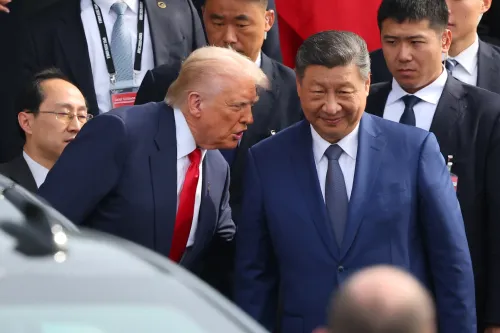
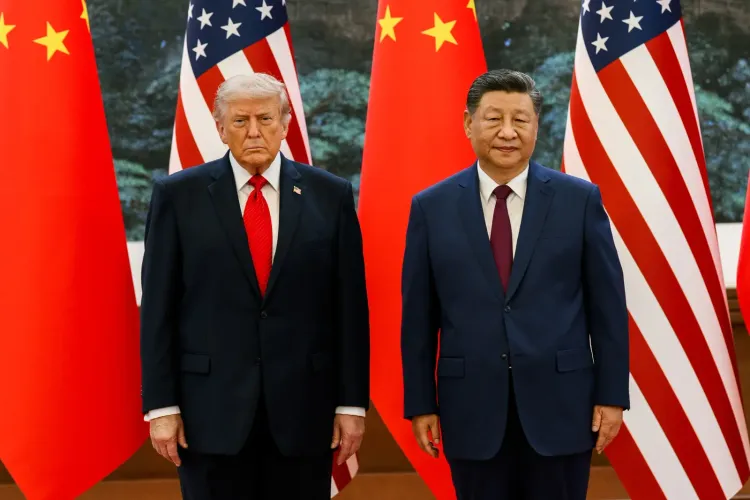
Trump and Xi Jinping met at the Great Hall of the People in Beijing on 14 May for a high-stakes bilateral summit.
Both sides agreed that Iran can never possess a nuclear weapon and that the Strait of Hormuz must remain open to global shipping.
Xi opposed the militarisation of the strait and expressed interest in buying more American oil to reduce China's Hormuz dependence.
Xi warned Trump that mishandling Taiwan could put the entire US-China relationship 'in great jeopardy.' Trump's delegation included Elon Musk , Jensen Huang , Tim Cook , and other top US business leaders, signalling the summit's economic focus.
Trump invited Xi to the White House on 24 September ; further summits are planned at APEC Shenzhen and the G20 Florida in late 2025.
Presidents Donald Trump and Xi Jinping concluded a high-stakes summit in Beijing on Thursday, 14 May, with the United States and China agreeing on two landmark positions: that Iran can never acquire a nuclear weapon, and that the Strait of Hormuz must remain open to global shipping. A White House official described the meeting — held at the Great Hall of the People — as 'good,' marking a significant moment in a relationship long defined by strategic rivalry.
Key Agreements on Iran and the Strait of Hormuz
'The two sides agreed that the Strait of Hormuz must remain open to support the free flow of energy,' the White House official said. The official added that Xi 'made clear China's opposition to the militarisation of the strait and any effort to charge a toll for its use.' Both governments also jointly declared that Iran can never possess a nuclear weapon — a rare area of explicit convergence between Washington and Beijing on Middle East security.
Xi also expressed interest in purchasing more American oil to reduce China's dependence on Hormuz-routed energy supplies, according to the official. The summit took place amid a stalled peace process between Washington and Tehran, with the ongoing US-Israeli war on Iran disrupting shipping through the waterway — a critical artery for global oil, fertiliser, and commodity flows.
Trade, Economic Cooperation, and the Business Delegation
The two leaders also explored pathways to deepen economic ties, including expanding market access for American businesses in China and increasing Chinese investment in US industries, though the White House official offered no specifics. Progress on curbing the flow of fentanyl precursors into the US and boosting Chinese purchases of American agricultural products were also highlighted.
Trump arrived in Beijing accompanied by a prominent US business delegation that included Elon Musk (SpaceX and Tesla), Jensen Huang (Nvidia), Kelly Ortberg (Boeing), Tim Cook (Apple), Sanjay Mehrotra (Micron Technology), Cristiano Amon (Qualcomm), and David Solomon (Goldman Sachs) — a line-up that underscored the summit's economic underpinning.
Taiwan and the 'Thucydides Trap'
Xi told Trump that the Taiwan question is the 'most important issue' in US-China relations and warned that mishandling it could lead to clashes or even 'conflicts,' putting the entire relationship 'in great jeopardy,' according to Xinhua. Xi also raised the concept of the 'Thucydides Trap' — the structural risk of conflict between a rising power and an established one — a framing that observers said reflected Beijing's expectation of being treated as an equal superpower.
Tone at the Summit and What Leaders Said
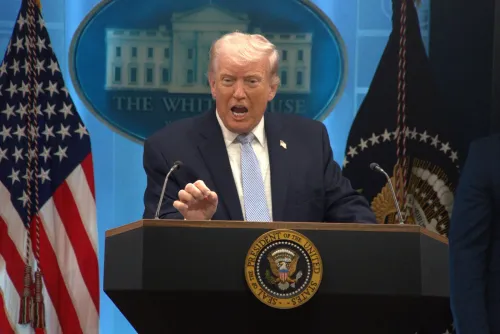
'It's an honour to be with you. It's an honour to be your friend, and the relationship between China and the USA is going to be better than ever before,' Trump said in his opening remarks. He praised Xi as a 'great leader' and described the conversations as 'positive and productive.'
Xi, speaking through an interpreter, said a stable Sino-US relationship is 'good for the world.' 'China and the United States both stand to gain from cooperation and lose from confrontation,' he said, adding: 'We should be partners, not rivals.' At a state banquet that followed, Trump invited Xi and Chinese First Lady Peng Liyuan to visit the White House on 24 September. Xi, in turn, said that China's 'great rejuvenation' and making America great again 'can go hand in hand.'
What Comes Next
Trump's three-day Beijing visit — his first to China since November 2017 — continues on Friday with tea and a working luncheon before he departs. This summit is the first in a series of anticipated bilateral meetings this year, including sideline talks at the Asia-Pacific Economic Cooperation summit in Shenzhen in November and the Group of 20 gathering in Florida in December. Whether the Hormuz and Iran agreements translate into concrete diplomatic movement will depend heavily on the trajectory of the Washington-Tehran war and Beijing's willingness to apply leverage on Tehran.
Point of View
Particularly while the US-Israeli war on Iran continues. What the summit really reveals is that both powers are managing a relationship too consequential to let collapse, even as structural competition on trade, Taiwan, and technology deepens. Xi's invocation of the Thucydides Trap was not a warning — it was a demand for recognition, and Trump's effusive praise of Xi as a 'great leader' suggests he may be willing to provide it, at a cost that remains opaque.
NationPress
19 Sept 2026
Frequently Asked Questions
What did the US and China agree on at the Beijing summit?
The US and China agreed that Iran can never possess a nuclear weapon and that the Strait of Hormuz must remain open to support the free flow of energy. The two sides also discussed expanding trade ties, curbing fentanyl precursor flows, and increasing Chinese purchases of American agricultural products.
Why is the Strait of Hormuz so important in this context?
The Strait of Hormuz is a critical global shipping lane for oil, fertiliser, and other commodities. The ongoing US-Israeli war on Iran has disrupted safe passage through the waterway, threatening energy supplies — particularly for China, which is heavily dependent on Hormuz-routed imports.
What did Xi Jinping say about Taiwan at the summit?
Xi told Trump that Taiwan is the 'most important issue' in US-China relations and warned that mishandling it could lead to clashes or 'conflicts' that put the entire bilateral relationship 'in great jeopardy,' according to Xinhua.
Who was in Trump's delegation to Beijing?
Trump was accompanied by prominent US business leaders including Elon Musk (SpaceX and Tesla), Jensen Huang (Nvidia), Tim Cook (Apple), Kelly Ortberg (Boeing), Sanjay Mehrotra (Micron Technology), Cristiano Amon (Qualcomm), and David Solomon (Goldman Sachs).
What are the next planned meetings between Trump and Xi?
Following the Beijing summit, Trump invited Xi to the White House on 24 September. Further meetings are planned on the sidelines of the Asia-Pacific Economic Cooperation summit in Shenzhen in November and the Group of 20 gathering in Florida in December 2025.