China's rising emissions put South Asia's climate-vulnerable nations at risk

Synopsis
China emits a third of the world's greenhouse gases but resists the very data-sharing that could protect downstream neighbours like Nepal, Bhutan, and Bangladesh from glacial floods and climate shocks — a structural asymmetry that a new report calls a matter of accountability, not just geography.
Key Takeaways
China accounts for nearly 33 per cent of global greenhouse gas emissions, releasing approximately 13.1 billion tonnes annually.
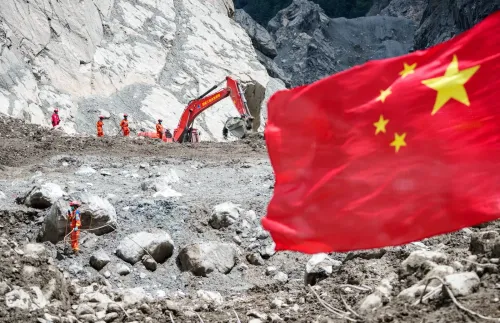
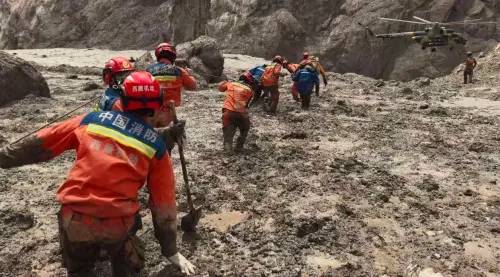
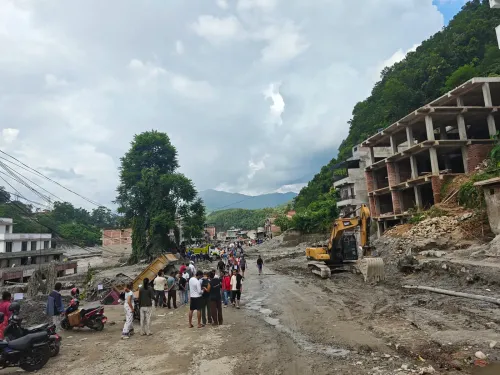
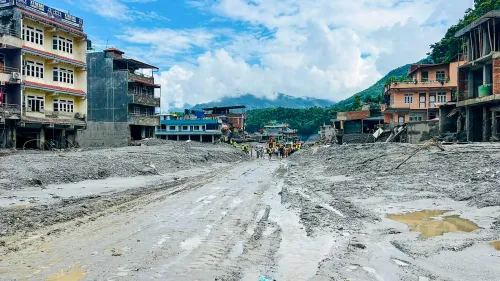
A glacial lake outburst flood struck Nepal's Rasuwa district in August 2026 ; experts identified around 25 glacial lakes in China posing risks to Nepal.
A prior flood originating in China's Gyirong County caused deaths and destruction in Nepal in July 2025 .
China has reportedly resisted transparent hydrological data-sharing with India and other downstream neighbours, according to The Diplomat report.
Nepal , Bhutan , and Bangladesh bear disproportionate climate risk despite contributing a far smaller share of historical global emissions.
China accounts for nearly 33 per cent of global greenhouse gas emissions — releasing approximately 13.1 billion tonnes annually — yet its climate-vulnerable neighbours, including Nepal, Bhutan, and Bangladesh, are left to absorb the consequences, according to a report published in The Diplomat. The analysis, released in November 2026, argues that Beijing's self-projection as a clean energy leader, grounded in relatively low emissions relative to GDP, obscures the reality of its rising absolute emissions footprint.
The Upstream Advantage Beijing Holds
The report highlights a structural imbalance at the heart of China's regional climate posture. As Asia's largest emitter and an upstream actor across shared river systems and glacial ecosystems, China reaps the economic rewards of coal-fired power — backed by guaranteed purchase agreements — while the downstream climate risks fall disproportionately on its neighbours. Critics argue that Beijing has done little to mitigate these risks through timely hydrological data-sharing or joint monitoring frameworks.
According to the report, concerns over China's climate responsibility extend well beyond its sheer emissions volume to encompass its dual role as a green technology provider and as a geographically dominant upstream actor shaping shared regional ecosystems.
Glacial Floods and the Asymmetry of Risk
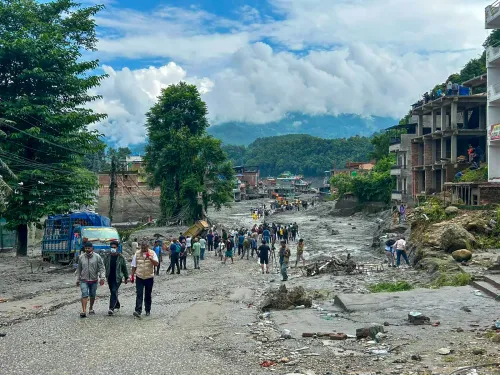
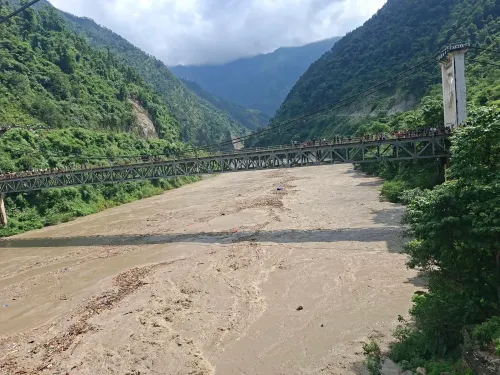
The report cited two recent transboundary glacial flood events as evidence of this asymmetry. In August 2026, a devastating glacial lake outburst flood struck Nepal's Rasuwa district, after which environmental experts identified approximately 25 glacial lakes in China that pose potential risks to Nepal and neighbouring regions. A comparable disaster had occurred just over a year earlier, in July 2025, when a flood outburst originating in China's Gyirong County caused deaths and widespread destruction in Nepal.
'Without commenting on causation, one can note that these hazards are highly asymmetric: risks originate upstream, and casualties are borne downstream,' The Diplomat noted. South Asian nations rank among the most vulnerable globally to climate-induced heatwaves, floods, and sea-level rise — despite contributing a far smaller share of historical global emissions.
China's Resistance to Transparent Climate Cooperation
The report argues that real-time hydrological data-sharing and joint monitoring are not merely technical conveniences but matters of accountability and responsibility. It specifically flagged the potential for China-India collaboration on climate security to enable accurate flood forecasting and shared glacier-melt tracking. However, according to the analysis, China has resisted this form of transparent cooperation, a stance that critics say increases India's vulnerability to floods and water shocks.
Notably, this comes amid broader tensions over data access along shared river systems, including the Brahmaputra, where India has repeatedly sought hydrological data from China during flood seasons with limited success.
The Green Technology Contradiction
The report underscores a contradiction at the centre of China's climate narrative: while Beijing positions itself as a global leader in renewable energy exports and green technology, its domestic coal capacity continues to drive absolute emissions upward. This duality, analysts argue, allows China to claim credit for green technology diffusion while deflecting scrutiny of its overall emissions trajectory — a framing that disadvantages smaller, more vulnerable neighbours who lack the diplomatic leverage to demand accountability.
What This Means for the Region
For countries like Nepal, Bhutan, and Bangladesh — nations with minimal historical emissions but outsized climate exposure — the stakes are existential. Sea-level rise threatens Bangladesh's coastal zones, while glacial instability imperils Nepal's mountain communities. Without binding regional frameworks for data-sharing and joint climate monitoring, these nations remain dependent on the goodwill of an upstream neighbour that has, according to the report, shown little urgency in providing it. The pressure on multilateral forums such as BRICS, SCO, and COP to address this asymmetry is likely to intensify in the months ahead.
Point of View
And framing it as anything else lets Beijing off the hook. India, Nepal, and Bangladesh have limited multilateral leverage to compel transparency, and existing forums like BRICS and SCO have not produced binding data-sharing commitments. Until climate accountability frameworks treat upstream emissions and information asymmetry as linked problems, the burden will continue to fall on the countries least responsible for creating it.
NationPress
8 Nov 2026
Frequently Asked Questions
How much does China contribute to global greenhouse gas emissions?
China accounts for nearly 33 per cent of global greenhouse gas emissions, releasing approximately 13.1 billion tonnes annually, making it Asia's largest emitter. Despite framing its emissions as low relative to GDP, its absolute output continues to rise.
How are South Asian countries affected by China's upstream position?
Nations such as Nepal, Bhutan, and Bangladesh face heightened risks from glacial lake outburst floods, heatwaves, and sea-level rise that are linked to upstream glacial and hydrological conditions in China. Because risks originate upstream and casualties occur downstream, the asymmetry is both geographic and political.
What happened in Nepal's Rasuwa district in August 2026?
A devastating transboundary glacial flood struck Nepal's Rasuwa district in August 2026. Environmental experts subsequently identified around 25 glacial lakes in China that pose potential risks to Nepal and neighbouring regions.
Why is China's resistance to data-sharing significant?
Real-time hydrological data from China could enable accurate flood forecasting and glacier-melt tracking for downstream countries including India and Nepal. According to The Diplomat report, China has resisted this transparent cooperation, increasing the vulnerability of downstream nations to floods and water shocks.
What role could regional forums play in addressing this issue?
Multilateral platforms such as BRICS, the SCO, and the annual COP climate summits are potential venues for establishing binding data-sharing and joint monitoring frameworks. However, no such binding commitments have emerged so far, leaving smaller South Asian nations with limited leverage to compel upstream accountability.