China's PLA air base in Laos: How Ban Keun could reshape US ops in region
Synopsis
China has quietly opened its first air-power-focused overseas military facility — at Ban Keun Airport in Laos — and analysts warn it could give the PLA Air Force a staging base to pressure US naval logistics in Singapore, Thailand, and even the Strait of Malacca. With rail connectivity to China and no disclosed troop or equipment numbers, the base's full strategic weight remains deliberately opaque.
Key Takeaways
China inaugurated the China-Laos Joint Support and Training Centre at Ban Keun Airport on 29 September 2026 , its third known overseas military facility.
Ban Keun is China's first publicly acknowledged overseas base centred on air power , unlike its naval-focused facilities in Djibouti and Cambodia .
The airport lies 45 km from Vientiane and has a runway of approximately 2,000 metres , with direct rail access via the China-Laos Railway .
Analysts warn the base extends PLAAF reach toward Myanmar , Singapore , and key US logistics hubs in Thailand .
Beijing says the facility is 'not directed' against any third party; no large-scale PLA force deployment has been confirmed at the site.
Future use could complicate US military operations in the Gulf of Thailand , Andaman Sea , and the Strait of Malacca , according to the analysis.
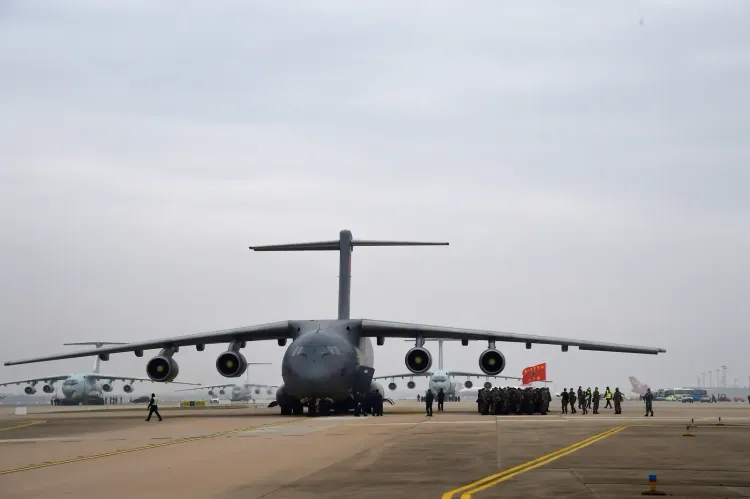
China's newly inaugurated military facility at Ban Keun Airport in Laos — its first publicly acknowledged overseas installation centred on air power — could provide the People's Liberation Army Air Force (PLAAF) a critical staging and transit base in Southeast Asia, potentially complicating US military operations across the Andaman Sea, the Gulf of Thailand, and the Strait of Malacca, according to an analysis published in The Diplomat.
What China Opened and When
Beijing formally inaugurated the China-Laos Joint Support and Training Centre and the China-Laos Friendship Aviation Academy at Ban Keun Airport on 29 September 2026, marking China's third overseas military facility. The stated purpose, according to China's Ministry of National Defence, is primarily to train Lao Air Force pilots. Beijing has not disclosed the number of Chinese personnel stationed there or the equipment deployed, and has maintained that the facilities are 'not directed' against any third party.
Why This Facility Is Different
'Ban Keun Airport is significant because it is China's first publicly acknowledged overseas military facility centred on air power,' The Diplomat report noted. This sets it apart from China's existing overseas installations — in Djibouti and Cambodia — which have largely been associated with naval operations. The airport is located in Vientiane Province, approximately 45 km from the Lao capital, and features the longest runway in Laos at roughly 2,000 metres.
Notably, the airport sits in close proximity to the China-Laos Railway, meaning personnel and select equipment can be moved overland without relying solely on airlift. According to the analysis, this logistical connectivity represents a 'highly significant' advantage for an overseas joint support base.
Strategic Reach: Myanmar, Singapore, and Beyond
Analysts cited in the report assess that Ban Keun is unlikely to be primarily oriented toward the South China Sea, where China already maintains facilities on Woody Island. Instead, its greater significance lies in its potential as a transit hub. 'From this location, Chinese forces would have a certain level of operational reach toward Myanmar and farther south toward Singapore,' the report stated.
This comes amid growing US reliance on Singapore and Thailand as key logistics and replenishment nodes — particularly during periods when US aircraft carriers are rotating or undergoing maintenance. According to the analysis, those locations would potentially fall within the operational range of aircraft flying out of Ban Keun.
Implications for US Military Operations
While analysts assess that the facility poses only a limited direct threat to the Taiwan Strait, they warn it would meaningfully enhance China's capacity to pressure US naval forces operating around Singapore. 'In the future, the facility could also be used to complicate US military operations in the Gulf of Thailand, the Andaman Sea, and even the Strait of Malacca,' the report cautioned.
Analysts have, however, underlined that there is currently no evidence Beijing has deployed large-scale forces at the site, and that any operational threat remains prospective rather than immediate. The base's true strategic weight will likely depend on whether China expands its footprint beyond the current training mandate — a question that regional defence planners are watching closely.
Point of View
Friendship, non-aggression — follows the same script it used for Djibouti and Cambodia, both of which have since evolved beyond their stated mandates. The Ban Keun facility's real significance is not what it does today but what it enables tomorrow: a rail-connected, air-capable base within operational range of the two chokepoints — Malacca and the Andaman Sea — that matter most to US Indo-Pacific logistics. Mainstream coverage focuses on Taiwan; the subtler threat is to the unglamorous but irreplaceable supply chain that keeps a US carrier strike group operational. India, too, should be paying close attention: a PLA Air Force presence flanking the Andaman and Nicobar archipelago on its eastern approaches is a strategic variable that did not exist two months ago.
NationPress
10 Oct 2026
Frequently Asked Questions
What is China's new military facility at Ban Keun Airport in Laos?
It is the China-Laos Joint Support and Training Centre, inaugurated on 29 September 2026 at Ban Keun Airport in Vientiane Province, Laos. China describes it as a pilot-training facility for the Lao Air Force, but analysts note it is Beijing's first overseas base centred on air power, distinguishing it from its naval-focused installations in Djibouti and Cambodia.
Why is the Ban Keun facility strategically significant?
The base gives the PLA Air Force a potential staging and transit hub in Southeast Asia, with operational reach toward Myanmar, Singapore, and critical US logistics nodes in Thailand. Its proximity to the China-Laos Railway also provides overland supply lines, reducing dependence on airlift alone.
Does the Ban Keun base threaten the Strait of Malacca or the Andaman Sea?
According to the analysis in The Diplomat, the facility could in the future be used to complicate US military operations in the Gulf of Thailand, the Andaman Sea, and even the Strait of Malacca. However, analysts stress there is currently no evidence of large-scale PLA force deployment at the site, making the threat prospective rather than immediate.
How does Ban Keun differ from China's other overseas military facilities?
China's bases in Djibouti and Cambodia have been primarily associated with naval operations. Ban Keun is China's first publicly acknowledged overseas facility focused on air power, making it a qualitatively new dimension in Beijing's overseas military posture.
What has China said about the facility's purpose?
China's Ministry of National Defence has stated the facilities are 'not directed' against any third party and are intended mainly to help train Lao Air Force pilots. Beijing has not disclosed the number of Chinese personnel stationed at Ban Keun or the equipment deployed there.