Pakistan a 'colonial, rent-seeking state': Analyst Ayesha Siddiqa at Hannover
Synopsis
At a Baloch Martyrs' Day conference in Hannover, Pakistan analyst Ayesha Siddiqa went beyond routine criticism — calling Pakistan a 'colonial, rent-seeking state' practicing 'constitutional militarism', linking enforced disappearances directly to mineral resource extraction, and alleging Army Chief Asim Munir's conference bypassed parliament entirely. It is a rare, named-on-record denunciation from a credentialled Pakistani academic on European soil.
Key Takeaways
Ayesha Siddiqa described Pakistan as a 'colonial and rent-seeking state' operating under 'constitutional militarism' at a Hannover conference on 16 November 2026 .
She said Pakistan has been a bureaucratic polity from its inception , making military dominance structural rather than accidental.
Siddiqa alleged that mineral resources from Balochistan and Khyber Pakhtunkhwa are being sold without public consultation or parliamentary oversight.
She linked enforced disappearances and state repression directly to protecting elite control over resource extraction.
Spanish journalist Karlos Zurutuza cited Freedom Network data showing at least 40 journalists killed in Balochistan over the past two decades .
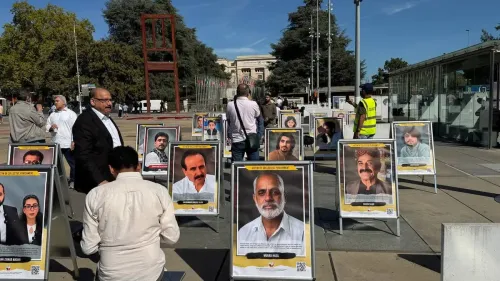
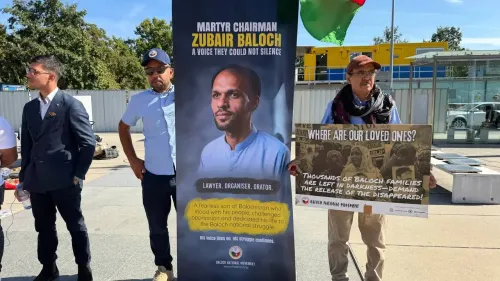
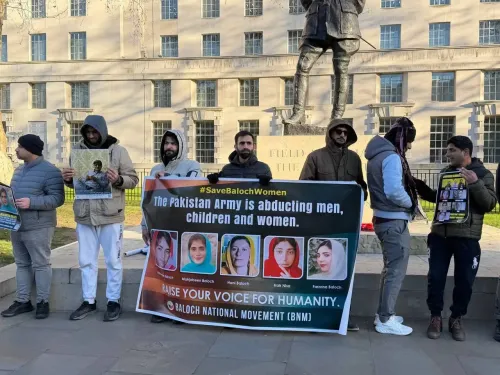
The event was organised by the Baloch National Movement (BNM) to mark Baloch Martyrs' Day , observed on 13 November each year.
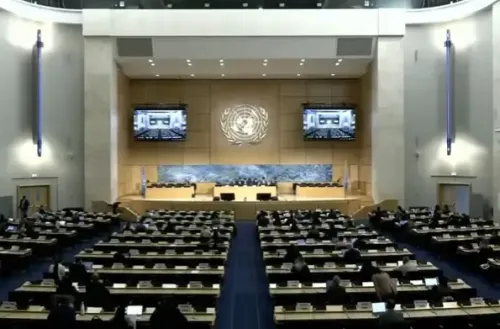
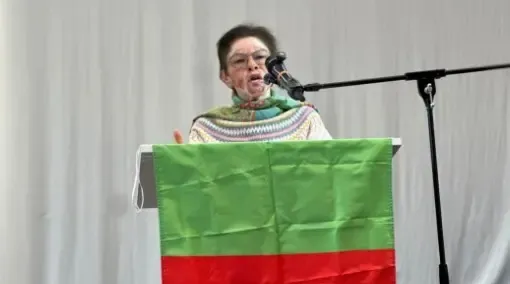
Pakistani political analyst and author Ayesha Siddiqa delivered a sharp indictment of Pakistan's state structure at a conference in Hannover, Germany on 16 November 2026, describing it as a 'colonial and rent-seeking state' that has assumed the form of 'constitutional militarism'. The remarks, made at an event organised by the Baloch National Movement (BNM), drew attention to the military's entrenched dominance in Pakistani political and economic affairs.
Pakistan as a Bureaucratic Polity, Not a Political State
Siddiqa argued that Pakistan was never a genuine political state to begin with, saying it had functioned as a bureaucratic polity from its inception — a condition that made the military's outsized role structural rather than incidental. She said she had lost confidence in Pakistani authorities' ability to protect citizens or address their grievances.
She specifically condemned the forcible abduction of citizens by state agencies, saying such acts 'can never be justified.' Siddiqa further warned that state violence and authoritarianism had intensified over time, stating unequivocally that she no longer trusts the system.
Parliament, Judiciary and Civil Society 'Hollowed Out'
According to the BNM's account of her remarks, Siddiqa criticised Pakistan's political parties and parliament for effectively surrendering their authority. She said parliament had 'willingly approved restrictions on the media' and other measures at the military's behest. She added that institutions including the judiciary and civil bureaucracy had been systematically weakened, while an alliance of military and civilian elite interests now controls the distribution of national resources.
Mineral Resources, Enforced Disappearances and Resource Extraction
Siddiqa drew a direct link between enforced disappearances and the extraction of mineral wealth from Pakistan's peripheral provinces. She alleged that Pakistani authorities were prepared to sell mineral resources from Balochistan, Khyber Pakhtunkhwa, and other regions without 'effective public consultation or accountability.'
Referring to a recent conference in Islamabad attended by Pakistani Army Chief Asim Munir, she said mineral resources were being offered to investors without taking parliament into confidence or consulting the communities living in the affected areas. She characterised 'fear, silence and repression' as deliberate tools used to sustain this process and shield those who control these resources.
Balochistan's Near-Invisibility in Global Media
Spanish journalist Karlos Zurutuza, who has reported from Balochistan, also addressed the event, noting that the province remains 'almost invisible' in international media despite its strategic significance and the acute dangers facing reporters there.
Zurutuza cited cases of New York Times correspondents facing serious obstacles, including reporter Carlotta Gall, who he said was beaten and expelled in 2006, and another reporter expelled after filing a single story. He also cited figures from Freedom Network, an Islamabad-based media watchdog, stating that at least 40 journalists have been killed in Balochistan over the past two decades.
Context: Baloch Martyrs' Day
The Hannover conference was held to mark Baloch Martyrs' Day, observed on 13 November each year by Baloch communities worldwide in tribute to those who lost their lives in the struggle for rights, dignity, and freedom in Balochistan. This year's gathering drew international voices raising concerns about state accountability, enforced disappearances, and media freedom in Pakistan's restive southwestern province. The event reflects a growing pattern of diaspora-led advocacy bringing Baloch rights issues to European platforms — a trend that Pakistani authorities have consistently contested.
Point of View
Independent verification of conditions on the ground remains structurally impossible. That opacity itself is a story mainstream coverage continues to underweight.
NationPress
16 Nov 2026
Frequently Asked Questions
What did Ayesha Siddiqa say about Pakistan at the Hannover conference?
Ayesha Siddiqa described Pakistan as a 'colonial and rent-seeking state' that has taken the form of 'constitutional militarism', arguing that the country has been a bureaucratic polity since its founding rather than a genuine political state. She said she has lost confidence in Pakistani authorities' ability to protect citizens or address their grievances.
What is the Baloch National Movement conference and why was it held?
The conference in Hannover, Germany was organised by the Baloch National Movement (BNM) to mark Baloch Martyrs' Day, observed on 13 November each year by Baloch communities worldwide. It honours those who have died in the struggle for the rights, dignity, and freedom of the people of Balochistan.
What allegations did Siddiqa make about Pakistan's mineral resources?
Siddiqa alleged that Pakistani authorities, including at a recent Islamabad conference attended by Army Chief Asim Munir, were offering mineral resources from Balochistan and Khyber Pakhtunkhwa without parliamentary consultation or accountability to the communities living in those areas. She described fear, silence, and repression as deliberate tools used to sustain this process.
How dangerous is reporting from Balochistan for journalists?
According to figures cited by Spanish journalist Karlos Zurutuza at the same conference, at least 40 journalists have been killed in Balochistan over the past two decades, based on data from Freedom Network, an Islamabad-based media watchdog. Foreign correspondents also face expulsion, with New York Times reporter Carlotta Gall reportedly beaten and expelled in 2006.
What has Siddiqa said about Pakistan's parliament and judiciary?
According to the BNM's account of her remarks, Siddiqa said Pakistan's parliament has willingly approved media restrictions and other measures demanded by the military, effectively surrendering its authority. She added that the judiciary and civil bureaucracy have been weakened, leaving an alliance of military and civilian elite interests in control of resource distribution.