France, UK, Germany, Italy back US-Iran deal; ready to lift sanctions
Synopsis
Europe's four biggest powers have thrown their collective weight behind the US-Iran memorandum of understanding — but with conditions attached. Sanctions relief is on the table only if Tehran takes verifiable steps on its nuclear programme, and the reopening of the Strait of Hormuz is framed as non-negotiable. The real test begins now, in the detailed negotiations ahead.
Key Takeaways
France , the UK , Germany , and Italy on 15 June 2025 jointly welcomed the US-Iran memorandum of understanding .
The four nations acknowledged mediators Pakistan and Qatar in their joint statement.
Sanctions relief is conditional on Iran taking 'clear, verifiable steps' on its nuclear programme, verified with the IAEA .
The leaders called for the immediate reopening of the Strait of Hormuz with unrestricted commercial navigation.
The statement reaffirmed support for Lebanon's sovereignty and the importance of a robust ceasefire in the region.
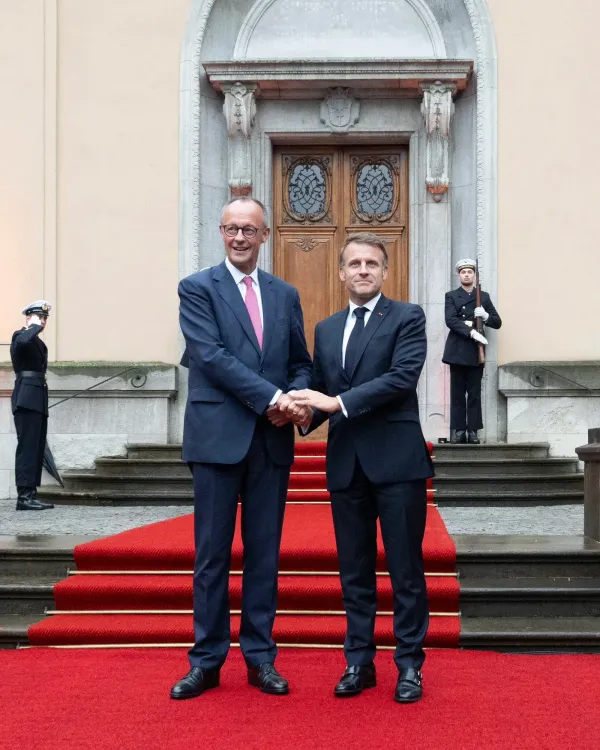
The leaders of France, the United Kingdom, Germany, and Italy on 15 June 2025 welcomed the announcement of a memorandum of understanding between the United States and Iran, describing it as a major diplomatic breakthrough and signalling readiness to ease relevant sanctions if Tehran takes clear, verifiable steps to address international concerns over its nuclear programme.
The Joint Statement
In a coordinated joint statement, the four European leaders congratulated the US, the Iranian government, and all parties involved in facilitating the agreement — specifically acknowledging the role of mediators including Pakistan and Qatar. The statement described the development as 'a moment of opportunity to restore regional stability and stabilise the global economy.'
'We warmly welcome the announcement of the memorandum of understanding between the US and Iran,' the leaders said. 'We congratulate the United States, the Iranian government and all those involved, including Pakistan, Qatar and all other mediators, on this diplomatic breakthrough.'
Conditions and Next Steps
The four governments stressed that the memorandum must now be translated into a comprehensive, rapidly implemented agreement. 'It is now vital that the detailed negotiations are concluded and this agreement is implemented rapidly and comprehensively. We are ready to support that effort,' the statement said.
On sanctions relief, the leaders made clear that any easing would be conditional. They expressed readiness to work with the US, Iran, and the International Atomic Energy Agency (IAEA) to ensure Tehran never acquires a nuclear weapon, and said sanctions would be lifted only in response to 'clear, verifiable steps' by Iran.
Strait of Hormuz and Maritime Security
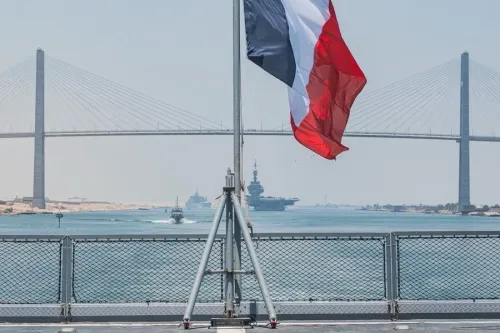
The statement placed particular emphasis on the Strait of Hormuz, calling for its 'urgent re-opening with unconditional and unrestricted freedom of navigation' for commercial vessels. The four leaders said they were committed to contributing to that objective, 'including through a strictly defensive and independent mission to reassure commercial shipping and conduct mine clearance operations.'
The Strait of Hormuz is a critical global chokepoint through which a significant share of the world's seaborne oil transits, making its reopening a priority for energy markets and supply chains alike.
Regional Stability and Lebanon
Beyond the nuclear file, the joint statement reaffirmed the four nations' 'full support to the stability, sovereignty and territorial integrity of Lebanon' and underscored the importance of a robust ceasefire in the region. The leaders pledged intensive engagement with the US, Iran, and regional partners to secure a lasting diplomatic settlement.
The statement signals a rare moment of transatlantic alignment on Iran policy, coming at a time when European capitals have often found themselves at odds with Washington over the pace and terms of diplomatic engagement with Tehran. Whether the memorandum translates into a durable, verifiable agreement will depend on the detailed negotiations that lie ahead.
Point of View
Conditional enough to preserve leverage. The insistence on 'clear, verifiable steps' before sanctions relief echoes the architecture of the 2015 JCPOA, which ultimately collapsed over verification disputes. What is notably new is the explicit focus on the Strait of Hormuz: framing maritime security as a parallel track to the nuclear file suggests Europe is alive to the risk that a nuclear deal alone will not stabilise the Gulf. The deeper question is whether this transatlantic alignment holds once the hard bargaining over timelines and inspection access begins — historically, that is where consensus has frayed.
NationPress
23 Sept 2026
Frequently Asked Questions
What is the US-Iran memorandum of understanding welcomed by European leaders?
It is a diplomatic agreement announced between the United States and Iran, welcomed on 15 June 2025 by France, the UK, Germany, and Italy as a major breakthrough. The memorandum is intended to address concerns over Iran's nuclear programme, with detailed negotiations still to follow.
Will European sanctions on Iran be lifted immediately?
No. The four European governments have said they are ready to ease relevant sanctions, but only in response to 'clear, verifiable steps' by Tehran on its nuclear programme. Any relief is conditional on Iran's compliance, verified in coordination with the IAEA.
Why is the Strait of Hormuz mentioned in the statement?
The Strait of Hormuz is a critical global oil and shipping chokepoint, and the European leaders called for its immediate reopening with unconditional freedom of navigation. They also signalled readiness to conduct a defensive mission for mine clearance and to reassure commercial shipping.
Which countries mediated the US-Iran deal?
The joint European statement specifically acknowledged Pakistan and Qatar, along with 'all other mediators,' as having played a role in facilitating the diplomatic breakthrough between the US and Iran.
What is the European position on Iran acquiring a nuclear weapon?
The four European leaders reaffirmed that 'Iran must never acquire a nuclear weapon.' They said they would work with the US, Iran, and the IAEA to ensure this objective is achieved, tying any sanctions relief to verifiable Iranian compliance.