Pakistan's Fuel Price Surge Creates Economic Strain Before Eid
Synopsis
As fuel prices in Pakistan soar, families face financial challenges during Ramadan. The increase impacts daily expenses, especially for those on limited incomes. With Eid approaching, the economic strain is palpable, prompting widespread concern and frustration.
Key Takeaways
Fuel prices in Pakistan have surged by Rs 55 per litre.
The hike is causing significant financial strain for middle-class families.
Daily wage earners are particularly affected due to low and uncertain incomes.
Transportation costs and food prices are rising rapidly.
The situation is leading to public frustration and demands for government intervention.
New Delhi, March 14 (NationPress) The significant surge in fuel prices in Pakistan is becoming increasingly burdensome during Ramadan, a time when household finances are already tight due to rising costs of essential goods that hit middle-class families the hardest, a recent report indicates.
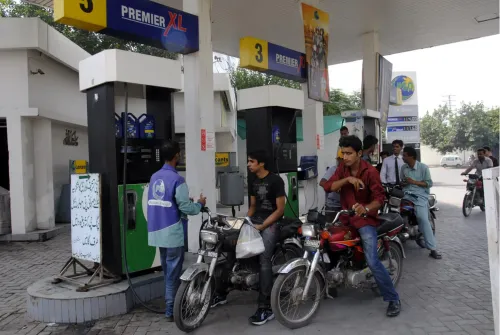
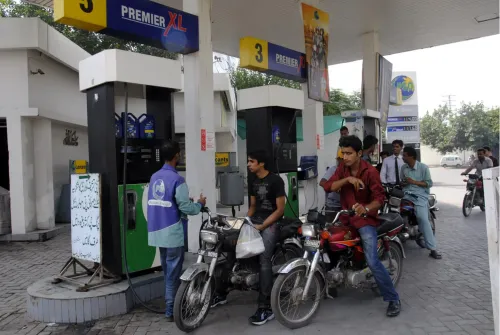
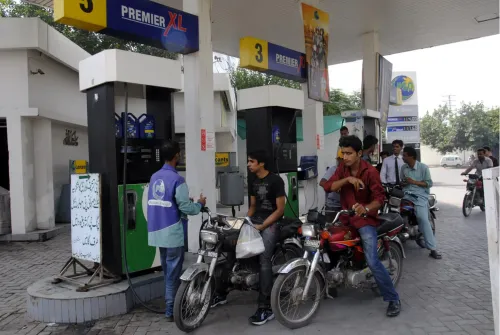
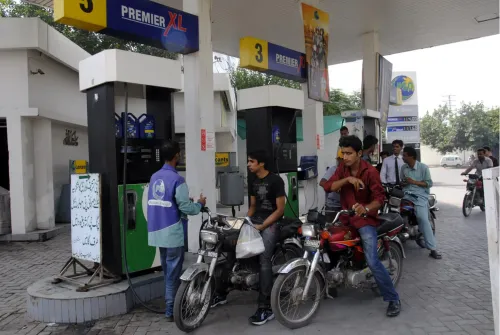
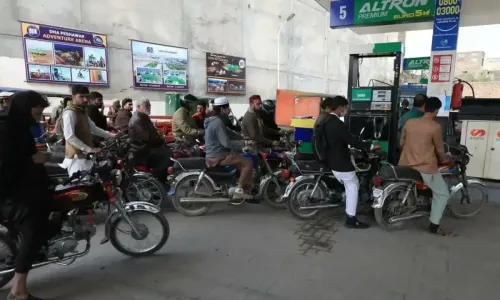
The staggering increase of Rs 55 per litre in fuel prices is causing widespread repercussions throughout the nation, elevating transportation costs, inflating food prices, and adding more pressure on families during the sacred month, as highlighted by the Dawn report.
“The timing of this increase has significantly heightened public discontent. Ramadan is typically a time when governments are expected to alleviate financial strain through targeted support for essential items. Instead, families are facing a cost crisis that is swiftly diminishing their purchasing power just as they start preparing for Eid expenses,” the report noted.
Furthermore, the impact of this price hike is particularly acute for millions of daily wage workers and gig economy participants whose earnings are modest and unpredictable.
Pakistan’s heavy reliance on imported fuel renders domestic prices extremely sensitive to international fluctuations.
“Fuel prices are never just a singular economic issue. In an economy like Pakistan’s, which depends on imports, they serve as a significant conduit through which cost pressures ripple across nearly every sector,” the report stated.
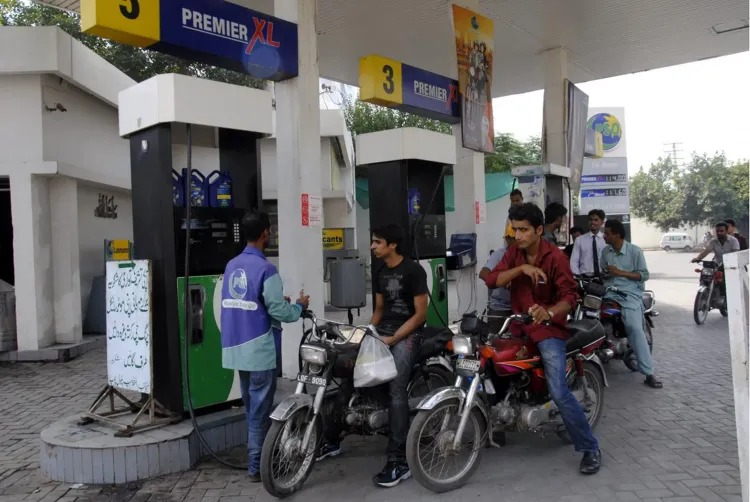
Transport fares have begun to rise across various cities almost immediately following the announcement. For millions who depend on public transport or motorcycles for commuting, this means an unavoidable increase in daily expenses.
The report further elaborated that households in Pakistan are grappling with a cost shock that is rapidly eroding purchasing power just as families prepare for Eid.
In Peshawar, the rise in petrol and diesel prices has led to increased prices for commodities and inter-city travel, while fuel sales have noticeably declined, according to petroleum dealers.
Meanwhile, in Karachi, the hike in petroleum prices has raised transport fares across multiple travel modes, further straining already overburdened household budgets.
The consequences are visible in local marketplaces, where merchants report that prices adjust within hours of any increase in fuel costs, the report noted.
Point of View
This situation highlights the urgent need for government intervention to provide relief for the affected families during a critical time like Ramadan. A nation-first approach should prioritize the welfare of citizens, especially the most vulnerable.
NationPress
8 Oct 2026
Frequently Asked Questions
What caused the recent fuel price hike in Pakistan?
The fuel price increase is attributed to Pakistan's heavy dependence on imported fuel, making domestic prices susceptible to international market fluctuations.
How does the fuel price hike affect daily wage earners?
Daily wage earners and gig workers are particularly hard hit, as their incomes are often modest and fluctuate, making it difficult to cope with rising living costs.
What are the immediate effects of the fuel price increase?
Immediate effects include rising transportation costs, increased prices for essential goods, and heightened financial strain on households during Ramadan.
Is there any government support for families during this time?
Traditionally, governments provide relief during Ramadan, but the current situation has led to increased public discontent due to the lack of support amid rising costs.
How are local markets responding to the fuel price hike?
Local markets are quickly adjusting prices, with traders noting that changes occur within hours of any fuel price increase.