G20 agrees to condemn food weaponisation at Milwaukee trade meet
Synopsis
For the first time, all G20 nations agreed to collectively condemn using food and agricultural products as weapons of economic coercion — a landmark moment at the Milwaukee trade ministerial. But the US couldn't get consensus on forced labour or excess capacity, revealing the limits of multilateral alignment even as a Leaders' Summit in Miami looms.
Key Takeaways
G20 nations reached consensus on 2 October 2026 to condemn the weaponisation of food through coercive trade actions at the Milwaukee trade ministerial.
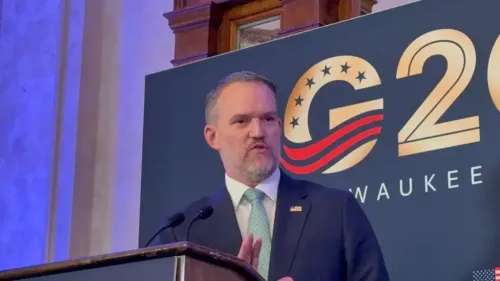
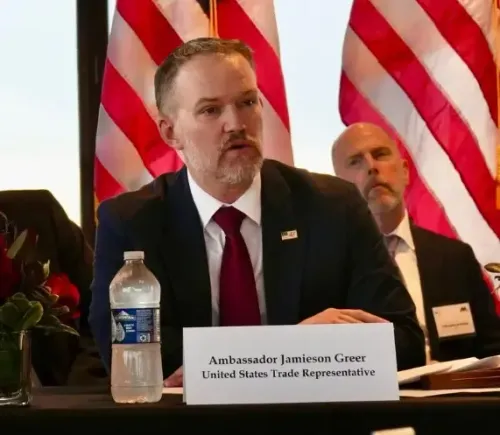
US Trade Representative Jamieson Greer called it 'an important step' towards preventing agricultural products from being used for economic or political coercion.
No consensus was reached on forced labour in global supply chains; a smaller group of trading partners will issue a separate joint statement instead.
Structural excess production capacity — affecting steel, autos, batteries, solar panels and chemicals — also failed to achieve consensus despite near-universal recognition of the problem.
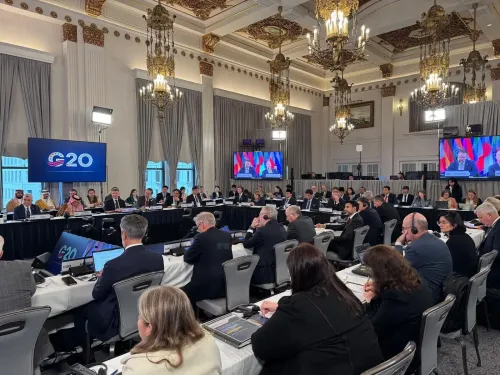
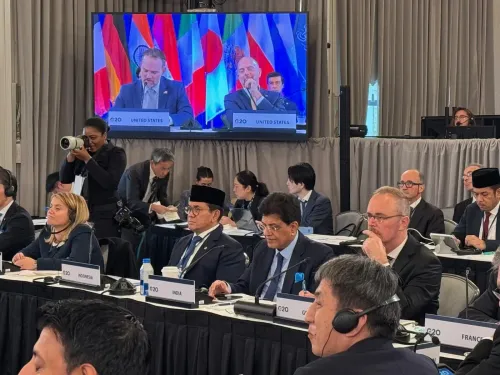
The Milwaukee ministerial is a preparatory step for the G20 Leaders' Summit in Miami later in 2026 .
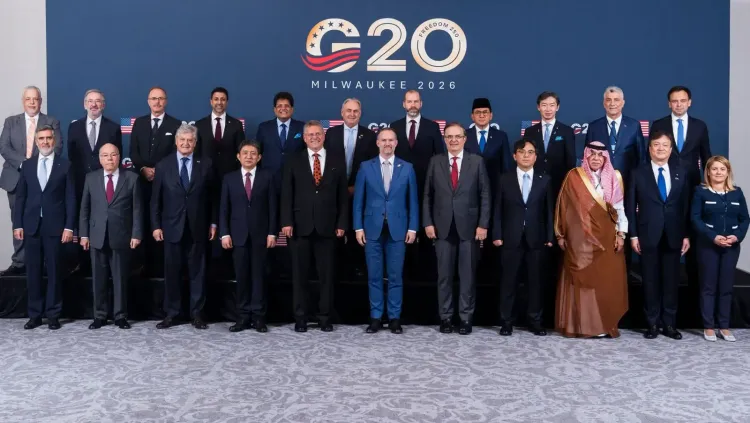
G20 nations reached consensus on 2 October 2026 to formally condemn the weaponisation of food through coercive trade actions, US Trade Representative Jamieson Greer announced at the G20 Trade Ministers' Meeting in Milwaukee. The agreement marks the first time the grouping — representing roughly 85% of global GDP — has taken a collective position against using agricultural products as instruments of economic or political pressure.
Key Developments at Milwaukee
The consensus on food security emerged after days of intensive negotiations during the ministerial, where the United States — holding the G20 presidency in 2026 — placed the issue squarely on the agenda. Greer confirmed that a formal joint statement would be released later on the same day. 'After days of discussions, and a willingness on the part of the members to act, we are pleased to have reached consensus on the G20 statement on the weaponization of food through coercive trade actions,' he told reporters.
'This is an important step towards ensuring that agricultural products are not used as a tool for economic or political coercion,' Greer added. He described food weaponisation as a relatively new subject for G20 deliberations, though the underlying problem, he noted, was longstanding.
What the Consensus Covers
According to Greer, discussions during the US G20 presidency focused on how trade in food, agricultural products, and agricultural inputs can be leveraged to exert coercive pressure — threatening livelihoods in targeted nations, distorting market competition, and undermining trust in the global trading system. The agreement represents a collective political signal, though details of enforcement or remedial mechanisms were not immediately disclosed.
Where Consensus Broke Down
The food agreement stood in notable contrast to deadlocks on two other US-backed agenda items. First, G20 members failed to reach consensus on a statement addressing forced labour in global supply chains. Greer called the outcome 'unfortunate,' adding that a smaller coalition of like-minded trading partners would instead release a separate joint statement on eliminating forced labour from supply chains.
Second, the ministerial could not agree on a statement tackling structural excess production capacity — a problem Greer said was widely recognised across steel, automobiles, batteries, solar panels, and chemicals. 'Nearly all countries agreed that this is an issue that requires action,' he said, adding that existing trade remedy mechanisms were broadly seen as inadequate. The US said it would continue discussions on excess capacity with aligned partners beyond Milwaukee.
Context and What Comes Next
The Milwaukee trade ministerial is part of the preparatory track for the G20 Leaders' Summit in Miami, scheduled later in 2026. Trade ministers have been working through a range of structural issues — food security, labour standards, excess production, and potential revisions to established international trade principles — ahead of the leaders' meeting. The partial outcomes from Milwaukee set the stage for continued negotiations, with the food weaponisation statement likely to inform the Miami summit communiqué. Progress on forced labour and excess capacity, however, remains contingent on broader multilateral alignment.
Point of View
And the statement's impact will depend on whether it finds its way into binding commitments at the Miami Leaders' Summit. More telling is what didn't happen: the US couldn't secure G20 agreement on forced labour or excess capacity, the two issues most directly tied to its trade rivalry with China. That failure reveals the structural limits of using a consensus-based forum to resolve fundamentally bilateral disputes. The G20's 85%-of-GDP heft means little when the countries that matter most on excess capacity are also the ones blocking a statement on it.
NationPress
2 Oct 2026
Frequently Asked Questions
What did G20 countries agree on regarding food weaponisation?
G20 nations reached consensus on 2 October 2026 to formally condemn the weaponisation of food through coercive trade actions, committing to prevent agricultural products from being used as tools of economic or political pressure. US Trade Representative Jamieson Greer announced the agreement at the G20 Trade Ministers' Meeting in Milwaukee and said a joint statement would be released the same day.
Why is food weaponisation a concern at the G20?
Trade in food, agricultural products, and agricultural inputs can be leveraged to exert coercive pressure on countries — threatening livelihoods, distorting competition, and undermining trust in the global trading system. While the practice is not new, this was the first time the G20 collectively addressed it, according to Greer.
Why did the G20 fail to agree on forced labour and excess capacity statements?
G20 members could not reach consensus on either a forced labour statement or one addressing structural excess production capacity, despite the US pushing both issues during its G20 presidency. The US said a smaller coalition of like-minded partners would separately address forced labour, while excess capacity discussions would continue beyond Milwaukee.
What is the G20 Leaders' Summit in Miami, and how does Milwaukee relate to it?
The G20 Leaders' Summit in Miami is the main heads-of-government meeting scheduled later in 2026, with the Milwaukee trade ministerial serving as a preparatory step. Trade ministers have been working through food security, labour standards, excess production, and international trade principles ahead of the leaders' gathering.
Which sectors are affected by the structural excess capacity problem the G20 discussed?
Excess production capacity was widely recognised as a problem across steel, automobiles, batteries, solar panels, and chemicals, according to Greer. Nearly all G20 members agreed the issue required action, but consensus on a formal statement could not be reached at Milwaukee.