Could Gen-Z and Women Voters Transform Bangladesh's Political Landscape?
Synopsis
As Bangladesh approaches its 13th National Parliament election, Generation Z and women voters are emerging as influential forces. With over 40 million young voters and 62 million registered female voters, their combined impact could reshape the political landscape, challenging traditional party strategies and influencing the future of democracy in the country.
Key Takeaways
Generation Z and women voters are emerging as crucial electoral forces.
Collectively, they represent a significant portion of registered voters.
Political parties are adjusting strategies to appeal to these demographics.
Women candidates face significant challenges in the political landscape.
The election could redefine traditional political dynamics in Bangladesh.
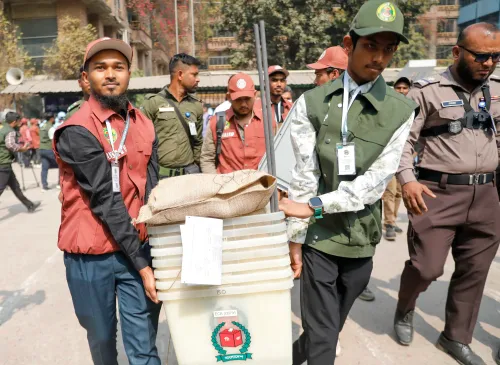
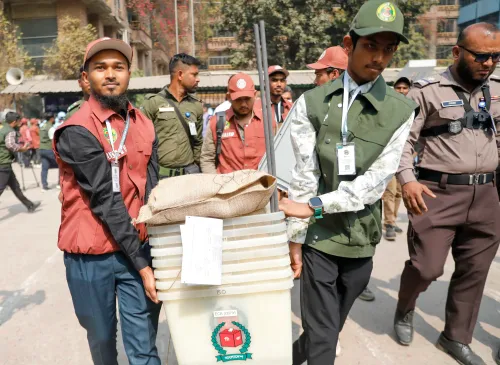
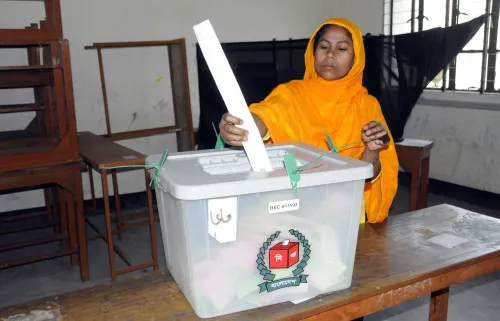
Dhaka, Feb 12 (NationPress) As Bangladesh holds its 13th National Parliament election, two critical voter blocs are being identified as key players in shaping the political outcome: Generation Z and women, as highlighted in a recent media report.
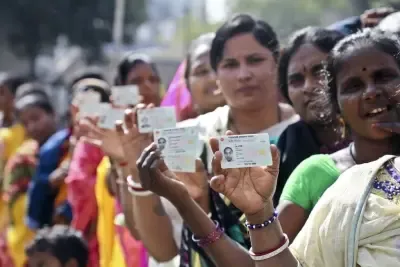
These groups collectively represent a numerical majority within the electorate, emerging as an independent voting bloc that has the potential to redefine traditional party strategies and electoral tactics.
With more than 40 million voters aged 18 to 29 and over 62 million registered female voters, political analysts suggest that the election results may rely less on established party frameworks and more on the aspirations of younger generations and gender-influenced voting behaviors, as reported by a prominent Bangladeshi newspaper, The Dhaka Tribune.
Experts contend that the choices made by these two demographics could determine not only which party leads the next government but also the broader trajectory of Bangladesh's evolving democratic landscape.
Recent data from the Election Commission indicates that Bangladesh has nearly 127.7 million registered voters. Among these, about 50 million voters belong to the 18-35 age group, while over 62 million are women, bringing the proportion of female voters close to that of their male counterparts. Additionally, nearly 10 million citizens will cast their votes for the first time, underscoring the growing impact of younger voters, the report stated.
Within this demographic, around 40 million voters are in the 18-29 age range, and approximately 26.7 million women voters are aged between 18 and 37, further emphasizing their significance.
These statistics reveal that younger voters and women together constitute a potent electoral force that could sway results, especially in closely contested constituencies.
Political parties have recognized this shift in voter demographics. Many candidates privately concede that it has become increasingly challenging to predict electoral success without understanding the political inclinations of women and Gen-Z voters.
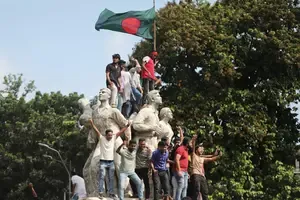
The same youthful demographic that played a significant role in the 2024 protests is now participating in what is widely regarded as the first major “post-movement election”.
Analysts characterize this moment as a transition from grassroots activism to formal political engagement.
While Gen-Z voters are seen as harbingers of generational change, women voters are recognized as drivers of structural transformation.
With more than 62 million female voters, their electoral importance is irrefutable. What appears to be changing during this election cycle is not just their numerical strength but also their increasing independence in political decision-making, as noted in The Dhaka Tribune report. Nonetheless, the Election Commission's data shows that women are significantly underrepresented.
Women comprise only around 4 percent of candidates in the upcoming national elections, highlighting deep-rooted gender barriers in a political sphere where women constitute half the population yet scarcely appear on the ballot.
Numerous female candidates across various constituencies have reported facing organized cyberbullying, character attacks, sexual harassment, and threats, both online and offline, aimed at intimidating them and undermining their campaigns, according to local media.
Across local constituencies, candidates are increasingly viewing women voters, especially those from working-class backgrounds, as a pivotal swing constituency. Major political entities, including the BNP, radical Islamist Jamaat-e-Islami, and the National Citizen Party (NCP), have integrated women-centered pledges into their manifestos to attract this influential voter group.
The BNP has promised to implement initiatives such as “family cards” to assist women, free education for women up to the postgraduate level, the establishment of women's support cells, day-care facilities, breastfeeding stations, and expanded entrepreneurship aid programs.
Senior BNP officials have consistently emphasized women-related issues at public gatherings, while family members of key party figures have engaged women and youth through seminars and outreach events.
Furthermore, after making several “misogynistic” remarks, Jamaat-e-Islami has attempted to rehabilitate its image by proposing the formation of a national women’s protection task force and committing to ensure safe and dignified employment opportunities for women, both domestically and abroad.
Meanwhile, the NCP has advocated for direct elections for female candidates across 100 reserved seats in the lower house.
Despite these commitments, doubts have been raised regarding the depth and practicality of these pledges.
Janit Ara Haque, coordinator of the advocacy group We Can, expressed skepticism about whether these manifestos provide substantive policy innovations for women voters, as reported by The Dhaka Tribune.
“Women voters have always been crucial,” she stated, “but these manifestos lack thorough research on women’s needs and the implementation of these plans.”
She added that working women, particularly those not firmly aligned with traditional ideological frameworks, could play a vital role in shaping electoral results.
Women’s political engagement is also manifesting through online activism. Digital campaigns urging women to “respond to misogyny with their votes” have gained traction across various social media platforms.
Following controversial comments allegedly linked to Jamaat Ameer Shafiqur Rahman, eleven women’s organizations submitted a memorandum to the Election Commission demanding the cancellation of his candidacy.
Beyond traditional party rivalry, analysts are portraying this election as a crucial juncture in Bangladesh's democratic development.
This election is occurring without the participation of the Awami League, without the supervision of a conventional caretaker government, and under an interim authority that has promised transparency.
If Gen-Z voters carry forward the “reformist enthusiasm” displayed during the 2024 protests and if women voters exercise independent electoral judgment in substantial numbers, Bangladesh's political landscape could experience a profound transformation, according to the media report.
Point of View
It is crucial that we recognize the vital role of both Generation Z and women voters in the upcoming elections. Their increasing political engagement signifies a shift towards a more inclusive democracy in Bangladesh, which could redefine traditional party dynamics. The nation must embrace this change to ensure that all voices are represented in the political discourse.
NationPress
27 Sept 2026
Frequently Asked Questions
What impact will Gen-Z and women voters have on the election?
Gen-Z and women voters together represent a significant portion of the electorate, and their voting patterns could challenge traditional party strategies, leading to a potential shift in the political landscape of Bangladesh.
How many registered voters are there in Bangladesh?
According to the Election Commission, there are nearly 127.7 million registered voters in Bangladesh.
What issues do women voters face in the election?
Women candidates have reported facing challenges such as cyberbullying, character attacks, and sexual harassment, which can deter their participation in the political process.
Are political parties addressing women's issues?
Yes, several political parties have incorporated women-centric initiatives in their manifestos to attract female voters and address gender-specific concerns.
What is the significance of the upcoming election for young voters?
The upcoming election represents a crucial opportunity for young voters, particularly Gen-Z, to influence the political direction of the country following their active participation in the 2024 protests.