Pakistan airstrikes in Afghanistan draw global condemnation after civilian deaths
Synopsis
Pakistani airstrikes on Afghan provinces killed at least 10 civilians — most of them children — triggering condemnation from the UN Special Rapporteur and former US envoy Zalmay Khalilzad. With the Pakistan-Afghanistan border sealed since October 2025 and diplomatic ties at a nadir, the strikes signal a dangerous new escalation in a conflict with deep colonial-era roots.
Key Takeaways
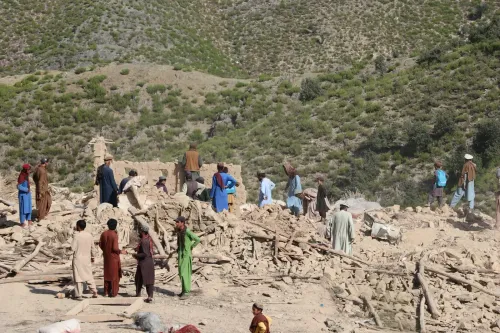
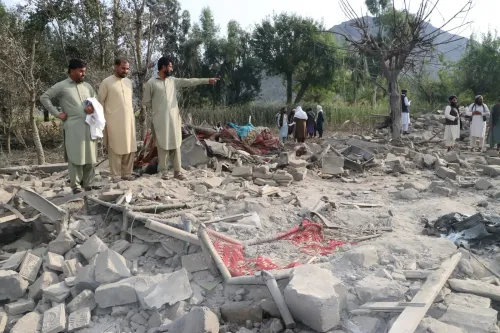
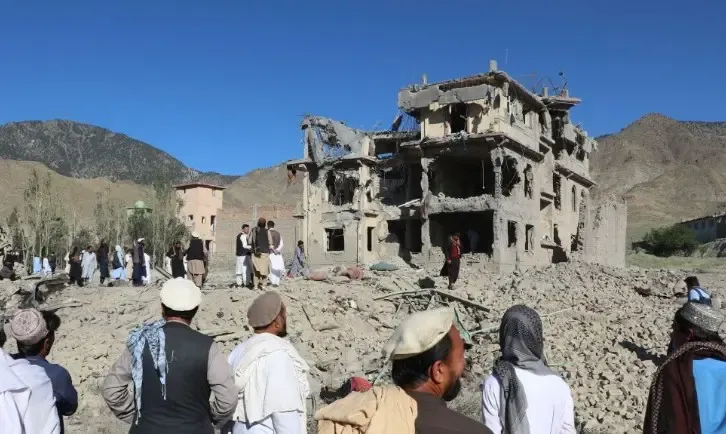
Pakistani military carried out airstrikes on Kunar and Helmand provinces on Thursday, 2 October 2026 , killing at least 10 civilians , most of them children.
UN Special Rapporteur Richard Bennett condemned the strikes as a likely violation of 'international human rights and humanitarian law.' Former US Special Representative Zalmay Khalilzad also condemned the attacks on X, calling for an immediate halt to the killing of innocent Afghans.
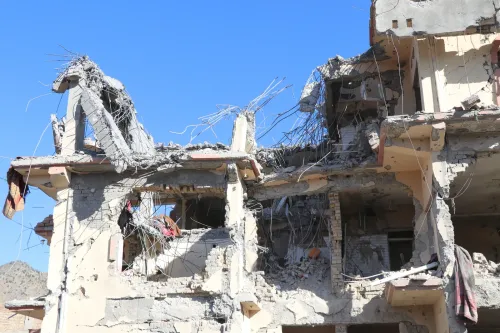
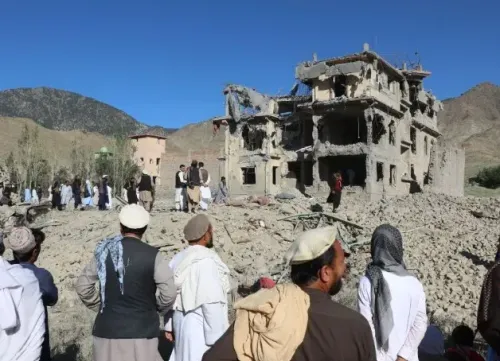
Taliban spokesperson Zabihullah Mujahid said the strikes killed 9 people including women and children, injured 11 , and destroyed 3 houses .
The Pakistan-Afghanistan border has been closed since October 2025 , causing significant economic disruption on both sides.
Underlying the conflict is a decades-old dispute over the Durand Line , the colonial-era border that Afghanistan has never formally recognised.
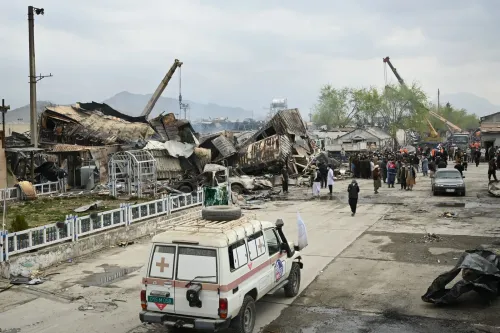
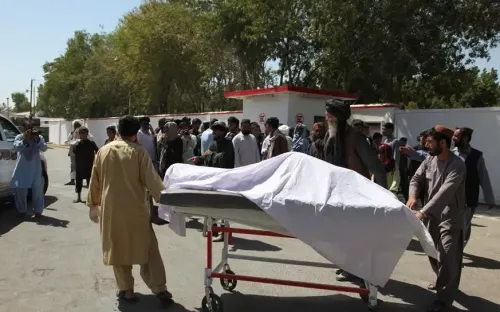
Pakistan carried out fresh aerial bombing raids on Afghanistan's Kunar and Helmand provinces on Thursday, 2 October 2026, killing at least 10 civilians — most of them children — and injuring 9 others, according to the United Nations Assistance Mission in Afghanistan (UNAMA). The strikes have drawn swift international condemnation, with world leaders and human rights bodies demanding accountability and an immediate halt to the killing of innocent Afghans.
What the Strikes Targeted and What Happened
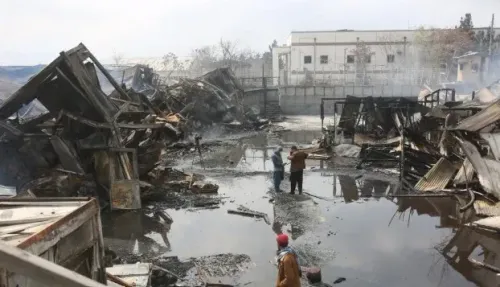
The Pakistani military reportedly struck civilian homes in Kunar and Helmand provinces in the early hours of Thursday. Taliban administration spokesperson Zabihullah Mujahid claimed the bombing killed nine people, including women and children, wounded 11 others, and destroyed three houses. UNAMA's confirmed toll — at least 10 civilians dead — was posted on social media platform X and subsequently tagged by the UN Special Rapporteur.
International Voices Demand Accountability
UN Special Rapporteur on human rights in Afghanistan Richard Bennett posted on X: 'Accountability is paramount after another airstrike that has killed civilians, most of them children. Is this incompetence, negligence or worse? Whatever, there is no justification for doing such irreparable harm to civilians, and it appears to violate international human rights and humanitarian law.'
Former US Special Representative for Afghanistan Reconciliation Zalmay Khalilzad also took to X, writing: 'Terrible news from Afghanistan. Pakistani air strikes have once again killed civilians, including several children. As in the past, I strongly condemn these attacks. The killing of innocent Afghans must stop.' Several governments, international organisations, and human rights groups have issued similar condemnations, particularly in light of repeated civilian casualties.
Deep-Rooted Tensions Behind the Strikes
The aerial raids are rooted in a deteriorating bilateral relationship that predates the current Afghan government. Pakistan has repeatedly accused the Taliban administration in Kabul of sheltering militants — specifically the Tehrik-e-Taliban Pakistan (TTP) and ISIS–K — who carry out cross-border attacks on Pakistani soil. Kabul has consistently denied harbouring such groups, accusing Islamabad of using militant activity as a pretext to deflect its own internal security failures.
Tensions escalated markedly after the Taliban regained control of Afghanistan in 2021, and the border has remained closed since October 2025 following a series of cross-border violence incidents. The closure has inflicted significant economic harm on both sides — driving up prices of goods, restricting medical travel, and disrupting livelihoods — while pushing businesses to seek alternative regional trade corridors.
The Historical Context: The Durand Line Dispute
At the heart of the conflict lies the Durand Line, the colonial-era boundary drawn by the British Raj to delineate British India's frontier with Afghanistan. Afghanistan has never formally recognised the line as a legitimate international border, a dispute that has fed hostility for decades and continues to complicate any diplomatic resolution to the current crisis.
What Comes Next
With the border sealed since late 2025 and civilian casualties mounting, pressure is growing on international bodies — including the UN Security Council — to take a stronger stance. The latest strikes mark at least the second major bombing incident to draw explicit condemnation from UN-affiliated officials in recent months. Diplomatic relations between Islamabad and Kabul remain at a low ebb, and there is no publicly announced framework for de-escalation.
Point of View
Raising the question of whether military escalation serves any achievable security objective or merely deepens a cycle of retaliation. What mainstream coverage underplays is the economic dimension: a sealed border since October 2025 is quietly strangling communities on both sides, creating a humanitarian pressure cooker that makes eventual political settlement harder, not easier. The Durand Line dispute remains the unresolved foundation beneath every skirmish — and until that structural issue is addressed, no amount of international condemnation will produce lasting calm.
NationPress
2 Oct 2026
Frequently Asked Questions
What happened in the Pakistan airstrikes on Afghanistan?
Pakistani military aircraft struck civilian homes in Afghanistan's Kunar and Helmand provinces on Thursday, 2 October 2026, killing at least 10 civilians — most of them children — and injuring 9 others, according to UNAMA. Taliban spokesperson Zabihullah Mujahid put the death toll at 9, with 11 wounded and 3 houses destroyed.
Who has condemned the Pakistan airstrikes on Afghanistan?
UN Special Rapporteur on human rights in Afghanistan Richard Bennett condemned the strikes as an apparent violation of international human rights and humanitarian law. Former US Special Representative for Afghanistan Reconciliation Zalmay Khalilzad also condemned the attacks on X. Several governments, international organisations, and human rights groups have issued similar statements.
Why is Pakistan carrying out airstrikes inside Afghanistan?
Pakistan accuses the Taliban administration in Kabul of sheltering militant groups — particularly the Tehrik-e-Taliban Pakistan (TTP) and ISIS–K — that carry out cross-border attacks on Pakistani soil. Afghanistan denies harbouring these groups and rejects the justification for the strikes.
What is the current state of Pakistan-Afghanistan relations?
Relations are at a low ebb. The Pakistan-Afghanistan border has been closed since October 2025 following cross-border violence, causing rising prices, restricted medical travel, and economic losses on both sides. Diplomatic ties have been severely strained since the Taliban recaptured Kabul in 2021.
What is the Durand Line and why does it matter to this conflict?
The Durand Line is the colonial-era border drawn by the British Raj to separate British India from Afghanistan. Afghanistan has never formally recognised it as a legitimate international boundary, and the dispute over its legitimacy has been a persistent source of hostility between Islamabad and Kabul for decades.