UN chief Guterres demands climate justice at COP Antalya, targets fossil fuel profits
Synopsis
At COP Antalya, UN Secretary-General António Guterres told 197 nations that 'polluters must pay' — and backed it with a number: $300 billion a year from developed countries by 2035. With the US boycotting and oil majors posting $95 billion in quarterly profits, the gap between moral urgency and political will has rarely looked wider.
Key Takeaways
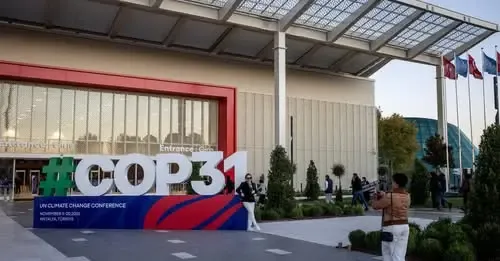
UN Secretary-General António Guterres called for a Climate Justice Compact at the COP summit in Antalya, Turkey on 11 November 2026 .
Guterres demanded developed nations deliver at least $300 billion a year by 2035 and at least triple adaptation finance.
The broader climate finance goal of $1.3 trillion must translate into 'real finance flowing to developing countries,' he said.
The nine largest oil companies posted $95 billion in profits last quarter, Guterres noted, underlining the fossil fuel industry's capacity to contribute.
India 's environment secretary Narendra Bhooshan called for a 'fair, equitable, and ambitious outcome' on Tuesday , reinforcing the developing-nation position.
The United States is boycotting the Antalya conference following President Donald Trump 's dismissal of international climate initiatives.
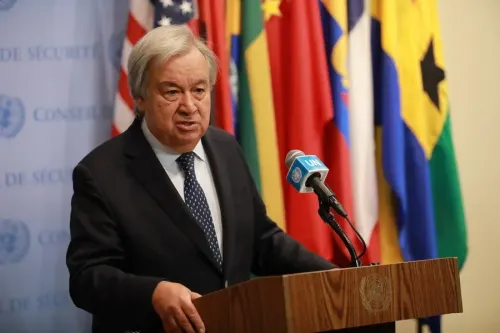
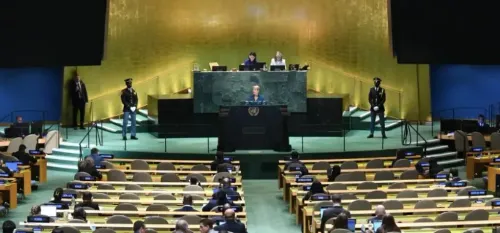
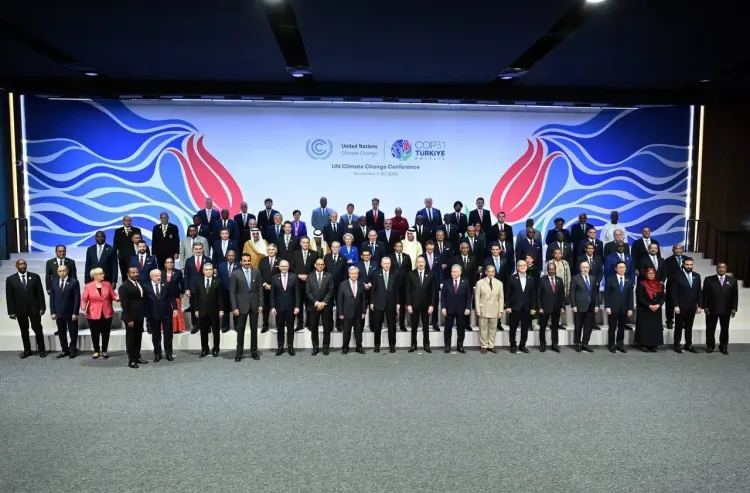
United Nations Secretary-General António Guterres on 11 November 2026 issued a pointed call for climate justice at the UN Climate Change Conference (COP) in Antalya, Turkey, demanding that industrialised nations bear proportional financial responsibility for the global warming crisis they historically drove. His remarks set a sharp tone at the summit, attended by representatives of 197 countries.
The 'Polluters Must Pay' Demand
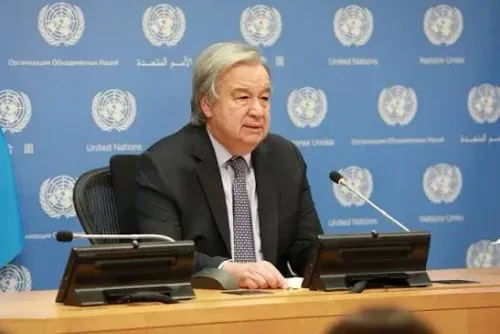
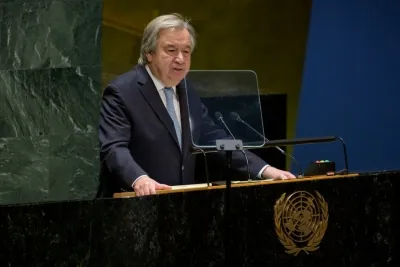
'Polluters must pay,' Guterres declared from the Antalya summit stage. He called for a new Climate Justice Compact grounded in 'shared responsibility, shared security and shared benefits,' insisting that the principle of common but differentiated responsibilities must govern any framework that emerges from the conference.
Guterres linked financial liability directly to historical emissions, arguing that nations and industries that derived the greatest economic gains from fossil fuels must help absorb the costs of climate damage. In a pointed critique of the fossil fuel sector, he noted that the nine largest oil companies collectively posted $95 billion in profits in the last quarter alone — framing that figure as a measure of the industry's capacity to contribute to climate finance.
Finance Targets: $300 Billion a Year by 2035
Guterres set out concrete expectations for developed nations, calling on them to deliver at least $300 billion a year by 2035 and to triple adaptation finance by that deadline. He said the broader $1.3 trillion goal must translate into 'real finance flowing to developing countries,' requiring every source — public, private, and multilateral — to contribute meaningfully.
'Developed countries must lead in delivering at least $300 billion a year by 2035, and set out concrete plans with clear milestones to at least triple adaptation finance by then,' he said. 'The $1.3 trillion goal must become real finance flowing to developing countries, and this demands that every source of finance pull its weight.'
He also called for greater South-South cooperation to widen access to green technology and capital for developing economies, and stressed that private investment must complement government and multilateral funding in supporting the energy transition.
India's Call for Equity and Accountability
Guterres' remarks reinforced a position India had staked out at the summit a day earlier. Narendra Bhooshan, Secretary of India's Ministry of Environment, Forest and Climate Change, addressed the conference on Tuesday, urging a 'fair, equitable, and ambitious outcome.' Bhooshan underscored that public financing from developed nations remains critical for enabling climate adaptation and addressing vulnerabilities in developing countries — a position consistent with India's long-standing stand in climate negotiations.
US Boycott Clouds Proceedings
A significant shadow hangs over the Antalya conference: the United States, historically the world's largest cumulative emitter of greenhouse gases, is boycotting the event. The absence follows decisions by President Donald Trump, who has repeatedly dismissed international climate change initiatives. The US non-participation complicates prospects for binding commitments, given its outsized role in both global emissions history and international climate finance.
Guterres warned that trade barriers, technology monopolies, and geopolitical rivalries continue to block effective global climate action — remarks widely read as addressing both the US stance and broader fractures within the international community.
What Comes Next
With 197 nations in attendance — but the world's largest historical emitter absent — negotiators face the dual challenge of securing ambitious finance pledges and ensuring enforcement mechanisms are credible. The push for a Climate Justice Compact, if it gains traction, would mark a structural shift in how climate liability is framed under international law. The coming days at COP Antalya will test whether Guterres' moral urgency translates into binding outcomes.
Point of View
But it also highlights the structural contradiction: nations that most need to redirect fossil fuel revenues toward climate finance are the ones whose domestic politics make that hardest. India's alignment with Guterres on differentiated responsibility is strategically sound, but New Delhi will need more than moral solidarity — it needs binding disbursement timelines, not aspirational figures. Without the US, any Climate Justice Compact risks being a document that redistributes guilt without redistributing money.
NationPress
11 Nov 2026
Frequently Asked Questions
What is the Climate Justice Compact proposed by António Guterres?
It is a proposed international framework announced at the COP summit in Antalya on 11 November 2026, calling for developed nations to bear financial responsibility proportional to their historical greenhouse gas emissions. The compact would be built on the principles of shared responsibility, shared security, and shared benefits, with the established doctrine of common but differentiated responsibilities at its core.
How much climate finance did Guterres demand from developed countries?
Guterres called on industrialised nations to deliver at least $300 billion a year by 2035 and to set out concrete plans to at least triple adaptation finance by that deadline. He also referenced a broader $1.3 trillion goal that must translate into real financial flows to developing countries.
Why is the United States absent from the Antalya COP summit?
The US is boycotting the UN Climate Change Conference in Antalya following decisions by President Donald Trump, who has dismissed international climate change initiatives. The absence is especially significant because the US is historically the world's largest cumulative emitter of greenhouse gases.
What did India say at the Antalya climate summit?
India's environment secretary Narendra Bhooshan, speaking on Tuesday, called for a fair, equitable, and ambitious outcome at the conference. He stressed that public financing from developed nations is vital for enabling climate adaptation and addressing vulnerabilities in developing countries.
What was Guterres' argument about fossil fuel companies?
Guterres noted that the nine largest oil companies generated $95 billion in profits in the last quarter alone, arguing that those who derived the greatest economic gains from fossil fuels must help bear the financial burden of climate damage. He used the figure to underscore the industry's capacity — and, in his framing, its obligation — to contribute to global climate finance.