IMF: Rupee should be India's first line of defense in energy shock

Synopsis
The IMF has told India to let the rupee absorb the energy shock from the Middle East war rather than defend it through central bank intervention — a pointed signal to the RBI. With a 7% growth projection intact but an El Niño lurking as the key downside risk, the Fund is essentially asking New Delhi to choose currency flexibility over short-term stability optics.
Key Takeaways
The IMF said the rupee should be India's 'first line of defense' against the ongoing Middle East energy shock , favouring exchange rate flexibility over RBI intervention.
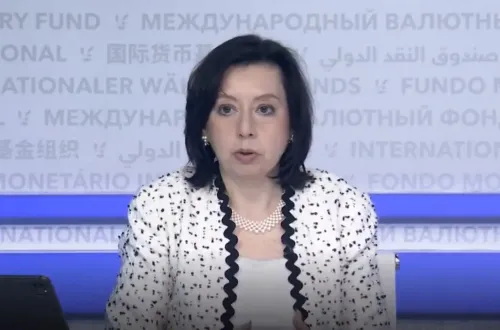
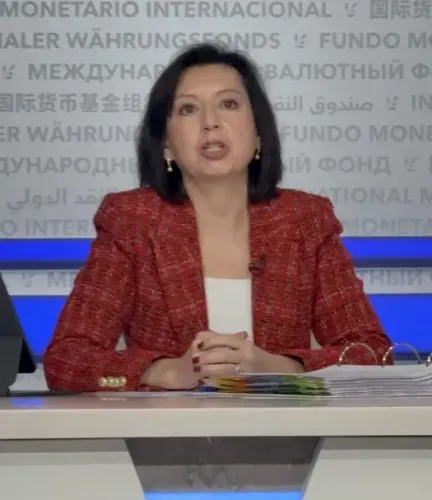
IMF Communications Director Julie Kozack made the remarks at a press briefing in Washington on 31 October .
The Fund maintained its 7 per cent growth forecast for India for both FY 2026-27 and FY 2027-28 , citing robust domestic demand and strong services activity.
The IMF said monetary tightening could be considered if a weaker rupee triggers broad-based inflation ; intervention is acceptable only when markets become disorderly .
The main downside risk flagged is an El Niño weather event that could hurt crop yields, rural activity, and food prices.
The next IMF reassessment of India's projections is due in the January World Economic Outlook update.
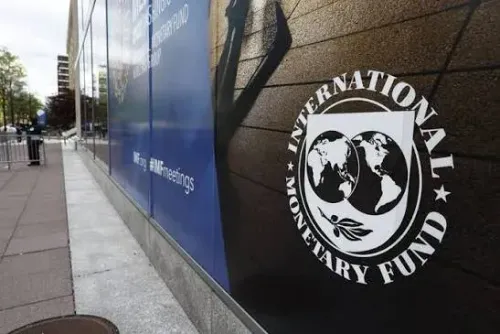
The International Monetary Fund (IMF) has stated that the rupee should serve as India's 'first line of defense' against the ongoing energy shock stemming from the Middle East war, signalling a clear preference for exchange rate flexibility over heavy intervention by the Reserve Bank of India (RBI). The Fund simultaneously maintained its 7 per cent growth forecast for the Indian economy for both FY 2026-27 and FY 2027-28.
What the IMF Said
IMF Communications Director Julie Kozack, responding to a question at her regular press briefing in Washington on Thursday, 31 October, said she was echoing the view of Krishna Srinivasan, head of the Fund's Asia and Pacific Department. 'Given the ongoing energy shocks that India is confronting, like all countries, our view is that the rupee should be the first line of defense in the face of these shocks,' Kozack said.
'Allowing the exchange rate to move freely to reflect the impact of these shocks is important to help the Indian economy adjust to these shocks,' she added. The remarks come against the backdrop of recent RBI interventions aimed at supporting the rupee, which the Fund implicitly flagged as a less preferred approach under current conditions.
When Intervention Becomes Acceptable
Kozack did not rule out foreign exchange intervention entirely. She clarified that such action 'can be appropriate when market conditions become disorderly,' which she said would be consistent with the IMF's Integrated Policy Framework. However, she was unambiguous that for India in the current context, 'exchange rate flexibility remains the preferable policy response.'
She also outlined a conditional path for monetary tightening: 'If significant rupee depreciation leads to broad-based increases in inflation, then our advice would be that monetary policy tightening could be considered to preserve price stability.' This effectively draws a line — the RBI's tools should respond to second-order inflation effects, not pre-empt currency moves.
India's Growth Outlook and Key Risks
On the broader economy, Kozack described India as 'really an engine of growth in the world economy,' citing robust domestic demand and strong services activity. The Fund's projection of 7 per cent growth holds for both fiscal years under review. However, the IMF flagged weather risk — particularly the possibility of an El Niño event — as the main downside concern, warning it could lower crop yields, weigh on rural activity, push up food price inflation, and erode household purchasing power. 'Right now those risks have not materialised,' Kozack noted. The Fund's next reassessment of India's projections is scheduled for the January World Economic Outlook update.
US Fed and Global Financial Conditions
Kozack also addressed the broader global macro environment, saying the US Federal Reserve under Chairman Kevin Warsh was 'appropriately remaining data-dependent' after holding rates on Wednesday following a hike in September. She noted that headline US inflation remained above the Fed's 2 per cent target, partly attributable to the energy price shock from the Middle East conflict. On emerging markets broadly, Kozack said financial conditions remained 'broadly supportive' despite higher bond yields, with spreads in emerging and developing economies still 'quite compressed' — a reflection, she said, of years of work by those countries to strengthen their economic fundamentals.
IMF and US Treasury Engagement
Asked about a US Treasury statement from 14 October calling on the Fund to sharpen its work on global imbalances and debt sustainability, Kozack acknowledged that the United States is the IMF's largest shareholder and that 'we do value the voice and engagement of the United States,' while referring detailed questions on the statement's intent to the Treasury. This comes amid a broader global conversation about multilateral institutions recalibrating their surveillance mandates in the face of rising debt levels across major economies.
Point of View
So a weaker rupee does not just absorb the shock — it amplifies it through the import bill, fuelling the very inflation the Fund says would trigger tightening. The 7% growth forecast is reassuring headline optics, but the El Niño qualifier is a reminder that India's growth story remains weather-dependent in ways that no monetary framework fully insulates against.
NationPress
31 Oct 2026
Frequently Asked Questions
What did the IMF say about the Indian rupee and the Middle East energy shock?
The IMF said the rupee should be India's 'first line of defense' against the energy shock from the Middle East war, meaning the exchange rate should be allowed to move freely rather than being propped up by central bank intervention. IMF Communications Director Julie Kozack made the remarks at a press briefing in Washington on 31 October.
What is the IMF's growth forecast for India?
The IMF is projecting 7 per cent GDP growth for India for both FY 2026-27 and FY 2027-28, citing robust domestic demand and strong services sector activity. The Fund described India as 'really an engine of growth in the world economy.'
Under what conditions would the IMF support RBI intervention in the currency market?
The IMF said foreign exchange intervention can be appropriate when market conditions become 'disorderly,' consistent with its Integrated Policy Framework. It also said monetary policy tightening could be considered if significant rupee depreciation leads to broad-based inflation — but reiterated that exchange rate flexibility remains the preferred response for India right now.
What are the key downside risks to India's growth according to the IMF?
The IMF flagged adverse weather — particularly an El Niño event — as the primary downside risk, warning it could lower crop yields, hurt rural economic activity, push up food price inflation, and erode household purchasing power. As of the briefing, those risks had not materialised.
When will the IMF next update its India growth projections?
The IMF is scheduled to reassess its India projections in the January World Economic Outlook update. The current 7 per cent forecast covers both FY 2026-27 and FY 2027-28.